// SPACE.COM — SPAZIO & SCIENZA
NASA's aging infrastructure can't handle Artemis launches without $1 billion in upgrades, watchdog warns
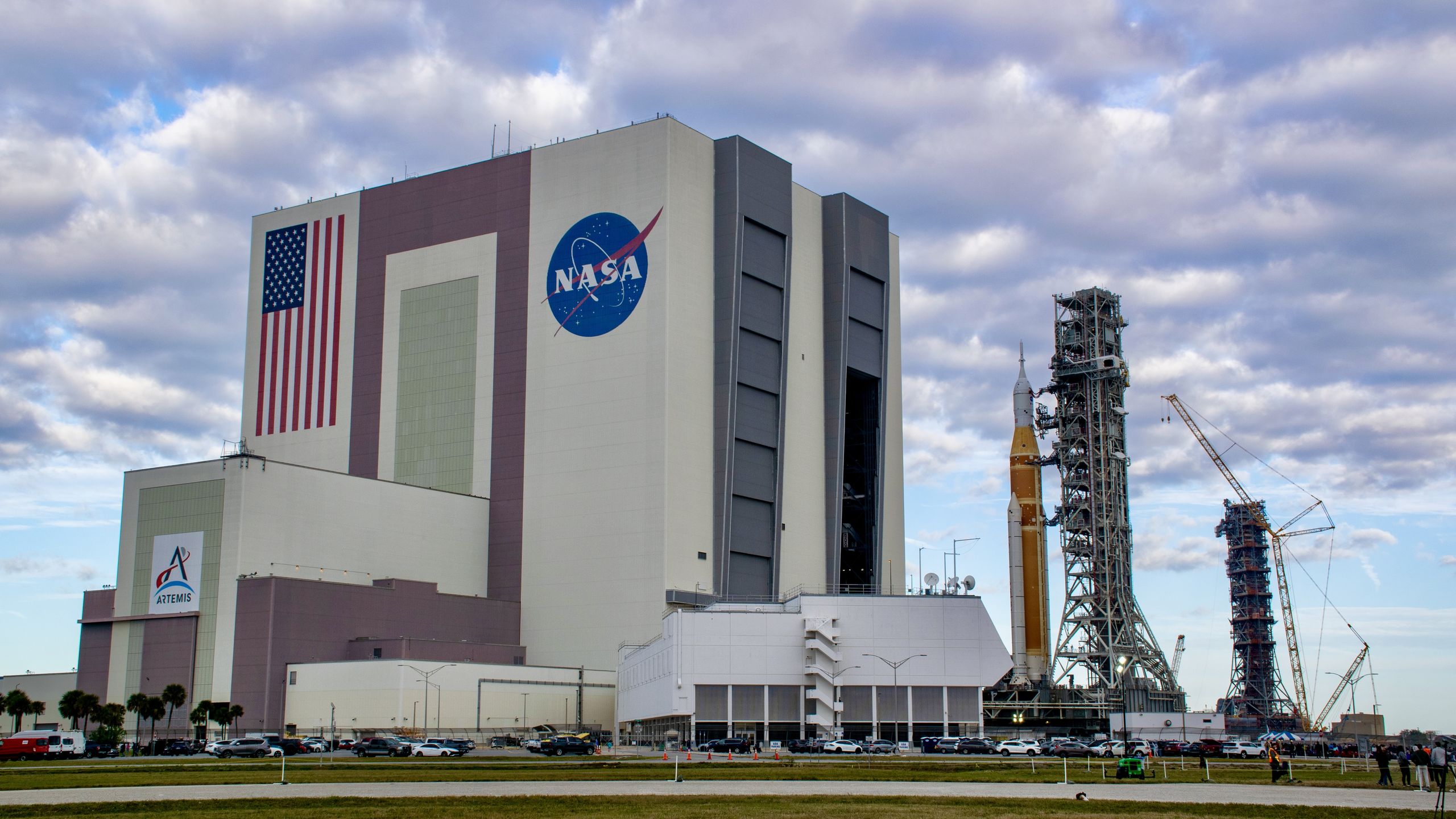
Decades-old facilities are struggling to keep pace with the new space race.
When you purchase through links on our site, we may earn an affiliate commission. Here’s how it works.
NASA's plan to return astronauts to the moon and bolster a rapidly growing commercial space industry is facing an infrastructure obstacle.
A new report from NASA's Office of Inspector General (OIG) warns that launch facilities at the Kennedy Space Center (KSC) in Florida and Wallops Flight Facility in Virginia are approaching capacity as demand accelerates across the agency and the private sector. Support infrastructure — such as roads, electricity, and gas and fuel pipelines that laid the foundation for KSC's network of launch pads built to support the Apollo program in the 1960s — are being increasingly stretched by the demands of NASA's Artemis missions, SpaceX, Blue Origin, United Launch Alliance (ULA) and other users.
"Based on current launch projections, Kennedy and Wallops are expected to operate near capacity in the 2028 to 2029 time frame," states the report, which was released on Monday (June 22). Though it credits NASA for already taking steps to address these issues, agency officials estimate it will take at least $1 billion to complete all the necessary upgrades, of which only $250 million was provided as part of NASA's funds allocated in last year's 2025 H.R.1 reconciliation bill.
On Florida's Space Coast, the assessment encompasses launch facilities at KSC as well as Cape Canaveral Space Force Station (CCSFS), which saw an increase of NASA-supported launches from 31 in 2020 to 109 in 2025, according to the report. Wallops, where there are fewer and smaller launch pads, doesn't traditionally see as many missions compared to KSC. But the Virginia site has experienced an even sharper jump, percentage-wise, over the same timeframe — from three launches in 2020 to 17 in 2025 (a 467% rise). By 2030, NASA expects traffic at both sites to increase by another 150% or so. And NASA officials told auditors that raw launch counts don't fully capture the strain on infrastructure, because launch campaigns require days or weeks of support activity before liftoff.
The report outlines launch infrastructure shortcomings at both facilities, but notes that Wallops' challenges have been partially mitigated by recent upgrades across its seven active launch sites. Wallops generally hosts small and medium-lift launch vehicles, like Northrop Grumman’s Antares rocket and Rocket Lab's Electron, but has taken steps to support Rocket Lab's upcoming Neutron, as well as Firefly Aerospace's Alpha rocket, which is expected to launch from the site sometime this year.
The major launch pads in question at KSC and CCSFS include Launch Complex-39A (LC-39A) and LC-39B, used by SpaceX and NASA, respectively; Space Launch Complex-40 (SLC-40), also used by SpaceX; SLC-41, used by ULA's Atlas and Vulcan rockets; and SLC-36, used by Blue Origin's New Glenn rocket.
SpaceX has transitioned to launching its Falcon 9 rocket primarily from SLC-40 and has reserved LC-39A for Falcon Heavy launches while construction of the first Florida launch tower for its Starship rocket is underway at the same pad. SpaceX hopes to start launching Starship from this pad before the end of 2026.
The company also has plans for a second Space Coast pad for Starship, at SLC-37. Once Starship, which is still under development at SpaceX's Starbase, Texas, facility, becomes fully operational, the company expects up to 44 launches a year from KSC, with an additional 76 launches per year projected from SLC-37 at CCSFS. That equals about one Starship launch every eight days for LC-39A, but a higher cadence will be needed to successfully support NASA's Artemis program.