// HACKER NEWS — CYBERSECURITY
Arrested for a Late Manuscript: Seicho Matsumoto's 'Tokyo Express'
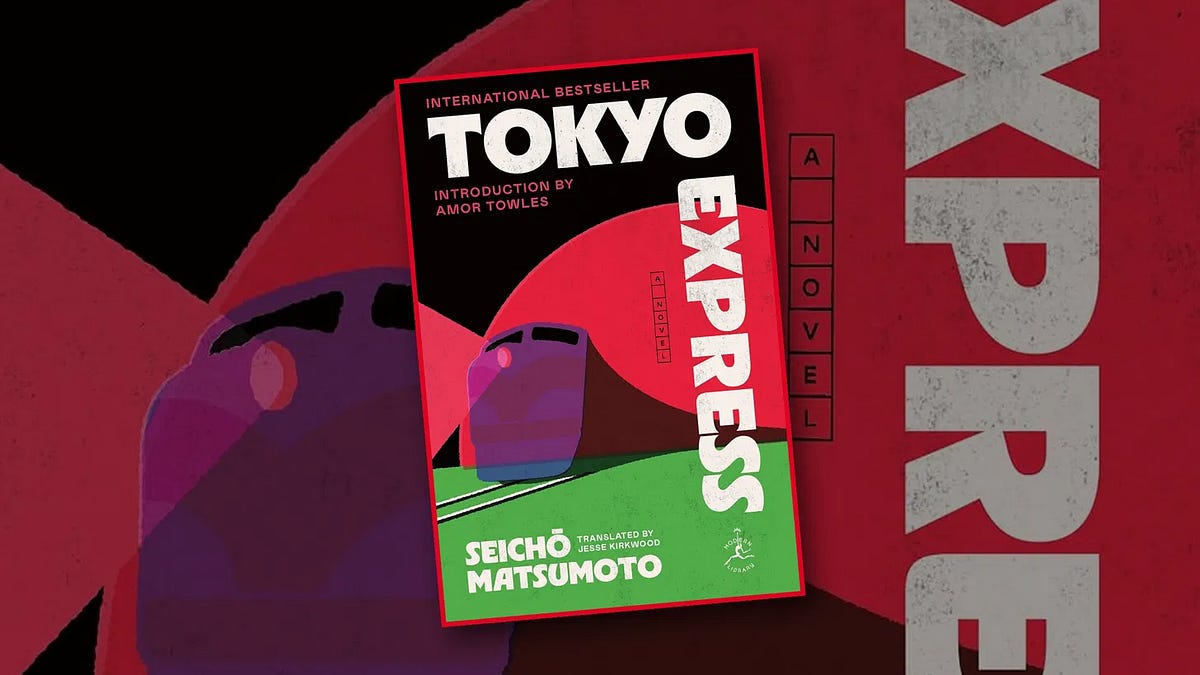
When local police investigate the death of a young couple on Kashii beach, a rocky strip on the eastern side of Hakata Bay on the island of Kyushu in the south of Japan, they assume it’s a lovers’ suicide. The pair is neatly dressed with no sign of distress, just the bloom of rosy cheeks from ingesting cyanide.
The tradition of lovers ending their lives together, called shinjū, was big in the middle of the Edo period, at the turn of the eighteenth century, but experienced a resurgence from the 1920s through the fifties. Perhaps most famously, the novelist Osamu Dazai attempted it in 1930. He survived, but his girlfriend died, and the failed attempt marked everything he touched thereafter, including his most celebrated novel No Longer Human. (Dazai and another woman tried it again in 1948; sadly, they succeeded.)
So while the events of Seicho Matsumoto’s mystery Tokyo Express unfold in 1957, police fall back on a long tradition to explain these bodies on the beach. Case closed. But not everything adds up. A single receipt undermines the whole picture.
The story begins in a Japanese restaurant in Tokyo, where industrialist Tatsuo Yasuda frequently comes to entertain his guests, government officials with whom he’s wangling deals and contracts. Rumors of corruption mean the host protects the anonymity of his connections. Thankfully, the waitresses don’t ask many questions. One in particular, Toki, is Yasuda’s regular server. She’s also the woman found on the beach.
She was last seen by Yasuda and two other waitresses from the restaurant on platform 15 of the train station, boarding an overnight with a handsome young man. “And who is he?” asks one of the girls. There were rumors Toki had a lover, but no one had yet seen or met the man. But here they were together!
His name is, as it turns out, Kenichi Sayama. He serves as assistant section chief at Ministry X, responsible for procurement. Embroiled in allegations of corruption, Ministry X is currently under investigation, and Sayama is a key witness in the scandal. He’s the man found on the beach alongside Toki.
Yasuda spots the couple on the platform when the two servers accompany him to his own train on platform 13, headed home for his weekly visit with his tubercular wife, Ryoko, in Kamakura. The bodies are found a week later.
Born in 1909, Seicho Matsumoto fell in love with detective fiction as a young man, reading both Japanese translations of western mystery writers and the homegrown stuff then emerging. Working in advertising at the Japanese news daily the Asahi Shimbun, he decided to try some writing of his own.
Short stories and a novella won him acclaim in the early 1950s—including the Akutagawa Prize—and freelance gigs began multiplying. In 1954 Kishu Okada, an editor at Tabi (“Travel”), asked Matsumoto to write for his magazine, then published by the Japan Travel Bureau. Over the next two years, Matsumoto published three articles in Tabi, along with his work for other outlets.
With his writing opportunities increasing in tandem with his reputation, Matsumoto finally resigned from the paper in 1956, though the decision proved difficult. As Makoto Sakai tells it in his recent biography, Matsumoto Seicho no Showa (Seicho Matsumoto’s Showa Era), he hated working at the paper. Dubbed “grubby Matsu” by his colleagues, he chucked his employee badge in a pond at one point. But he also liked the security of the job.