// KOTAKU — GAMING
Solaris in Xenogears Is A Disturbing But Fascinating Journey Into Human Nature
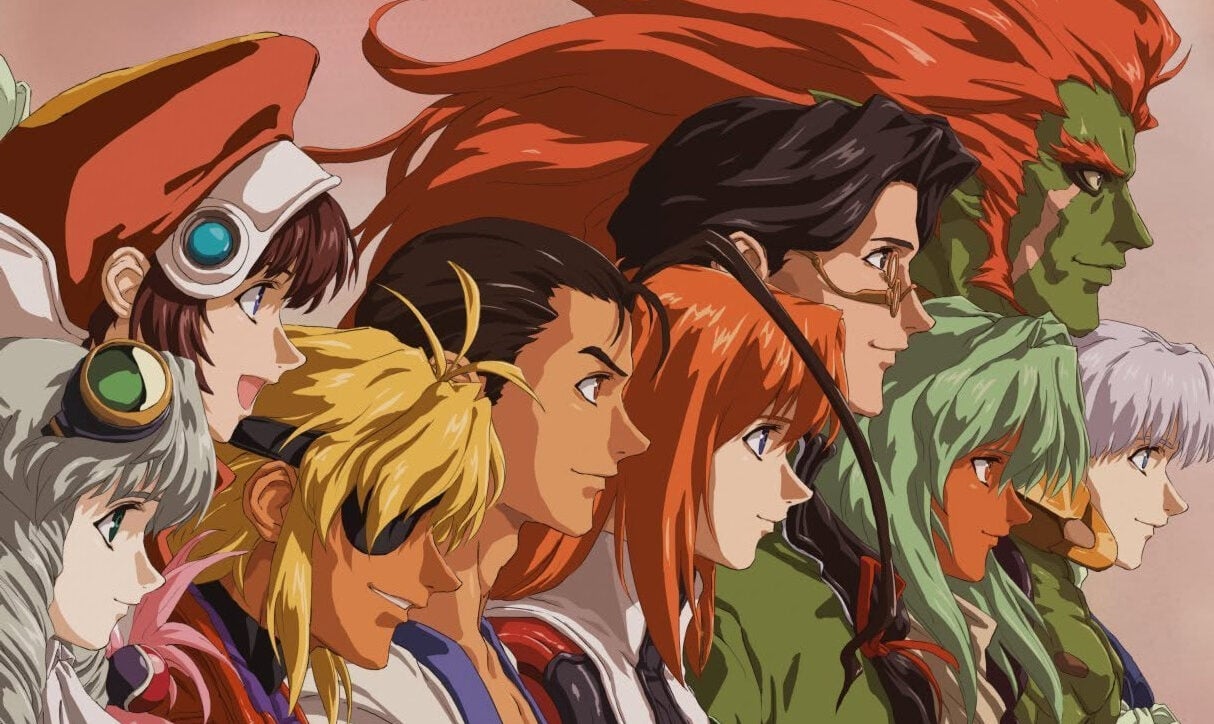
Xenogears might not be the best JRPG on the PS1 due to its format shift in the second half, but it has one of the most thought-provoking stories on the system. The first half still remains one of the most ambitious and complex narratives ever told. I still discover new things with each playthrough and feel I’d have to write a whole book just to describe all of my thoughts on it. Instead, I’ll focus on the sky kingdom of Solaris which comes just before the end of Disc 1 and epitomizes what makes the game so revered among those who’ve had the chance to experience it.
Plotwise, there’s a lot going on in Xenogears. In the opening anime, the colony ship called the Eldridge crashes into a planet with the cryptic text, “You shall be as gods” repeating on the screen. Thousands of years later, Kislev and Aveh are at war. The main protagonist, Fei, tries to figure out what all the flashbacks he gets mean while juggling his fractured self that somehow connects with his ability to unleash massive power on his gear. The floating city of Shevat holds many secrets that tie in with the conflict and it’s all somehow connected with a war 500 years ago and the 12 Anima Relics of God. Ethos (a religious group) and Gebler (a secret military faction) are both pulling the strings and causing the land-dwellers or “lambs” to fight each other. Meanwhile some masked stranger named Grahf wants to awaken Fei so they can kill god. There’s so many characters in Xenogears with clashing agendas that whenever I think I’m starting to understand what’s going on, a new twist or character upends everything. It feels like a science fiction-philosophy-psychology-religious buffet with the devs mixing and matching in ways that kept me constantly intrigued.
Director and co-writer, Tetsuya Takahashi paid tribute to many of his favorite works in the game. The Sacred Empire of Solaris is named after the SF classic Soviet film and book that’s about an oceanic planet called Solaris. The planet turns out to be conscious and can physically manifest people’s deepest secrets, kind of like a Silent Hill in space. In Xenogears, Fei learns that Solaris is secretly funding and directing the Ethos and Gebler to exacerbate tensions and keep the lambs in perpetual strife. The party has to make their way up to the kingdom by destroying the Three Surface Gates that hide its existence from the rest of the world.
On initially landing in Solaris, the team is physically inverted, walking upside down on the floating city. I took it as foreshadowing that everything they thought they knew was going to be turned upside down, and it is. Fei is split from the group and ends up arriving at 3rd Class F Block, which is the lowest section of the city.
As soon as he emerges from his cell, he hears someone yell, “Something’s wrong with all of you! Working like machines day after day. You have no will! This isn’t living!!’ They’re seized by a security cube, flown over to a giant pit, then dropped down without a warning to their death. No one tries to protest or object to his treatment. Instead, one of the citizens complains, “It’s malcontents like him that get us all punished. It kills me to think that all our work to raise our block’s rank is ruined.”
The citizens are split into three separate classes and those in the Honeycomb are in the 3rd, and lowest, class. They focus on staying compliant and alive. Fei meets up with one of his team members, Elly, who reveals that 3rd class citizens are called “Worker Bees,” and provide “manual labor vital to the support of Solaris’ core.” They’re treated as disposable.
In another cell, someone is worried they’ll be “rearranged” and, having no other source of comfort, begs God for support. But his prayers go unanswered. As soon as you leave, the honey comb is removed and “rearranged” as they feared. You later learn that the process involves a mix of “brainwashing and amnesia,” often targeting those who try to escape. Language is just as critical a tool of re