// ARS TECHNICA — MONDO
Supreme Court forces TV stations to sell more election ads at steep discounts
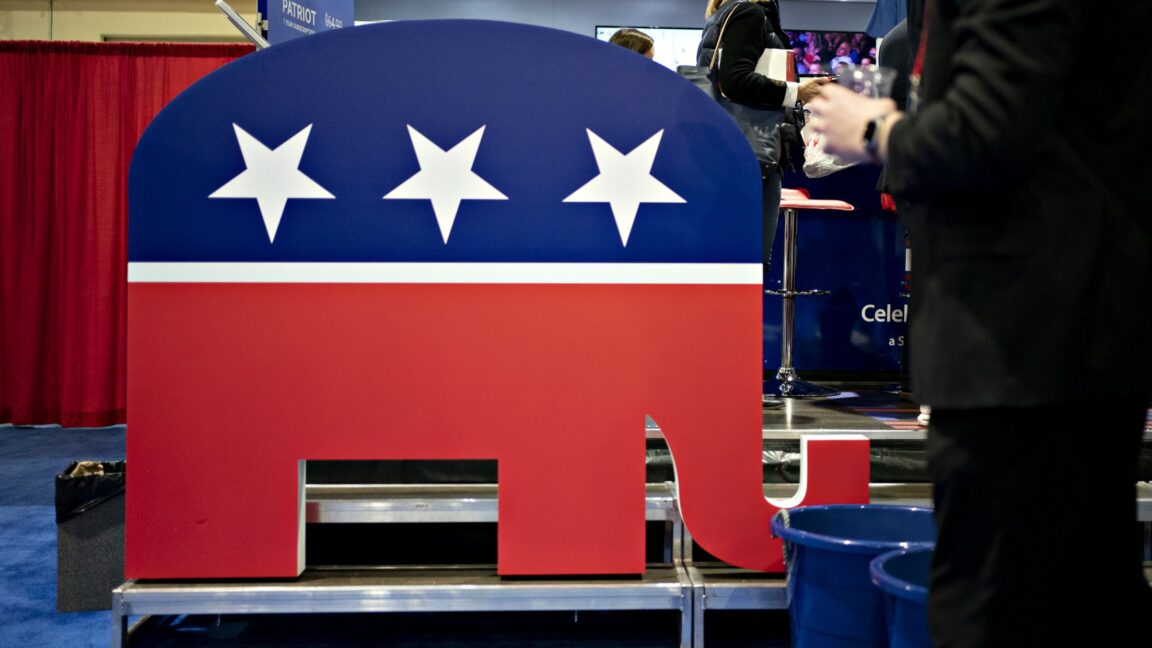
Republican victory means stations must offer lowest ad prices to political parties.
In a victory for Republican campaign committees, the Supreme Court issued an order on Friday that forces broadcast TV stations to cut the prices of election ads purchased by political parties and joint fundraising committees. The September 4 ruling came in response to a petition filed by the National Republican Congressional Committee and National Republican Senatorial Committee.
The Supreme Court order was issued just in time for the start of a 60-day period before the election, in which broadcasters are required by US law to offer ad discounts to individual candidates. Because of the top court’s order, TV stations must also give their lowest ad rates to political parties and joint fundraising committees, which face fewer limits on how much money they can raise and spend.
The legally required discount is known as the “lowest unit charge,” or LUC. A US law that applies to any licensed station that airs election ads requires that the lowest price be charged for “the use of any broadcasting station by any person who is a legally qualified candidate for any public office in connection with his campaign.” The main legal question is whether “use… by” a candidate can refer to ad time purchased on a candidate’s behalf by parties and joint fundraising committees.
The Federal Communications Commission this year issued a public notice ordering broadcast TV stations to give the discounts to parties and joint fundraising committees. While both major parties could take advantage of the discounted ads, the Trump administration has pushed for the change, and four Democratic candidates contested it in court. The Democratic candidates won at the US Court of Appeals for the Fourth Circuit, where a judges’ panel found that the FCC public notice contradicts the plain language of US law that limits the discount to individual candidates.
The Republican campaign committees then filed an emergency motion for a stay that would block the Fourth Circuit ruling, and the Supreme Court granted the stay on Friday. The Supreme Court didn’t rule on the merits of the case but said the Fourth Circuit should not have intervened because the FCC hasn’t made a “final” decision on a challenge filed by the Democratic candidates. See this article for a more in-depth description of the legal issues in the dispute.
The stay could have a major impact during this election-ad season, in part because of a previous Supreme Court decision that struck down related limits on campaign spending. That case also involved the National Republican Senatorial Committee.
“Just months ago, the Supreme Court lifted all limits on how much political parties can spend in direct coordination with candidates. Now that same money can also buy campaign ads at the lowest price the law requires broadcasters to charge only to individual candidates,” Federal Communications Commission Commissioner Anna Gomez, the commission’s only Democrat, said on Friday.
Gomez was referring to the Friday ruling and a June decision in which the Supreme Court struck down federal limits on how much a political party can spend in coordination with candidates. Gomez said the latest ruling “opens the door to a flood of dark money that will let a handful of wealthy donors pool unlimited contributions,” while broadcasters that are already struggling financially “are the ones absorbing the cost.”
The Supreme Court order on TV ad prices was unsigned, with a dissent from Justice Ketanji Brown Jackson. The ruling was per curiam, meaning at least five of the nine justices agreed, but the court didn’t say how each justice ruled. “For the foregoing reasons, the application for stay presented to the Chief Justice [John Roberts] and by him referred to the Court is granted,” the order said.