// NATURE NEWS — SPAZIO & SCIENZA
Popular open-science platform to stop hosting data and code amid funding concerns
Dalmeet Singh Chawla is a freelance science journalist based in London.
Search author on:
PubMed
Google Scholar
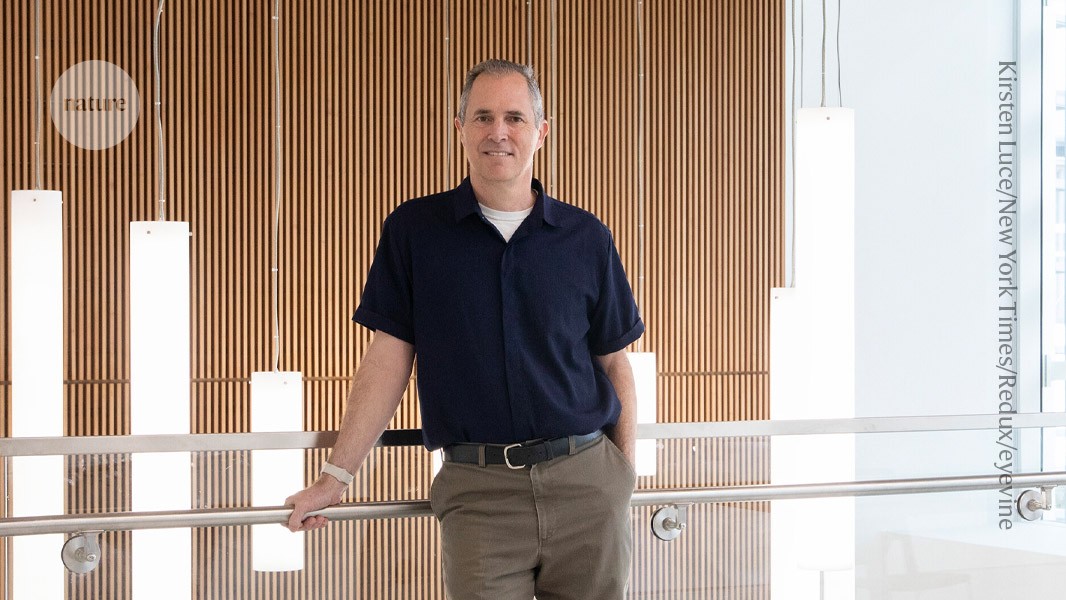
Brian Nosek, the executive director for the Open Science Framework, announced last month that the platform will soon stop hosting code, data and supplementary materials for researchers. Credit: Kirsten Luce/New York Times/Redux/eyevine
The co-founder of a prominent open-science platform has announced that funding uncertainties have forced the site to make changes to some of its most popular features.
In a statement released on 11 August, Brian Nosek, executive director of the Center for Open Science (COS) in Charlottesville, Virginia, which runs the Open Science Framework (OSF), announced that the platform will no longer allow researchers to post their code and data after 16 November. Any documents that are already publicly available on the site will remain online. But users will no longer be able to upload new materials in private mode, and all existing private files will be made public after the change unless users remove them or make them public themselves.
The OSF’s preregistration workflow — which allows scientists to post research designs and articles that describe their planned methods and analyses for upcoming experiments — will continue to operate as normal, as will the 14 preprint servers run on the OSF platform.
Launched in 2012, the OSF allows researchers to publish their code, data, supplementary materials and manuscripts online indefinitely and to share them publicly. Users can also choose to keep uploaded materials private or share them with only collaborators. With more than one million users, the platform has served as a one-stop shop for researchers looking to manage entire projects in a single space — all at no cost to the researchers themselves.
But that doesn’t mean that the tools OSF provides are free. Nosek says the policy change was “necessitated because of financial realities”, noting that it costs between US$4 million and $5 million annually to manage the OSF (see ‘Rising costs’). He adds that, over the past few years, the COS has relied on financial backing from federal agencies and private foundations, but not all of this funding has been renewed.
Phasing out data and code storage and not allowing researchers to host documents privately will reduce the OSF’s operating costs by more than half, Nosek estimates. Although he recognizes that these features are popular and widely used, he notes that many users were using the OSF’s private mode as a free storage platform, often hosting content not relevant to science. About one-fifth of the platform’s users keep all of their materials private, Nosek says, which runs counter to the COS’s open-science ethos.
“We’re not raising philanthropic dollars to provide a free, private data-storage solution,” he explains. Those factors, collectively, create a “meaningful burden that these changes will reduce”. Nosek encourages researchers to post their data, code and supplementary materials on repositories such as Zenodo, Dryad, Dataverse and Figshare instead.