// HACKER NEWS — CYBERSECURITY
Casablanca: How An Unproduced Play Marched into Movie History
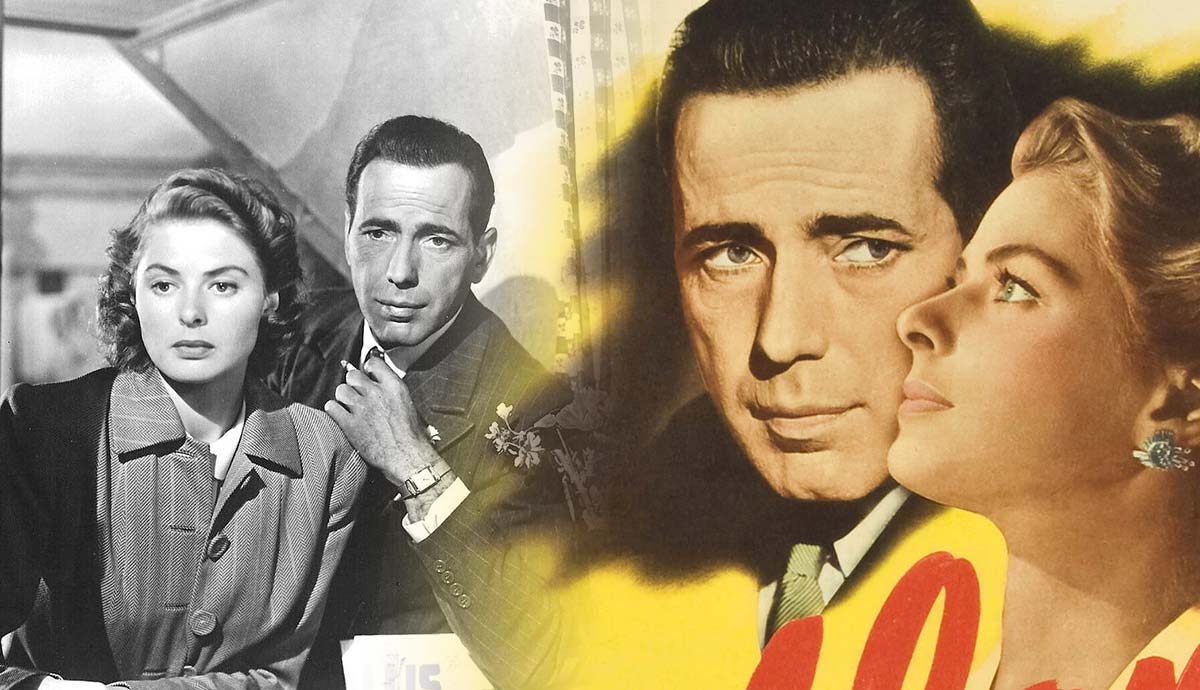
Published: Sep 9, 2026written by Thom Delapa, MA Cinema Studies, MA Social Sciences, BA Liberal Arts
Even filmgoers who have never seen the 1942 Humphrey Bogart/Ingrid Bergman Oscar winner have heard its famous lines quoted in countless spoofs, memes, and homages, both on and off the screen. So the next time you hear “Round up the usual suspects,” or “Of all the gin joints in all the towns in all the world, she walks into mine,” or the infinite variations on “I’m shocked, shocked, to find out that [fill in the blank] is going on here!” you must remember this: They all came from Casablanca.
When it came to production and release timing, Warner Bros. struck gold—and not just Oscar’s gold enamel. Co-written by Murray Burnett and Joan Alison, their 1940 play (Everybody Comes to Rick’s) was snapped up by the studio immediately after the December 7, 1941 Japanese attack on Pearl Harbor. The next day, President Franklin D. Roosevelt asked for—and was granted—a declaration of war against Japan and, within days, its European “Axis” allies Germany and Italy.
Before Pearl Harbor, the U.S. was ostensibly neutral regarding the war already raging in Europe. But with America’s decisive entrance into both the European and Pacific fronts, Warner Bros. launched into action, armed with a 43-year-old supporting actor who had made his name playing heavies in the studio’s bread-and-butter 1930s gangster films. Humphrey Bogart would not only star in Casablanca, but his command performance would win him a first-class new contract, making him Hollywood’s highest-paid actor.
Warners not only played the conquering hero at the 1942-43 Academy Awards (three Oscars including Best Picture), it went home a winner at the box-office, too. In production during the summer of 1942, the film’s late November New York City premiere astoundingly landed almost exactly when U.S. forces (under Gen. George S. Patton) marched into Casablanca following a cease-fire agreed to by the outmanned French “Vichy” army. With Germany’s blitzkrieg defeat of France in 1940, Paris and half the country fell under direct Nazi control, while French officials willing to collaborate with the Nazi occupation ruled the other half. The latter included France’s colonies in North Africa, including Morocco. Several hundred Vichy officials were executed as traitors following the war.
Of course, while the film contains realistic “big picture” elements reflecting the glum wartime context, it is nevertheless popular entertainment, however compelling it was for 1943 audiences, as well as modern ones. A platoon of screenwriters adapted and honed the play, chief among them the Epstein brothers, Julius and Philip, as well as the more politically minded Howard Koch. This type of “assembly line” scripting (with multiple writers working on different drafts in succession) was standard for classic Hollywood and especially in this case since the writers were reworking the script nearly every day of the production. It is a lesser-known trivia fact that the constant re-writes were such that co-star Ingrid Bergman was never sure which man she would romantically end up with until the finale was actually shot.
Against the war’s backdrop, Casablanca’s plot pitches a three-sided romantic battlefield. In one corner is Bogart’s Rick Blaine, a disillusioned American ex-pat who’s fled to the port city to open a swanky bar and night club. In the first years of Hollywood stardom after leaving her native Sweden, Bergman plays Ilsa, Rick’s old flame who arrives in Casablanca with her husband Victor (Paul Henreid), a dedicated Resistance leader on the run from the Nazis. Now cue Rick’s world-weary complaint about how, “of all the gin joints in the world,” one night Ilsa elegantly strolls into his. On the outside wryly looking in is Captain Renault (Claude Rains), the lecherous, easily corrupted Vichy prefect with an eye for young ladies in need. As for the Nazi villain of the piece, Conrad Veidt’s Major Strasser flies