// SPACE.COM — SPAZIO & SCIENZA
June's Strawberry Moon is unlike any other full moon. Here's why
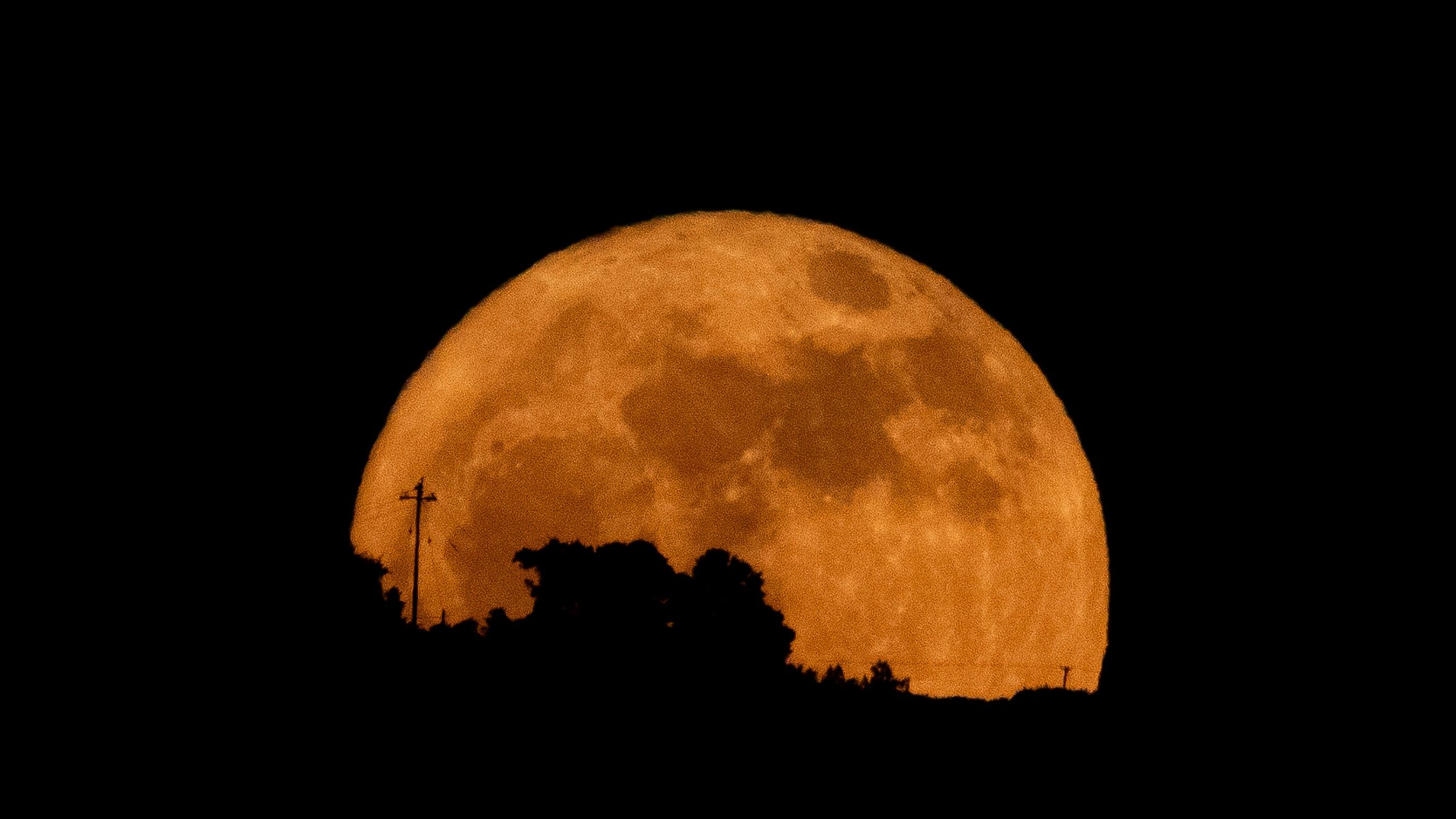
Think all full moons look the same? June's Strawberry Moon rises and sets at extreme points, tracing an unusually low path across the Northern Hemisphere sky.
When you purchase through links on our site, we may earn an affiliate commission. Here’s how it works.
Full moons are overrated and, frankly, a pain. They wash out the stars, ruin deep-sky observing, and they all look the same. Technically, all of that is true. Yet every month — and particularly each June — I find myself standing outside at dusk waiting for the full moon to rise like it's an old friend arriving for an annual visit.
The main attraction of June's Strawberry Moon is that it stays so low, as seen from the Northern Hemisphere. It appears at an extreme southeasterly point on the horizon and rises slowly, almost reluctant to leave the horizon. It doesn't climb sharply upward like a winter full moon. Instead, it drifts sideways through the southern sky, hanging low and heavy in warm evening haze. People who never normally notice the moon suddenly stop and stare — the surefire way of telling that a celestial event has crossed the threshold and become simply an event.
Last year's Strawberry Moon rose absurdly low because it was at a major lunar standstill, the peak of an 18.6-year cycle that changes how extreme the moon's rising and setting positions become. It reached its most southerly moonrise point since 2006, and we won't see another stretch quite like that again until the 2040s. I was at an outdoor concert at the time, and spent much of the set looking in the complete opposite direction from the stage. It just looked so odd rising behind my city in a position I had never seen it rise before. It was like being in an alternate reality. Few around me even noticed.
It won't rise quite as far in the southeast this year, but June's low-hanging moon always feels bigger emotionally, even when you know the moon illusion is mostly a trick of human perception.
You don't need to understand lunar cycles and celestial mechanics to appreciate the Strawberry Moon. You just need clear southeastern and then southern sightlines to watch it hug the horizon. However, I'm going to explain it anyway. The moon doesn't repeat the same apparent path through the sky every month. Its orbit is tilted about five degrees relative to the ecliptic — the apparent path of the sun through the sky — and those tilts combine and shift to create a cycle that repeats every 18.6 years.
Moreover, the full moon always sits opposite the sun in the sky. In June, the sun takes its highest and northernmost path of the year in the Northern Hemisphere. That's why it's summer — the sun is higher, so days last longer and there's more sunlight. The Strawberry Moon does the reverse: it follows the lowest and most southerly path possible. It rises late, well south of due east, follows a shallow arc across the sky and sets early, well south of due west, just like the sun in winter.
Southern Hemisphere observers get the opposite experience. June marks the beginning of winter there, so the Strawberry Moon rises much higher in the sky and appears more northerly. While Northern Hemisphere observers experience the famous "low-hanging fruit" effect, southern observers see a higher, more elevated full moon that remains visible for longer into the night.
That reversal is one of my favorite things to explain to beginners because it instantly makes the sky feel global rather than local.