// TOM'S HARDWARE US — HARDWARE & GADGET
Apple's A20 Pro shatters Geekbench 7 single-core record — 2nm chip beats desktop Intel Core i9 and AMD Ryzen 9 by up to 32%
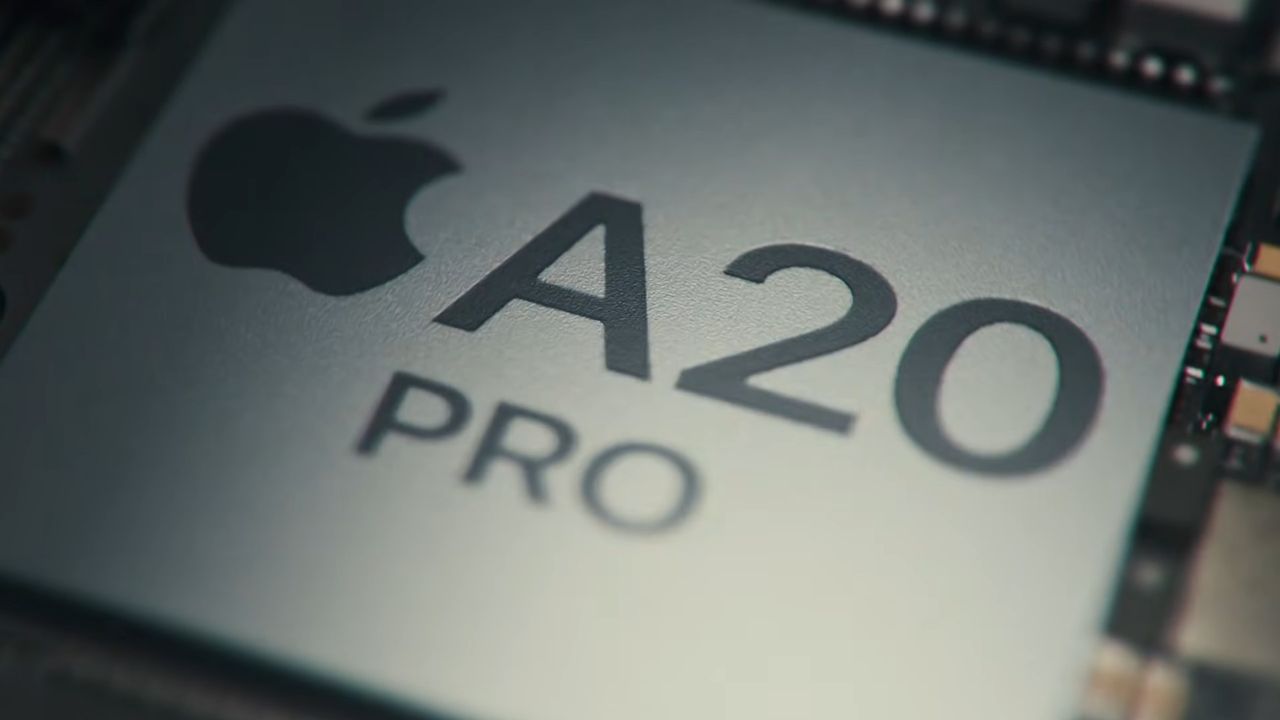
Eats Intel's entry Panther Lake CPUs for breakfast too.
When you purchase through links on our site, we may earn an affiliate commission. Here’s how it works.
Architectural enhancements and significantly higher clock speeds enable Apple's A20 Pro application processor (AP), used in the company's latest iPhones, to deliver not only a substantial generation-to-generation performance boost but also to outperform leading desktop CPUs from AMD and Intel by up to a whopping 32% in the single-thread Geekbench 7 benchmark, setting the record for the highest single-thread performance. While high-end PC CPUs still have more oomph for multi-threaded workloads, the tiny A20 Pro is still faster than mainstream laptop CPUs even when many threads are involved.
Apple's A20 Pro system-on-chip (SoC) delivers 4,006 points in single-thread and 11,460 points in the multi-thread Geekbench 7 benchmark, which represents a 23.3% higher ST performance and 27.1% higher MT performance compared to the immediate predecessor, the Apple A19 Pro, according to an early submission (which may or may not demonstrate performance of actual A20 Pro-based products, so take the results with a grain of salt).
The new SoC delivers the highest generation-over-generation performance improvement for Apple's smartphone processors in years and is currently the highest-performing mobile AP. Furthermore, the A20 Pro beats AMD’s 16-core Ryzen 9 9950X3D by 26% and Intel’s Core i9-14900KS by 32% in single-thread performance.
When it comes to the single-thread Geekbench 7 benchmark, Apple's A20 Pro outperforms its closest rivals — Qualcomm's Snapdragon 8 Elite Gen5 (SM8850) and Xiaomi's XRing O3 — by 31.5% - 33.7%. In fact, both SM8850 and XRing O3 perform on par with Apple's two-years-old A18 Pro. The six-core A20 Pro also beats the eight-core SM8850 by 12.2% in multi-thread workloads in Geekbench 7 and offers roughly similar multi-thread performance to the 10-core XRing O3.
Compared with other flagship smartphone processors, Apple's A20 Pro holds a commanding lead in Geekbench 7. It is 76% faster in single-thread and 48% faster in multi-thread performance than MediaTek's eight-core Dimensity 9400, while it nearly doubles the performance of Google's eight-core Tensor G5, with advantages of 99% and 96%, respectively. But the most striking gap of A20 Pro is with Huawei’s Kirin 9050 Pro: Apple's flagship is 290% faster in single-thread and 139% faster in multi-thread Geekbench 7 workloads.
While Apple's A20 Pro continues to feature 'only' six cores like many generations before it, this time around the processor packs two 'super' desktop-class general-purpose cores running at up to 4.93 GHz, four efficiency cores running at lower clocks, and a memory interface that delivers +50% higher memory bandwidth compared to its predecessor (allegedly using a 96-bit memory I/O).
The architectural enhancements of advanced CPU cores running at nearly 5 GHz, along with a more capable memory subsystem, not only enable a massive generational performance uptick, but also allow the chip to offer unbeatable single-thread performance and massive multi-thread performance that is comparable to that of laptop CPUs, including previous-generation laptop CPUs from Apple.
Get Tom's Hardware's best news and in-depth reviews, straight to your inbox.