// 9TO5GOOGLE — MOBILE & WEB
The iPhone Duo didn’t reinvent Android foldables, but I fear the copycats anyway
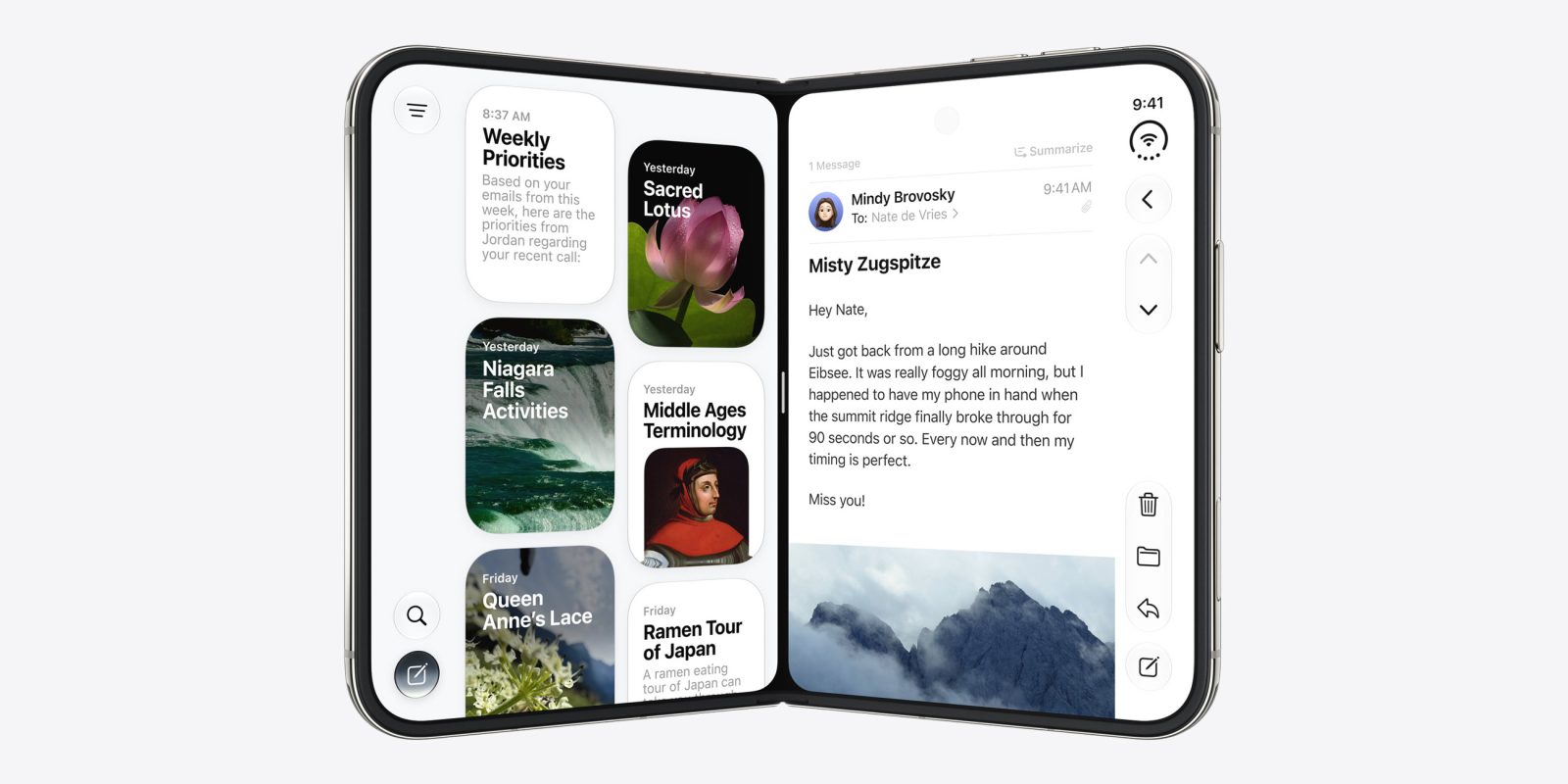
Apple’s first foldable is here and, shocker, it didn’t exactly reinvent the foldable, but the iPhone Duo did get some of the most important aspects right, and will give the Android side of the conversation some things to work on too.
This issue of 9to5Google Weekender is a part of our newsletter that highlights the biggest Google stories with added commentary and more. Sign up here to get Weekender delivered to your inbox every weekend, and catch our weekday roundups too!
Look, I promise we’ll stop talking about the iPhone Duo at some point. We’re not 9to5Mac, but Apple’s first foldable is a big deal for the Android side of the industry too. It’s not every day that an entirely new form factor built up by Android brands gets co-opted by the only real competitor.
And, despite Android’s several-year head start, Apple is immediately putting up a fierce competition with its iPhone Duo.
It’s a polished foldable across the board. A smart design with aspect ratios that should prove useful – and, based on the Fold 8’s popularity, resonate among customers – and a package that seems to deliver on everything it needs to. It’s thicker and heavier than basically every other current Android foldable, but it’s also not so far out of the ordinary as to be uncompetitive. Early reactions have been positive, though I’m certainly curious to see what people think after the typical Apple event psychosis wears off.
But, as good as the Duo looks, I think the biggest thing to walk away with is that Apple is not reinventing the foldable. It’s been speculated for years now that Apple would somehow crack open the formula on how to build a foldable in ways that no Android brand had figured out and, based on what’s been shown off so far, that’s simply not the case.
On the hardware side, Apple doesn’t seem to outdo existing hardware in any particularly meaningful ways. The matte display is the thing that has my attention most, as it seems to lessen even the visual appearance of a crease to essentially nothing – though, without that, I bet it’d be similar to the Galaxy Z Fold 8 and Oppo Find N6. But even that display doesn’t seem flawless, with the glossy dot over the selfie camera immediately catching my attention. Under-display cameras are already a tech that’s been shown to be of dubious worth, and with this visual oddity at play, I’m pretty surprised Apple adopted this one at all.
The software is where even I expected Apple to figure out ideas for a foldable beyond what we’ve seen but, really, there wasn’t much.
Split-screen looks mostly akin to the Pixel Fold, though with the two halves treated as independent by default and allowing you to go to the homescreen to grab another app. That feels very intuitive, even if Android has the same core functionality through its taskbar. The ability to put video windows on top of other apps looks useful and more polished than existing split-screen or picture-in-picture options on Android, but it’s still not exactly groundbreaking.
The most attention-grabbing additions in Apple’s software come from a neat animation that shows up when you open or close the device – almost certainly set to be copied in future software updates on Android devices – and a rethinking of navigation.