// SPACE.COM — SPAZIO & SCIENZA
Is there a hidden 'Planet 9' in our solar system?
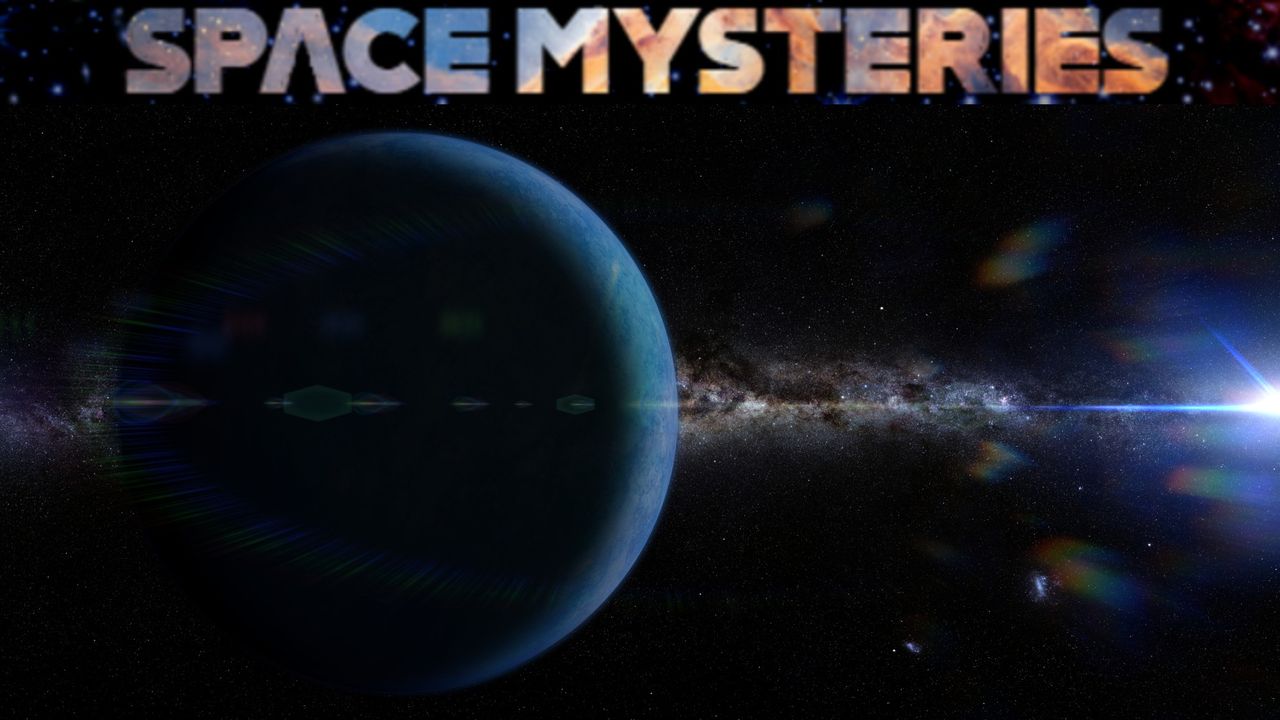
For more than a century, astronomers have been captivated by the idea that an undiscovered planet could be lurking in the furthest reaches of our solar system.
When you purchase through links on our site, we may earn an affiliate commission. Here’s how it works.
For more than a century, astronomers have been captivated by the idea that an undiscovered planet could be lurking in the furthest reaches of our solar system.
The search for this elusive, hypothetical planet has taken many forms over the decades. The discovery of Neptune in 1846 demonstrated that an unseen planet might be inferred from its gravitational effects on other worlds. Based on this, the search for a ninth planet began in earnest, seemingly culminating with the discovery of Pluto by astronomer Clyde W. Tombaugh in 1930.
However, decades later in August 2006, Pluto's long-held planetary status was withdrawn after its formal reclassification as a dwarf planet, launching a debate over the Kuiper Belt object's identity that continues today. Yet beyond the controversy over how Pluto should be classified, the quest to determine whether a hidden ninth planet may exist in our solar system continues — and some astronomers are more confident than ever that its discovery could be imminent.
The story of our solar system's unconfirmed ninth planet takes us back to the early decades of the last century. At that time, astronomers began to suspect that, much like Neptune's discovery based on irregularities in the motion of Uranus, evidence of even more distant planets might begin to surface through similar observations. This prompted American astronomer Percival Lowell to advance the idea that orbital irregularities displayed by both Uranus and Neptune could point to the existence of a distant, unknown planet — one he dubbed "Planet X."
Today, although Lowell's name for this hypothetical planet is sometimes used interchangeably with the idea of a "Planet Nine," the concepts are slightly different. While the early search for Planet X relied on observations of the motion of Uranus and Neptune, new data that included Voyager 2's encounters with those planets in the 1980s helped reveal that their orbital behavior could be explained without the introduction of an unknown ninth planet.
By contrast, modern proponents of the existence of a ninth planet focus their searches further out, looking instead to orbital peculiarities in smaller objects that occupy the distant reaches of the solar system. This approach to solving the Planet Nine mystery was put forward in 2016 by Caltech astronomers Konstantin Batygin and Michael Brown, who argued that an undiscovered planet could account for the odd orbital patterns displayed by several extreme trans-Neptunian objects in the distant solar system.
In 2024, the Caltech team presented additional findings, which specifically focused on long-period, low-inclination objects that are known to traverse Neptune's orbit.
"These objects are dynamically unstable, so the population has to be continuously replenished," Batygin recently told Space in an email. "In our 2024 work, we found that Planet Nine naturally produces the observed population, whereas the model without Planet Nine is strongly inconsistent with the data once observational biases are accounted for."