// KOTAKU — GAMING
Sekiro: No Defeat’s 2-Hour Movie Version Is A Disjointed Disappointment
Activision BlizzardFromSoftwareSekiro: Shadows Die Twice
Sekiro: Shadows Die Twice was an unusual FromSoftware release when it arrived in 2019, as the Dark Souls developer partnered with a Western publisher in Activision for a more action-driven affair than its usual work, leaving medieval fantasy behind for a journey through ancient Japan. Battles played out like samurai clashes in an Akira Kurosawa film, speedy and flashy yet poised. All the while, at the game’s heart sat a traditionally structured story to hook your heart: in a world painted with the blood of death from constant samurai infighting, a one-armed samurai named Wolf protects the heir of the Ashina clan, Kuro, from having his immortal blood used by Genichiro to raise an undead army.
A man with one arm, protecting a young boy whose immortal blood makes him a target for those who wish to make the fighting last forever. It’s a solemn tale seeped in myth that, once news of an anime adaptation was revealed at Gamescom last year, had fans excited by its potential to make the natural jump to this new medium and bring new audiences into this world. That anime is being released in two formats: as a theatrical film, and as an anime series.
Sadly, as a film at least, Sekiro: No Defeat is a muddled mess of an adaptation, feeling both rushed and dragged out as it fails to capture the soul of what made this tale so engaging in the context of FromSoftware’s masterpiece.
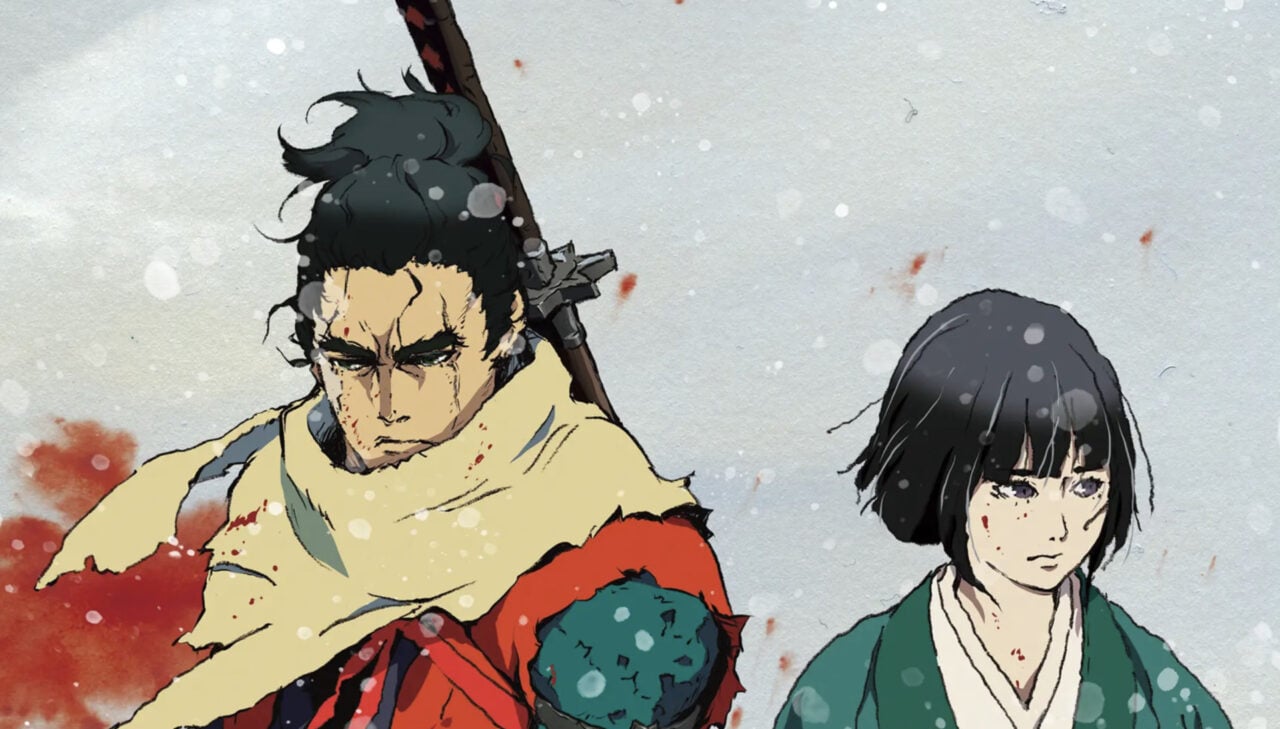
To give this film credit, it does make genuine attempts to be its own distinct take on this world, rather than merely a carbon copy of the original stripped of its interactivity. This is immediately apparent in its visuals, which depart from the grittiness of the game to offer something far more abstract and painterly in style. The film’s washed-out appearance is reminiscent of ukiyo-e and sumi-e art, used by Japanese artists to capture moments and recall memories of the past. In motion, the feeling is one of this tale being told as if it’s a legend that’s been passed down for generations and warped by the passage of time. Often, it’s stunning to look at.
While the anime does tell the same overarching story as the game, this, too, has been amended somewhat in the transition. For any video game seeking to effectively transplant itself into a new medium, it must follow one of three pathways. It must either seek to recapture the feeling of an interactive experience in a non-interactive form (think Takashi Miike’s wonderfully absurd adaptation of Ace Attorney), or it must tell a new story in an already-established universe that can attract old and new audiences (this is where Cyberpunk: Edgerunners thrives). Or, it must reshape and enhance the existing story to feel best-suited to its new medium, altering it as needed for viewing rather than active participation in its world.
This is the path taken by Sekiro: No Defeat. In the game, the bond between Wolf and Kuro is rarely given a chance to breathe beyond the thick of the action, by nature of the medium through which it is told. Spend too much time away from the action or denying the player control for passive storytelling, and the game would feel unfocused and disjointed. The anime, however, has the luxury of spending far more time in these quieter moments. Time which is spent pondering the consequences of Kuro’s ability to grant immortality at the cost of draining that strength from those around him, and how to prevent its abuse.
We spend significant time focused on Kuro and Wolf, with other perspectives on this story culled for narrative focus; after all, this is a two-hour film adapting a game that is many times longer. This compression is where cracks most noticeably form. We get to know a little more about who Wolf and Kuro are beyond the battlefield, but these moments feel like vignettes in a story that’s missing the scenes that would tie them all together. Action takes a backseat, and when it is present, it lacks impact. Battles mostly have a genuine