// NATURE NEWS — SPAZIO & SCIENZA
Daily briefing: How this year’s super El Niño is different
Search author on:
PubMed
Google Scholar
Hello Nature readers, would you like to get this Briefing in your inbox free every day? Sign up here.
This year’s El Niño weather event is forecast to reach unprecedented strength. It’s also the first strong El Niño to form in the eastern (rather than central) Pacific since the late 1990s, when the Earth was cooler. These facts, combined with the climate crisis, make El Niño’s effects hard to predict, experts say. So far, the impacts resemble those of previous strong events, and are far-reaching:
• Drought conditions in Central America have slowed shipping traffic on the Panama Canal.
• The anchovy harvest at a fishery off the coast of Peru, one of the most productive in the world, was cancelled early as fish fled warm waters.
• Tens of millions of people in parts of southern and East Africa are predicted to experience acute food insecurity because of dry weather combined with high prices for fuel and fertilizer.
Read more: The United Nations cultural organization UNESCO has released an online tool for heritage professionals and policymakers to prepare for the impact of El Niño on cultural sites.
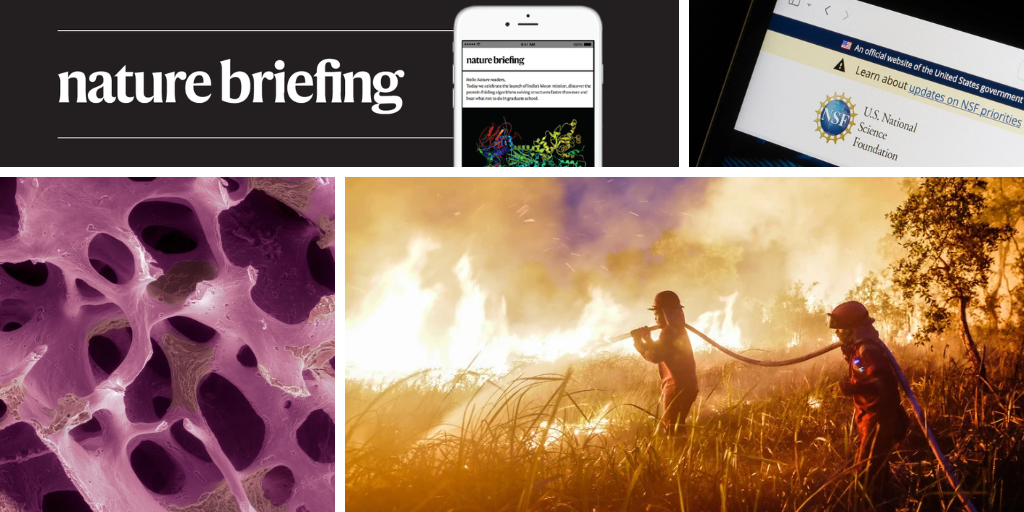
The US National Science Foundation (NSF) is changing how it funds research grants — and how it decides which ones to fund — to better align with the priorities of US President Donald Trump’s administration. An NSF letter describes a shift to a “portfolio-based” approach to making grants that combines traditional “investigator-driven inquiry” with “NSF-directed opportunities”. It doesn’t specify what the opportunities will be. Agency staff who spoke to Nature worry that the changes will lead to further cuts for discovery-focused, curiosity-led research.
The amount by which Mercury appears to have shrunk since it formed — up to 30% more than previously thought. (Space.com | 6 min read)
The results of a small trial hint that a one-time cell therapy could rebuild brittle bones in people with osteoporosis. Ten women with the condition received an infusion of their own bone-marrow cells that had been engineered to better penetrate bone tissue. After the trial, the women experienced far fewer fractures than they had before, but the exact effect of the cell therapy is difficult to pinpoint, say researchers. Participants were taking conventional osteoporosis medication before and during the trial, and it’s unclear how many therapeutic cells reached their target.