// ARS TECHNICA — MOBILE & WEB
Apple takes Epic fight over app store fees to the Supreme Court
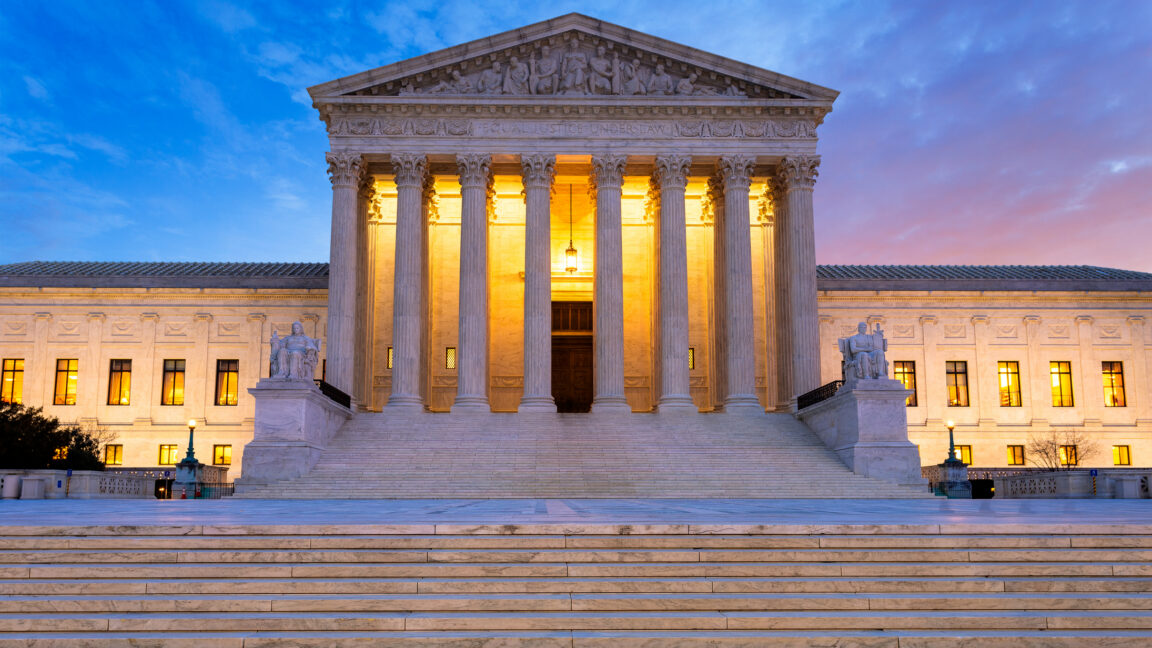
Supreme Court will weigh if Apple contempt finding in Epic case is “erroneous.”
Apple is hoping the Supreme Court will reverse a contempt finding that threatens to block the tech giant from charging high commission fees when developers divert iPhone users to non-Apple payment methods for app purchases.
The contempt finding came in a case where Epic Games accused Apple of violating a judicial order requiring changes to its App Store, which charged a 30 percent commission for using Apple payment methods and did not allow developer links to alternative payment methods.
That order required Apple to allow developers to include links to make payments outside the Apple ecosystem, but Apple did so only after requiring a 27 percent commission for allowing the link-outs. In December, Apple lost an appeal after defending its commission as reasonable. At that time, the 9th Circuit concluded that Apple violated the spirit of the order by charging fees so high that they “had a prohibitive effect” on developers who saw little benefit in updating apps to save only a small amount on fees.
With seemingly nowhere left to turn, Apple petitioned the Supreme Court to intervene in a last-ditch attempt to keep fees at an acceptable rate. In the petition, Apple argued that the 9th Circuit’s “‘spirit’-based approach sharply conflicts with the contempt standard in other circuits,” which only find contempt when companies defy explicit language in a judicial order.
“Apple clearly could not be held in civil contempt in other circuits for charging a commission that is nowhere mentioned in the underlying order,” Apple argued.
On Tuesday, the Supreme Court confirmed that justices would weigh Apple’s question “whether a court may hold a party in civil contempt based on a violation of an injunction’s ‘spirit’ where the injunction is silent as to the conduct upon which contempt is based, as the Ninth Circuit holds; or, instead, whether a court must ground a finding of civil contempt on the violation of an order that clearly and unambiguously proscribes the precise conduct at issue, as other circuits hold.”
For Apple, the stakes are “enormous.” The iPhone maker told the Supreme Court that millions of app purchases could be impacted by the outcome of the case. Also, regulators around the world are waiting to see what commission rate US courts find acceptable, Apple argued. If the “taint” of the contempt finding influences litigation over setting that rate, Apple is concerned that it will never be able to revert the rate in regions outside the US.
“The result is that, even if Apple could appeal whatever commission rate the district court sets on remand, that rate may be practically difficult—if not impossible—to change in the other jurisdictions that are closely monitoring these proceedings,” Apple argued.
As the SCOTUS review was announced, a United Kingdom competition watchdog confirmed that it’s preparing to challenge how Apple and Google set up app stores to block link-outs to alternative payment methods, The Guardian reported. The UK’s Competition and Markets Authority has argued that “consumers and app owners are being let down by Apple and Google restrictions on spending money outside their app stores,” and eliminating or lowering fees to allow more link-outs would “benefit competition,” The Guardian reported.