// HACKER NEWS — CYBERSECURITY
Does Georgism work? Five years later
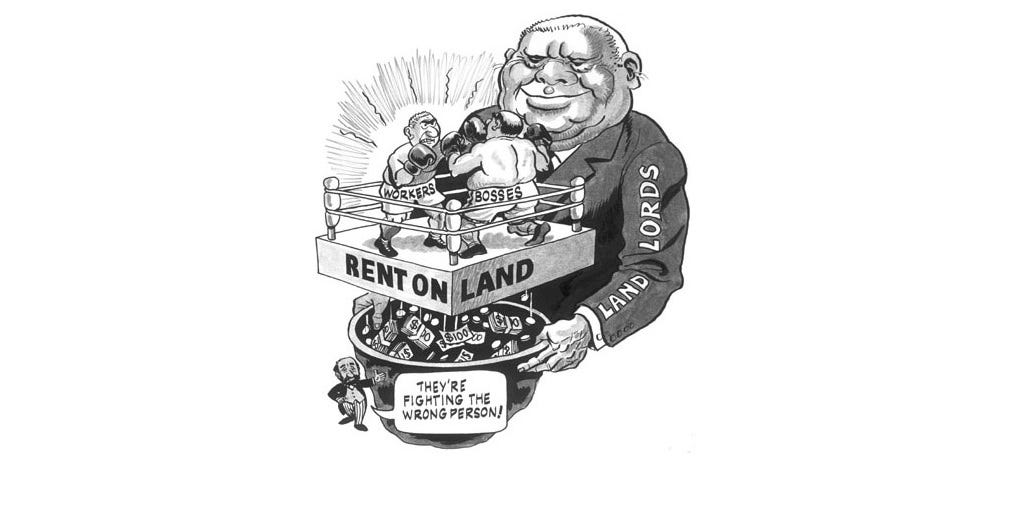
Hi, this is Lars Doucet, author of the book review of Henry George’s Progress and Poverty that won the first ACX book review contest, as well as the three-part follow-up guest post series, “Does Georgism Work?” A lot has happened since then, including land value tax (LVT) enablement laws passing this year in two U.S. states and the election of LVT-friendly national leaders in the UK and South Korea. As for me, I now work full-time for the Center for Land Economics and write for Progress & Poverty substack.
I’d like to reflect on what I wrote five years ago: what I was right about, what I’ve changed my mind on, and what the outlook for LVT is in 2026. But first, here’s a brief summary for those who either have no idea what I’m talking about or just need a refresher.
In 2021, I wrote a book review for ACX on the book Progress and Poverty, the magnum opus of the famed 19th-century economist and populist firebrand Henry George:
If I had to summarize the book in a single sentence I would put it this way: poverty and wealth disparity appear to be perversely linked with progress, The Rent is Too Damn High, and it’s all because of land.
George argues that poverty paradoxically advances alongside progress because, as material conditions improve, landowners can charge more rent for locational benefits they didn’t create. People who earn more than the local average salary (e.g., software engineers) can stay ahead of this trend, whereas those who don’t (teachers and service workers) are priced out of the homes they rent. Eventually, even upper-middle-class families can struggle to afford services like daycare, because daycare businesses must charge more to pay business rent and employee wages. Landlords, rather than daycare owners or workers, collect most of the service price increase parents pay.
Henry George’s remedy is the land value tax, or LVT. In its ideal form, this tax would capture and redistribute the annual rental value of land; that is, the recurring value of the land excluding the value of any buildings or other improvements on top of it. In practice, this looks a lot like a conventional property tax paired with a “universal building exemption.” Notably, George isn’t simply in favor of a land value tax; he’s also opposed to taxes on both labor and capital.
George further proposed the single tax—a policy in which land is taxed at its full annual rental value, and LVT is the only tax.1 Although the feasibility of the “single tax” remains controversial among economists, land value tax itself is surprisingly well accepted by economists left, right, and center as the ideal tax policy, with mainstream criticism mostly centered on practical and political concerns.
After the book review contest results were announced, ACX readers inundated me with questions, which led to the three follow-up posts. After those ran, I reposted all four articles on the standalone site www.gameofrent.com, and later consolidated them into a book, Land is a Big Deal.
Five years ago, LVT was mostly a hypothetical idea people debated on blogs. Today, it has the most legislative momentum it’s seen in decades. Many states introduced bills this year, and Virginia and Kentucky passed land value tax enablement laws in April. These laws allow municipalities to opt into split-rate property taxes, which lower tax rates on buildings and raise them on land. My organization, the Center for Land Economics, maintains a public legislation tracker with an interactive map that makes it easy to keep tabs on these trends.
Virginia and Kentucky were the big winners for the 2026 legislative season, enabling various cities in those states to implement land value taxes. However, even bigger opportunities are coming. In Washington State, my organization is collaborating with the Sightline Institute on an upcoming LVT bill. Meanwhile, in New York, Governor Hochul extended authority for cities to utilize land value capture to fund new transit stops, a tool that can be used