// ARS TECHNICA — HARDWARE & GADGET
NASA inspector general suggests Boeing's Starliner will now be a decade late
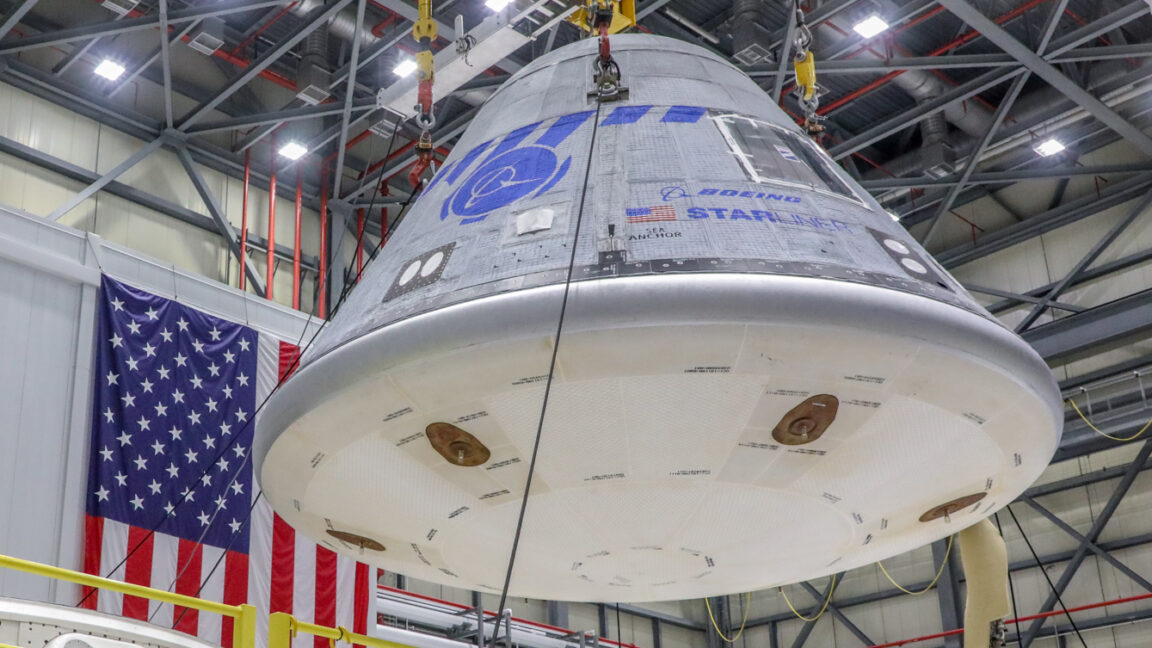
Starliner’s certification may be delayed to 2027, 10 years later than Boeing’s original schedule.
NASA’s inspector general released an audit Tuesday of the agency’s Commercial Crew Program, and it looks increasingly likely that Boeing’s Starliner crew capsule won’t be certified for operational flights to the International Space Station until next year.
That’s just three years before NASA’s official retirement date for the ISS in 2030, though lawmakers in Congress are seeking an extension until 2032. What’s more, declaring Starliner ready for regular crew rotation flights next year would put the Boeing crew capsule a decade behind its original target of 2017.
The inspector general issued six recommendations. NASA officials agreed to all of them. The recommendations include developing a schedule for the next Starliner flight and future crew missions and making sure the schedule is updated to include sufficient time to ensure all of the problems from Starliner’s first test flight with astronauts in 2024 are “resolved and documented.”
In an appendix to the report, NASA officials wrote that they expect to complete these tasks by December 31. The schedule for the launch of the next Starliner mission—now a cargo flight designated Starliner-1—was left unsaid. NASA’s official schedule for missions visiting the ISS indicates the Starliner-1 launch date is “under review.” But the odds of launching Starliner-1 before 2027 look to be diminishing if NASA anticipates it will take until the end of the year to resolve all of the spacecraft’s technical issues and establish a schedule.
Ars has extensively covered Starliner’s technical problems before. Managers reported approximately 100 in-flight anomalies and “observations” on the spacecraft’s Crew Flight Test in 2024, during which Starliner ferried NASA astronauts Butch Wilmore and Suni Williams to the International Space Station for what was supposed to be an eight-day stay.
They ended up staying nine months after NASA determined the capsule was not reliable enough to bring the crew back to Earth. Wilmore and Williams instead returned home on a SpaceX Crew Dragon.
The investigations into most of the anomalies and observations have been closed, according to a briefing by NASA’s Aerospace Safety Advisory Panel on June 22. But the big ones—Starliner’s helium leaks and overheating control thrusters—remain under investigation, said Kent Rominger, a former Space Shuttle commander and member of NASA’s independent safety panel. “Parachute anomalies remain a risk that requires continued monitoring,” the inspector general reported Tuesday.
“These unresolved technical issues were driven by NASA’s and Boeing’s overconfidence in Boeing’s use of heritage systems, an unachievable schedule, and limited flight simulation data,” the inspector general said.
NASA awarded Boeing and SpaceX contracts in 2014 to develop the Starliner and Crew Dragon vehicles to transport astronauts to and from the ISS. At the time, the US space agency relied solely on Russia’s Soyuz vehicle for crew transportation after the retirement of NASA’s Space Shuttle fleet in 2011. Boeing and SpaceX said they expected to begin flying crews to the station for six-month expeditions beginning in 2017. After some delays, NASA certified SpaceX’s Crew Dragon for regular crew rotation missions in 2020.