// PC GAMER — GAMING
Lenovo Legion 5i Gen 10 gaming laptop review
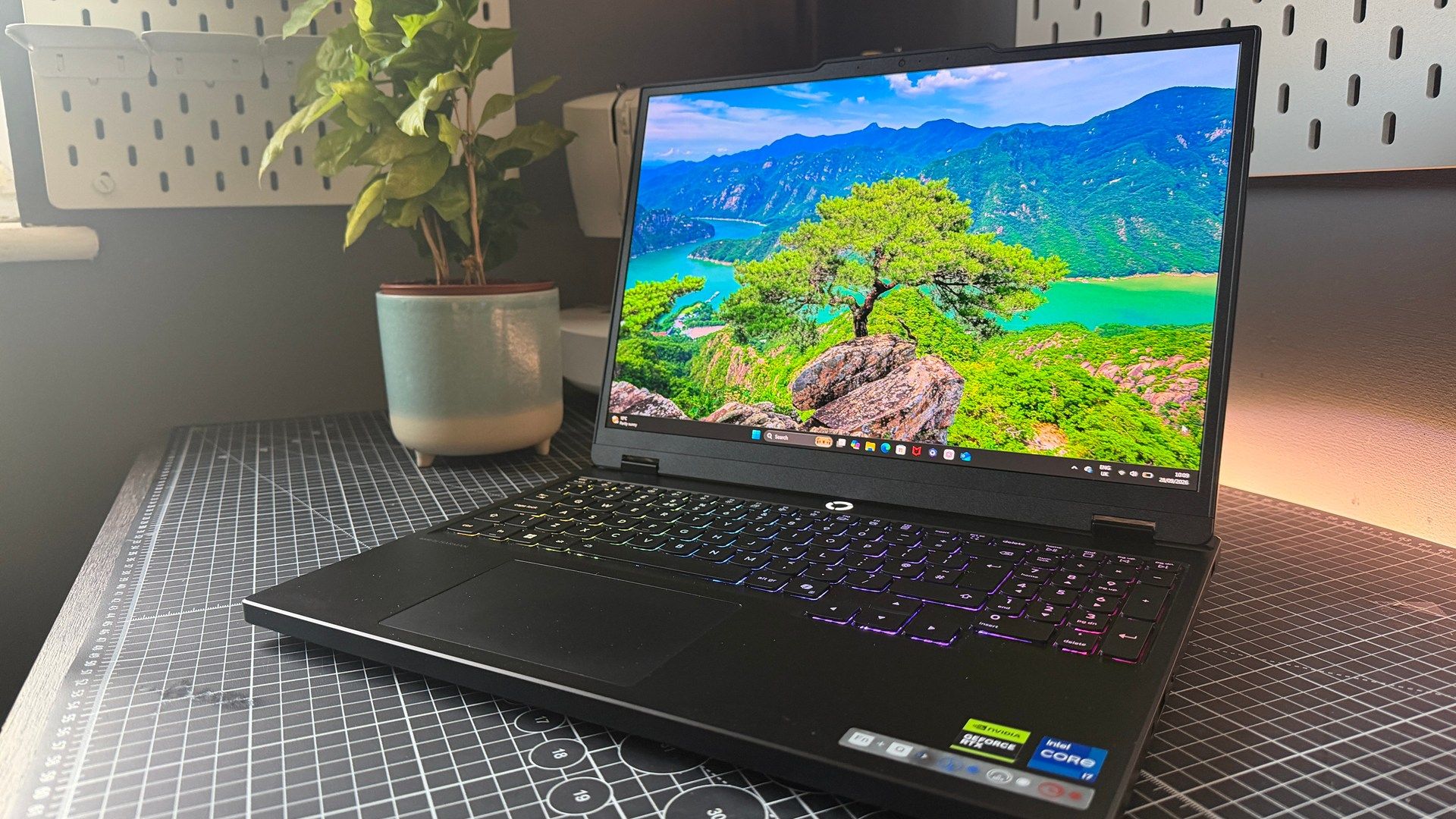
Lenovo's Legion 5 is a curious thing. Its crisp, beautiful OLED display is outstanding. Aesthetically it looks premium and doesn't compromise in the sake of being a "gaming" laptop, and overall performance outside of certain niche scenarios is exemplary. All bound up in a surprisingly affordable price. The biggest and only issue, is the lack of a dual-channel RAM config, from the get go, which, in the tasks that require that extra mem bandwidth, really hurts.
PC Gamer's got your back
Our experienced team dedicates many hours to every review, to really get to the heart of what matters most to you. Find out more about how we evaluate games and hardware.
"I'm sure you'll enjoy reviewing this single-channel Lenovo laptop," Dave joked, as we ended a call discussing the new PC Gamer benchmark database. I laughed, as you do, because it's one of those things that I've written about extensively in recent months, (and moaned at PC Gamer, a lot more about besides), and one I hoped I wouldn't see here today. Because, you know, it's mildly insane. And yet… Here we are. Oh... oh boy.
I'm actually reviewing a slew of mid-range laptops currently. This, the MSI Katana 15 HX, and the Asus TUF Gaming A16. And you know what those other two plucky little lappies have? Well, you've probably already guessed, 2x 8 GB of DDR5, both running at 5,600 MT/s. Not so with Lenovo's Legion 5. This wee beauty comes in with just a single 16 GB stick running at a "rapid" (that's sarcasm) 4,800 MT/s. The gaming equivalent of buying a Porsche 911 GT3 RS, and fitting it with a diesel engine from a 1997 Peugeot 106 (an exaggeration, yes, but I'm just so passionate about RAM channels this feels like an almost personal betrayal to me).
Now the logical assumption here is that, for a gamer, this has minimal impact on the overall result, right? You're not going to see any issue at all, because most of your performance comes from the GPU, and its VRAM doing its job. The likelihood of CPU bottlenecks, particularly at 2560x1600, is fairly muted. In short, doing the tasks that this little laptop was designed to fulfill should be a doddle with or without the extra channel bandwidth. Heck, it might even make it into the best gaming laptop buying guide, Lenovo probably said, (11 years of journalism folks).
And, that's kinda true, but the problem is, that in those moments that the RAM bandwidth bottleneck suddenly becomes a thing. It's a problem. A big bloody problem. And not of the same caliber as your GPU getting a little too hot and clock speed falling off by a couple 100 MHz. As soon as that channel saturates, that Peugeot 106 engine blows a head gasket.
✅ You want a beautiful crisp OLED display on the cheap: Gaming? Tick. An aesthetic delight? Tick. The most beautiful screen you've seen for sub 1.5K? Also tick.
❌ You're likely to play games at high frame rates, or do memory intensive tasks: The lack of a 2x8GB RAM setup is no bueno for anything even mildly bandwidth sensitive.
Lenovo's Legion 5 is a curious thing. Its crisp, beautiful OLED display is outstanding. Aesthetically it looks premium and doesn't compromise in the sake of being a "gaming" laptop, and overall performance outside of certain niche scenarios is exemplary. All bound up in a surprisingly affordable price. The biggest and only issue, is the lack of a dual-channel RAM config, from the get go, which, in the tasks that require that extra mem bandwidth, really hurts.
£1,348 / $1,499 (US model features Core i7-14700HX)