// NATURE NEWS — SPAZIO & SCIENZA
How to mobilize the agile science needed in a crisis
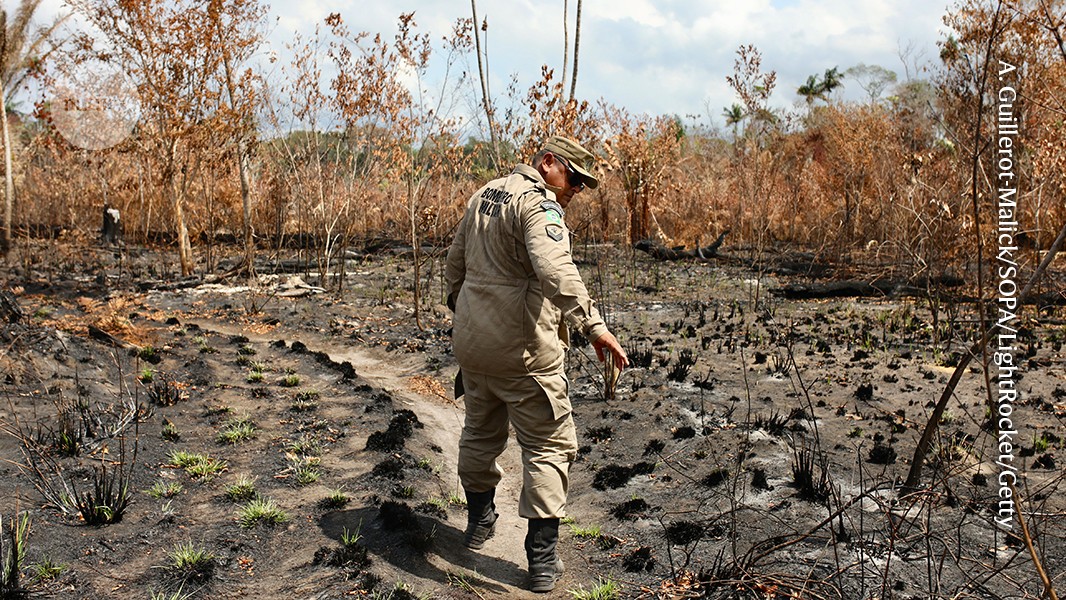
After fires devastated parts of the Amazon rainforest in 2023–24, researchers collaborated with firefighters, Indigenous groups and other stakeholders to produce guidance on how to tackle future blazes.Credit: Apolline Guillerot-Malick/SOPA Images/LightRocket/Getty
Climate change, the COVID-19 pandemic and conflicts have all contributed to current national and global instability. In this age of polycrises, politicians and policymakers often need to make fast decisions. Scientists in academia can struggle when asked for research to support those decisions, often because their institutions are not set up to provide authoritative knowledge for rapid decision-making.
The sprint to solve coronavirus protein structures — and disarm them with drugs
One high-profile exception to this offers a blueprint for how to mobilize and do high-quality research reliably in a crisis. During the COVID-19 pandemic, researchers in academia and industry, working with policymakers, together solved the protein structures of the SARS-CoV-2 virus in record time; conducted fast, randomized controlled trials to test drugs; and quickly developed vaccines that subsequently gained rapid approval.
Now, two initiatives from UK universities revisit questions of how to do high-quality and effective collaborative research equitably, transparently and in a timely way across disciplines. Their findings need to be considered far beyond the United Kingdom. At a time of public mistrust of institutions, they show how universities could become more agile and responsive to the needs of wider society.
In early 2022, environmental scientists at the University of Oxford, UK, asked whether academic research teams could deliver the timely science needed by decision makers while working in partnership with stakeholders, such as those in government, industry, non-profit organizations and local communities. The Oxford team began testing its idea using a series of experimental grants under a research project called the Agile Initiative. The grants would last between 6 and 12 months, with funding provided by the Natural Environment Research Council, part of the country’s main public funder, UK Research and Innovation (UKRI).
The first experiment awarded grants through a business-as-usual approach, with proposals for research topics coming from scientists. A second flipped the model, with decision makers posing questions for researchers to answer. The third was a combination, incorporating what is known as co-creation or co-production: decision makers and researchers collaborated in an iterative process on study design and implementation. The first two approaches resulted in relatively few effective ideas. The third generated strong interest from both groups and produced many good ideas, the Oxford team found (see go.nature.com/4y3zrbw).
In one example from 24 funded projects, researchers, government officials, fire brigades and Indigenous organizations collaborated on a handbook about how to fire-proof the Amazon forest. This came about after the region’s severe fire season of 2023–24, in which a drought fuelled some of the worst fires in two decades (C. Bourgoin et al. Biogeosciences 22, 5247–5256; 2025). The handbook was then distributed by boat along major rivers to hundreds of local fire-fighting teams before the next fire season, which is expected to be fierce because of the current El Niño.
The Agile Initiative also highlighted institutional barriers to research with partners outside academia. This was the subject of a separate, two-year investigation called the Co-Production Futures Inquiry. In response to a call for evidence on the scale of the problem and possible solutions, a team led by researchers at the universities of Liverpool, Manchester and Sheffield reviewed around 100 submissions from more than 90 organizations. Funded by Research England (part of UKRI), the inquiry has now released its findings in a report (see go.nature.com/46tzjep) and discussed them i