// SPACE.COM — SPAZIO & SCIENZA
30 years on, "Independence Day" still proves the versatility of the original "The War of the Worlds"
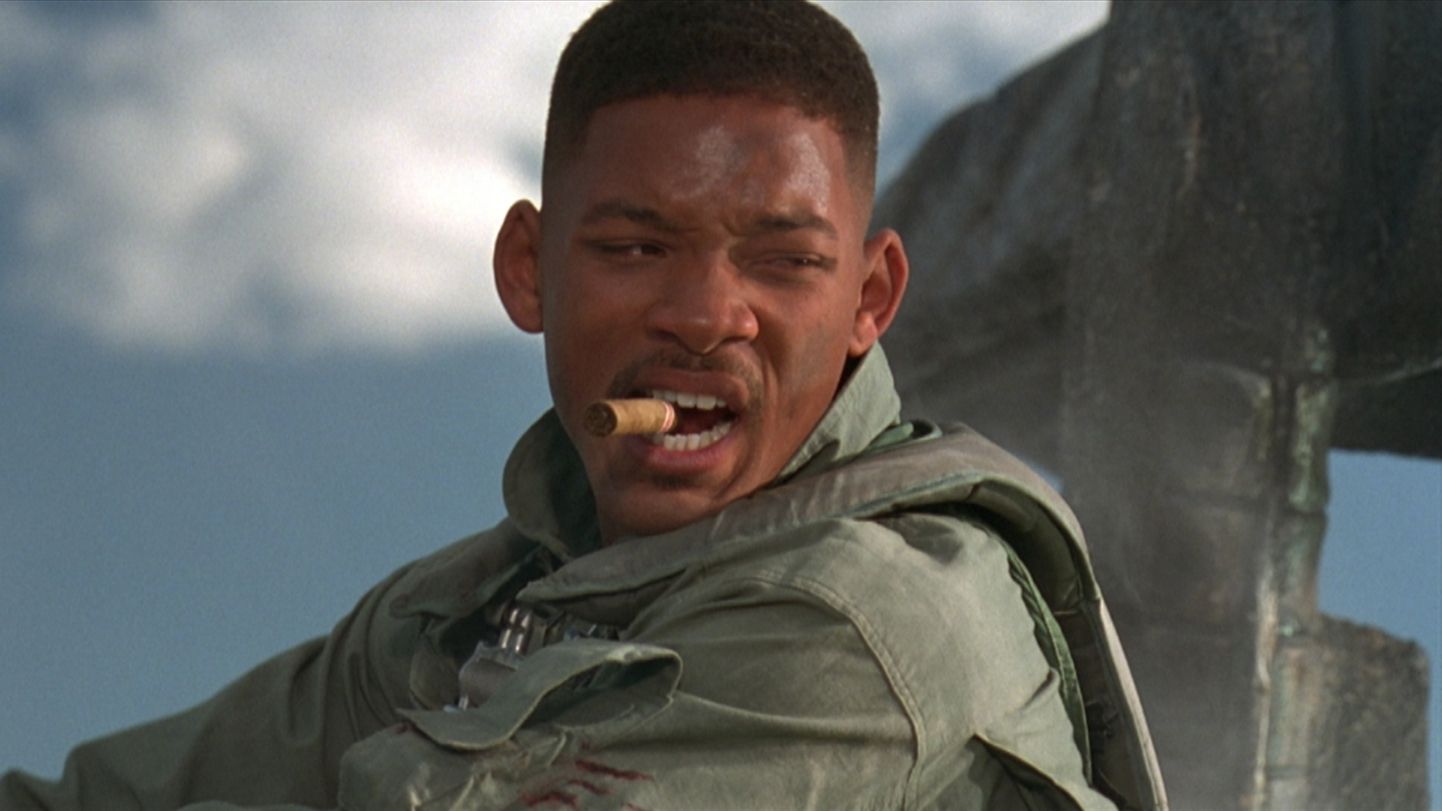
"Independence Day" isn't technically "The War of the Worlds" but it's still one of the most successful adaptations of HG Wells' genre-defining novel.
When you purchase through links on our site, we may earn an affiliate commission. Here’s how it works.
"Independence Day" definitely isn't "The War of the Worlds". The characters are all new, the alien invaders don't come from Mars, and HG Wells sure as hell didn't write about spaceships engaging in "Star Wars"-esque dogfights over Victorian England.
But here's the contradiction. "Independence Day" totally is "The War of the Worlds". It's about Earth being hopelessly outgunned by aliens from outer space and a human resistance fighting back against impossible odds. It also has, more or less, the same ending — the extra-terrestrials' demise by computer virus is a cunning update of the original book's microbial final twist.
Director Roland Emmerich's genius, however, was reinventing Wells' sci-fi classic for the blockbuster age. His aliens had Hollywood in their blood, their entire plan built around delivering the perfect money shot. Let's be honest, there has to be a more practical way of flattening entire cities than blasting famous landmarks with a Death Star-scale super-lasers, but it wouldn't have been quite so popcorn- — or movie poster- — friendly.
Besides, nobody was going to believe that humanity's nemesis hailed from Mars after the Viking landers had sent back photos of a barren, dead world. Reinventing the aliens' origin story — as nomadic, resource-hungry scavengers — just made sense in the cynical '90s.
"The War of the Worlds" is cut from the same cloth as fellow genre pioneers "Frankenstein" and "Dracula" (the latter was, coincidentally, originally published the same year as Wells' alien invasion classic). Each story is so versatile that it can be reimagined again and again to reflect the hopes and fears of any time period. You can change a few names here and there — as "Nosferatu" famously did with Bram Stoker's vampire page-turner — but these plotlines have become archetypes within our collective consciousness.
More than a century later, we still can't get enough. They're also — to use that hoary old sci-fi/fantasy cliché — a brilliant way of pointing a mirror back at the time they were made.
"The War of the Worlds" was less than 40 years old (and still in copyright) when a 20-something Orson Welles turned it into a radio drama in 1938. The cinematic immortality of "Citizen Kane" was still three years away when the Hollywood wunderkind went looking for a story to adapt as a fake newscast for Halloween.
Writer Howard Koch shifted the action from 19th-century London to contemporary New Jersey (coincidentally, also the location of Steven Spielberg's 2005 "War of the Worlds"), and the resulting broadcast became one of the most famous — and definitely most infamous — radio dramas in history. Indeed, it was so far ahead of its time that "Ghostwatch", the BBC's spooky primetime mockumentary, got itself into trouble for a similar, knowingly 'fake news' stunt over half a century later.