// SPACE.COM — SPAZIO & SCIENZA
Could humans someday explore Saturn's moon Titan, or will humanoid robots do it for us?
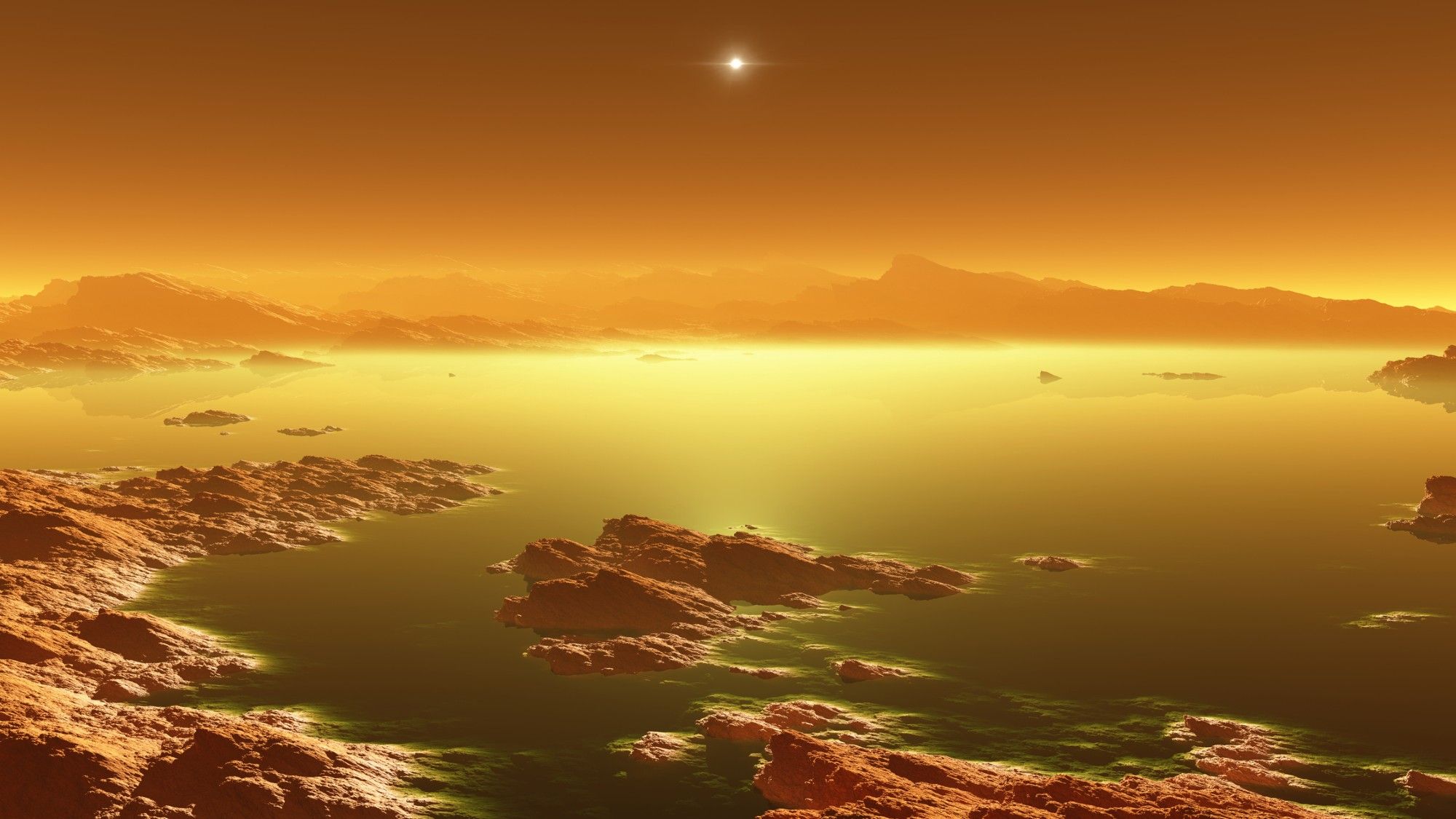
"Ultimately, we think of Titan as the next big leap beyond Mars."
When you purchase through links on our site, we may earn an affiliate commission. Here’s how it works.
BOULDER, Colorado - Humans have been exploring outer space since April 1961 with the pioneering flight of Soviet cosmonaut Yuri Gagarin.
Today, several nations are making new plans to launch human beings back to the moon, then onward to Mars and perhaps beyond. But will that pursuit be short-circuited by the fast-paced merger of artificial intelligence (AI) and advanced humanoid robots?
That proposition was broached during a Humans to Titan Summit, held here June 11-12, a first-time event attended by specialists seeking to send astronauts to Titan, Saturn's largest moon. It is an attractive, attention-getting place in space. Titan comes with a thick atmosphere and is a distinctive world of clouds, rain, rivers, lakes and seas of liquid hydrocarbons like methane and ethane. But will humans ever set foot on Titan, or will AI-powered advanced robots make the voyage instead?
The Humans to Titan Summit was both exciting and futile, said Pascal Lee, chairman of the Mars Institute and a planetary scientist at the SETI Institute. He is also director of the NASA Haughton-Mars Project at NASA Ames Research Center.
"The futile part comes from the fact that humans going to Titan is a longer-term goal in an age where technology is evolving so quickly," Lee told Space.com. "But it has to be done and it's worth doing as it gives us some sense of direction."
Lee's central position is that a human trek to Titan would be decades in the future. No surprise there.
"Meanwhile there's a revolution that's taking place on Earth," he said, the emergence of android robots imbued with AI, innovations that are brewing and maturing relatively quickly.
"Everyone is aspiring to achieve artificial 'general' intelligence. However, we're nearing the moment where AI is no longer narrow and focused on specific tasks to a point where it essentially matches human intelligence.