// NATURE NEWS — SPAZIO & SCIENZA
Gut microbes that trace ancient human journeys
Carina M. Schlebusch is in the Department of Organismal Biology, Uppsala University, SE-752 36 Uppsala, Sweden, and at SciLifeLab, Uppsala, and the Palaeo-Research Institute, University of Johannesburg, Johannesburg, South Africa.
Search author on:
PubMed
Google Scholar
Maja Vukovikj is in the Department of Organismal Biology, Uppsala University, SE-752 36 Uppsala, Sweden.
Search author on:
PubMed
Google Scholar
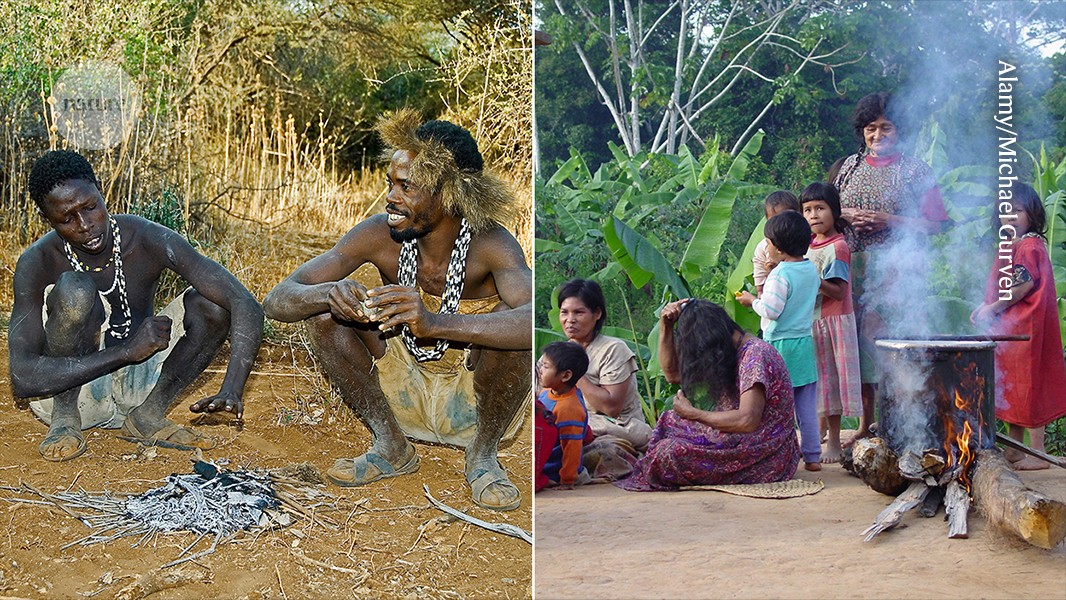
Humans have never travelled alone. When our ancestors spread out of Africa and across the other continents, they carried their microorganisms with them. Writing in Nature, Carter et al.1 compare the community of gut microbes (also known as the microbiota) from the Indigenous Hadza people of Tanzania with that of the Tsimane of Bolivia, whose populations diverged during human migrations that occurred tens of thousands of years ago. The authors report that, despite these dispersals, hundreds of microbial species are present in both groups. Furthermore, genetic differences between strains of the same microbial species in Hadza and Tsimane populations were broadly consistent with the timescale of prehistoric human migrations. Many of these shared microbes are now rare or missing in populations from industrialized regions.
Access Nature and 54 other Nature Portfolio journals
Get Nature+, our best-value online-access subscription
Prices may be subject to local taxes which are calculated during checkout
Carter, M. M. et al. Nature https://doi.org/10.1038/s41586-026-11106-1 (2026).
Article
PubMed
Google Scholar