// NATURE NEWS — SPAZIO & SCIENZA
US proposes $100,000 charge for international students to do post-graduate work
Dan Garisto is a freelance reporter in Syracuse, New York.
Search author on:
PubMed
Google Scholar
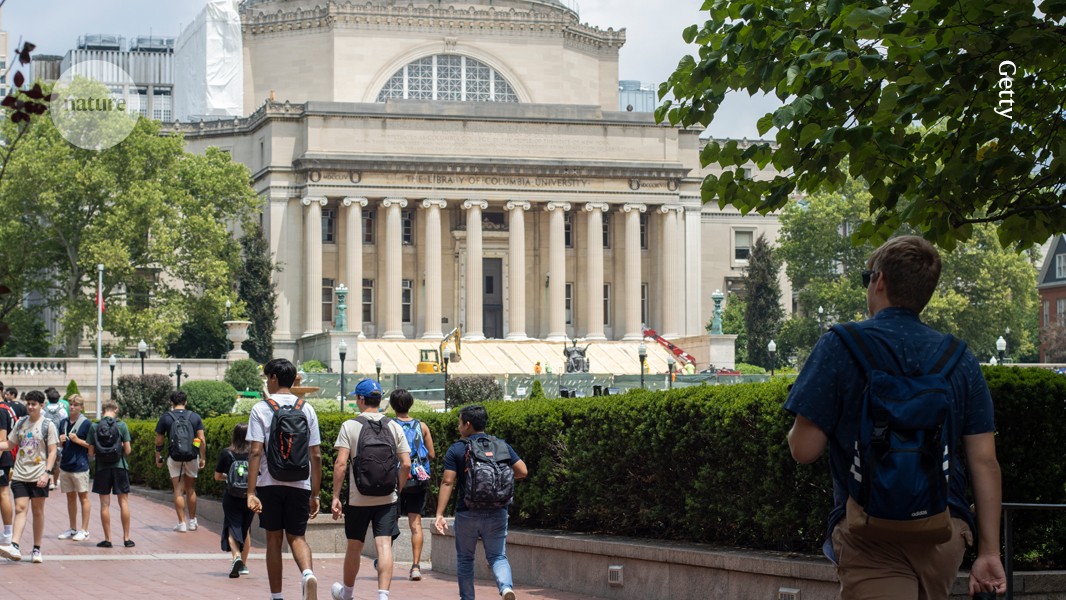
Universities in the United States would have to pay as much as US$100,000 for one of their graduates to work at a US job after their education under a new federal proposal. Credit: Getty
International students in the United States would face a US$100,000 price tag to work a science job in the country after graduation under a proposal made public yesterday by the administration of US President Donald Trump.
The proposed rule would require academic institutions to foot the bill for a work programme called optional practical training (OPT), which allows overseas students to work in the United States for up to 3 years after finishing an undergraduate or graduate degree.
Some 420,000, or roughly one-third, of international students participated in OPT in the 2025–26 academic year, making it the largest pipeline of global talent into the US workforce.
International PhD students to face strict limits on time in the US
The US Department of Homeland Security (DHS), which issued the proposed rule, stated that it is meant to “combat fraud, strengthen the integrity of the immigration system, and protect U.S. workers”. The DHS projected that if the rule were finalized, OPT enrollment would drop by as much as 44% and universities would pay between $8.4 and $16.5 billion annually.
An unpublished analysis of the rule’s effects on OPT enrollment by Michael Clemens, an economist at the Johns Hopkins School of Government & Policy in Washington DC, projects that the number of students who enroll after a bachelor’s degree would be halved, and that enrollment by those with master’s degrees would be virtually eliminated. Clemens also noted that OPT is especially important for international PhD graduates in science, technology, engineering and mathematics (STEM) fields, drawing roughly 70 percent of them in 2022.
The proposed rule is the latest in a series of Trump administration attempts to restrict immigration, which have already limited the country’s ability to recruit scientific talent. In 2025, for example, Trump announced a $100,000 levy on a visa reserved for researchers and other highly skilled foreign workers. As a result, new applications for those visas plummeted by 90%, according to the US Citizenship and Immigration Services.