// ARS TECHNICA — MODA & SOCIETÀ
Judge weighs if Trump can charge $100K for early access to Truth Social posts
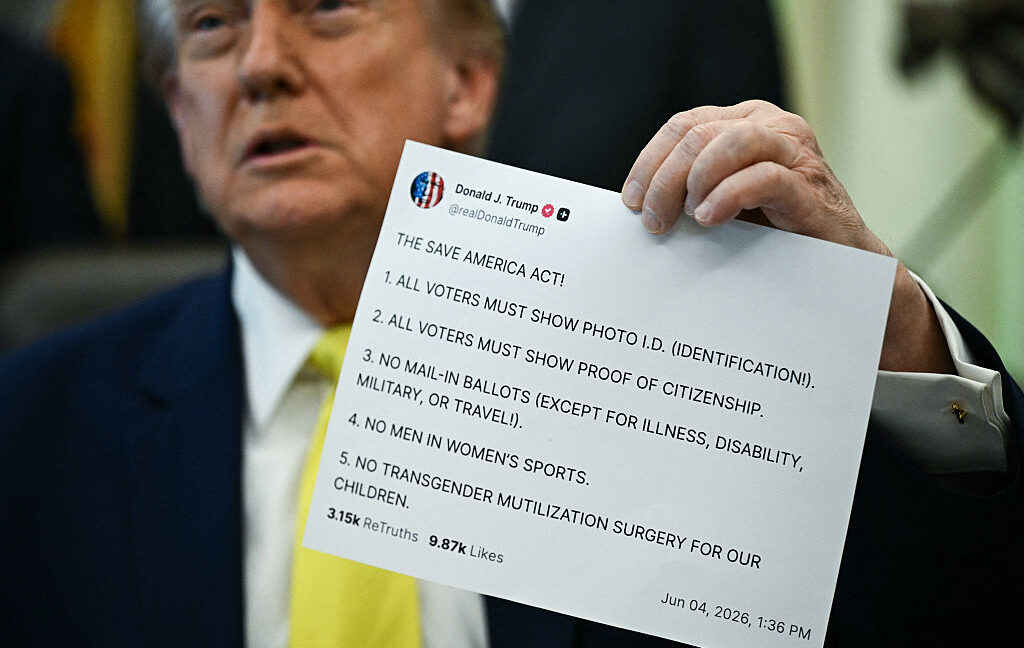
Judge questioned if Trump delaying access to Truth Social posts by a second harms the press.
Likely in the next few weeks, a federal judge will decide if Donald Trump can become the first president to personally profit from selling early access to government information in his social media posts.
At a hearing Wednesday, Department of Justice civil attorney Brantley Mayers argued that there was no conflict whatsoever with Trump charging up to $100,000 monthly for instant API access to Truth Social posts that often break news from his administration.
Trump is the largest stakeholder and majority owner of Trump Media & Technology Group, the parent company that owns Truth Social, and the value of the API access comes largely from Trump’s role as president.
News groups suing have argued that Trump’s exorbitant API fees violate the First Amendment and the Presidential Records Act by creating tiers of access to government information in social media posts that Trump doesn’t technically own. Additionally, Trump’s exorbitant API fees undermine the Fifth Amendment. That prohibits the government from “charging unreasonable sums that cannot be justified to offset the cost of the government benefit, and granting preferential access to crucial government information for arbitrary and irrational reasons,” news groups argued.
However, Mayers likened Trump’s Truth Social posts—which have announced military strikes, ceasefires, tariffs, immigration policies, and major changes in his administration—to Franklin D. Roosevelt’s evening radio addresses known as “fireside chats,” Courthouse News reported. His personal feed acts as an unvarnished public service, not a greedy profit grab, the DOJ argued.
It’s clear, though, that Trump could potentially make $1.2 million per subscriber annually by selling government information that is not Trump’s property. Before Mayers could proceed, US District Judge Paul Oetken “cut him off,” Courthouse News reported.
“Well, President Roosevelt didn’t charge money for his fireside chats, did he?” Oetken asked.
Responding, Mayers suggested that although Roosevelt didn’t charge for his broadcasts, there were similar “barriers to entry” keeping every American from tuning in. Just as some news groups today can’t afford to pay $60,000 to $100,000 for Truth’s API, some Americans in the ‘30s and ‘40s couldn’t afford radios, he argued.
Nikhel Sus, chief counsel for a group representing news plaintiffs called the Citizens for Responsibility and Ethics in Washington (CREW), told Ars that the judge was right to push back on the DOJ’s comparison. During the hearing, the judge acknowledged that the Truth API could be discriminatory by creating “two classes of people,” Courthouse News reported. Sue said that he also clearly recognized the “symbiotic relationship” between Trump and Truth Social.