// SPACE.COM — SPAZIO & SCIENZA
The 'Halloween Fireballs' are coming. Here's what to expect from the Taurids this year
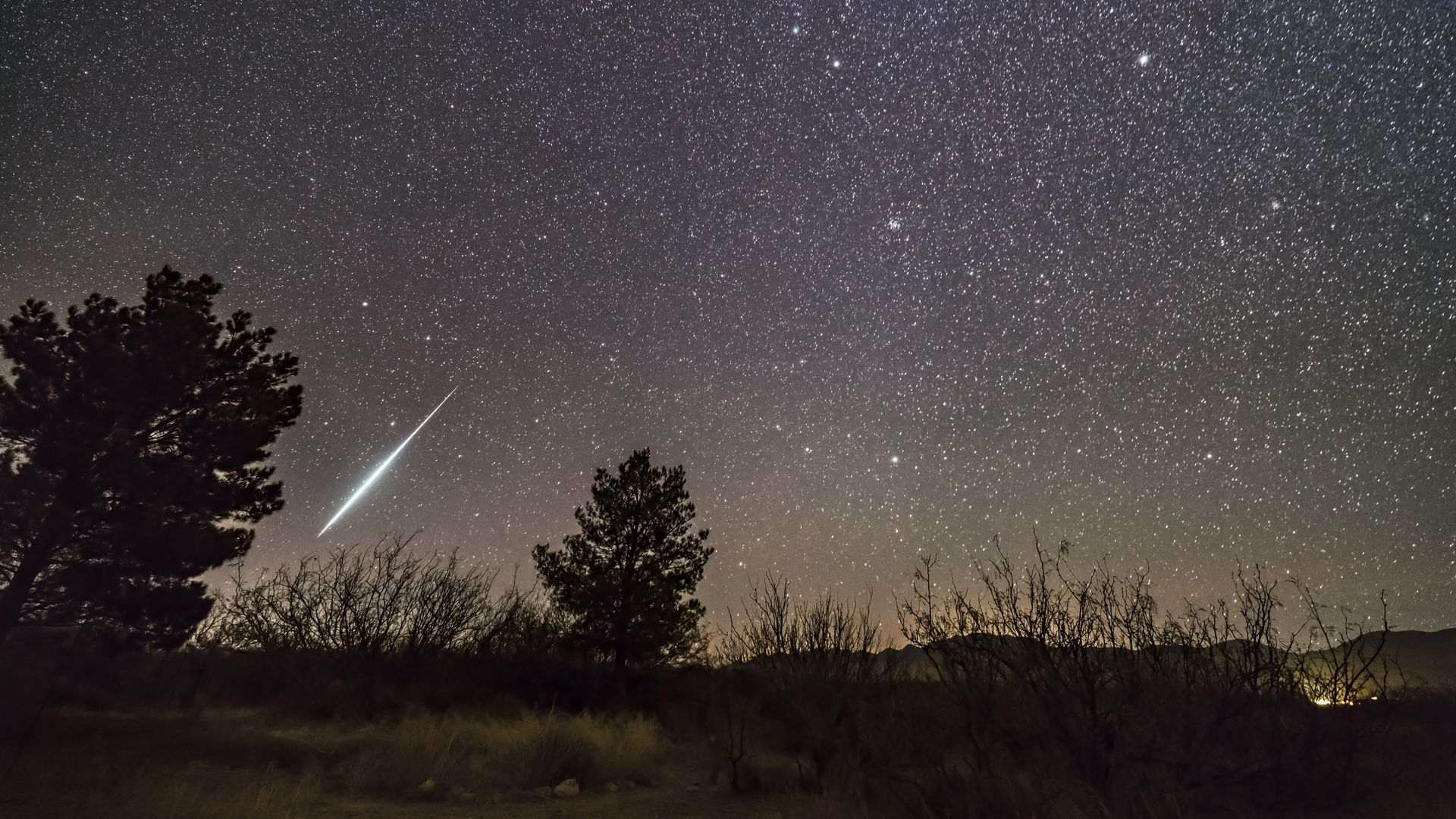
The Southern and Northern Taurid meteor showers will produce occasional bright, slow-moving meteors worldwide during October and November, with moon-free peaks in 2026.
When you purchase through links on our site, we may earn an affiliate commission. Here’s how it works.
They don't produce anything like the torrent of "shooting stars" associated with August's Perseids or December's Geminids, but the Taurid meteor showers have something else going for them — fireballs.
The Taurids are famous for occasionally producing exceptionally bright, slow-moving meteors that can streak dramatically across the night sky from September to December. As a bonus, they're visible from both the Northern and Southern hemispheres. That's because they appear to emanate from the constellation Taurus, which sits close to the ecliptic, the apparent path the sun takes across the sky as Earth orbits around it.
The Taurids are actually two closely related showers — the Southern Taurids and Northern Taurids — whose activity overlaps in late October and November. That's why they're known informally by skywatchers as the "Halloween fireballs." The broad overlapping peaks make the Taurids less about watching on one particular night and more about keeping an eye on the night sky for several weeks. Both have their radiant points — the place in the night sky where their "shooting stars" appear to come from — close to the famous Pleiades (M45) open cluster of stars in the constellation Taurus.
There's another tempting reason to watch the Taurids in 2026 — moonlight will cause little interference around the main peaks.
The Southern Taurids are already underway. According to the American Meteor Society, they're active from Sept. 20 through Nov. 20, with two distinct components. The annual component peaks around Oct. 14, while a component particularly associated with fireballs peaks overnight on Nov. 4-5. That's the night to circle if you're hoping to see one of the "Halloween Fireballs."
However, don't expect a conventional meteor storm. The Southern Taurids have an average zenithal hourly rate of about five meteors per hour. ZHR describes how many meteors an observer could theoretically see under ideal conditions with the shower's radiant directly overhead. In practice, observers see fewer, so this is not a chance to gather friends for a special show, as with the Perseids.
What the Southern Taurids lack in quantity, however, they can make up for in quality. Their meteors strike Earth's atmosphere at about 17 miles (27 kilometers) per second. That's relatively slow for a meteor, helping make some Taurids conspicuous as they travel across the sky. You don't see a Taurid meteor; you watch it.
If clouds allow, conditions should be favorable around Nov. 4-5. The moon will be absent most of the night, rising a couple of hours before dawn as a 17%-illuminated waning crescent — too dim to affect visibility of meteors.