// NASA BREAKING NEWS — SPAZIO & SCIENZA
NASA’s SpaceX CRS-35 Mission to Launch Health Research
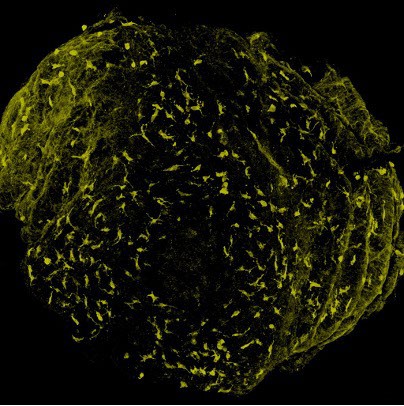
NASA experiments focused on human and plant health and drug-resistant organisms will travel to the International Space Station aboard SpaceX’s 35th Commercial Resupply Services mission for the agency from Cape Canaveral Space Force Station in Florida, advancing research that benefits life on Earth and future exploration.
This research supports astronaut health during long-duration missions through four investigations from the agency’s Biological and Physical Sciences division, including 3D models of the human brain, a crop disease study, a faster way to assess astronaut health, and an analysis of antibiotic-resistant bacteria aboard the space station.
A new precision health investigation helps address a key question: What happens to the human brain in space?
The experiment sends small, lab-grown models of the human brain to the orbiting laboratory for five weeks. Researchers compare tissue models that traveled to space with identical ones kept on Earth to determine how a short spaceflight affects the human brain at the cellular level.
The effort could deepen our understanding of how the human brain responds to stress and help lay the groundwork for methods that counter risks to brain health that astronauts may face on future missions to the Moon and beyond.
A space crops investigation tests whether crop diseases develop faster and more severely in microgravity.
The experiment compares molecular and structural changes between Earth-grown and space station-grown plants infected with a disease-causing fungus. The findings could guide plant breeding on Earth to produce disease-resistant crops and help minimize yield losses in future space agriculture systems.
Space crops provide nutrition, increase dietary variety, and offer psychological benefits for astronauts during extended missions. They also absorb carbon dioxide, produce oxygen, and recycle water, which will become increasingly important as human missions extend farther from Earth.
The spacecraft also carries the first test of a compact microplate reader that arrived aboard the space station earlier this year.
The Commercially Enabled Rapid Space Science initiative experiment tests the device’s ability to detect and measure certain biomarkers such as antibodies, antigens, and proteins.