// SPACE.COM — SPAZIO & SCIENZA
Scientists discover that some of the universe's biggest explosions may have never happened at all
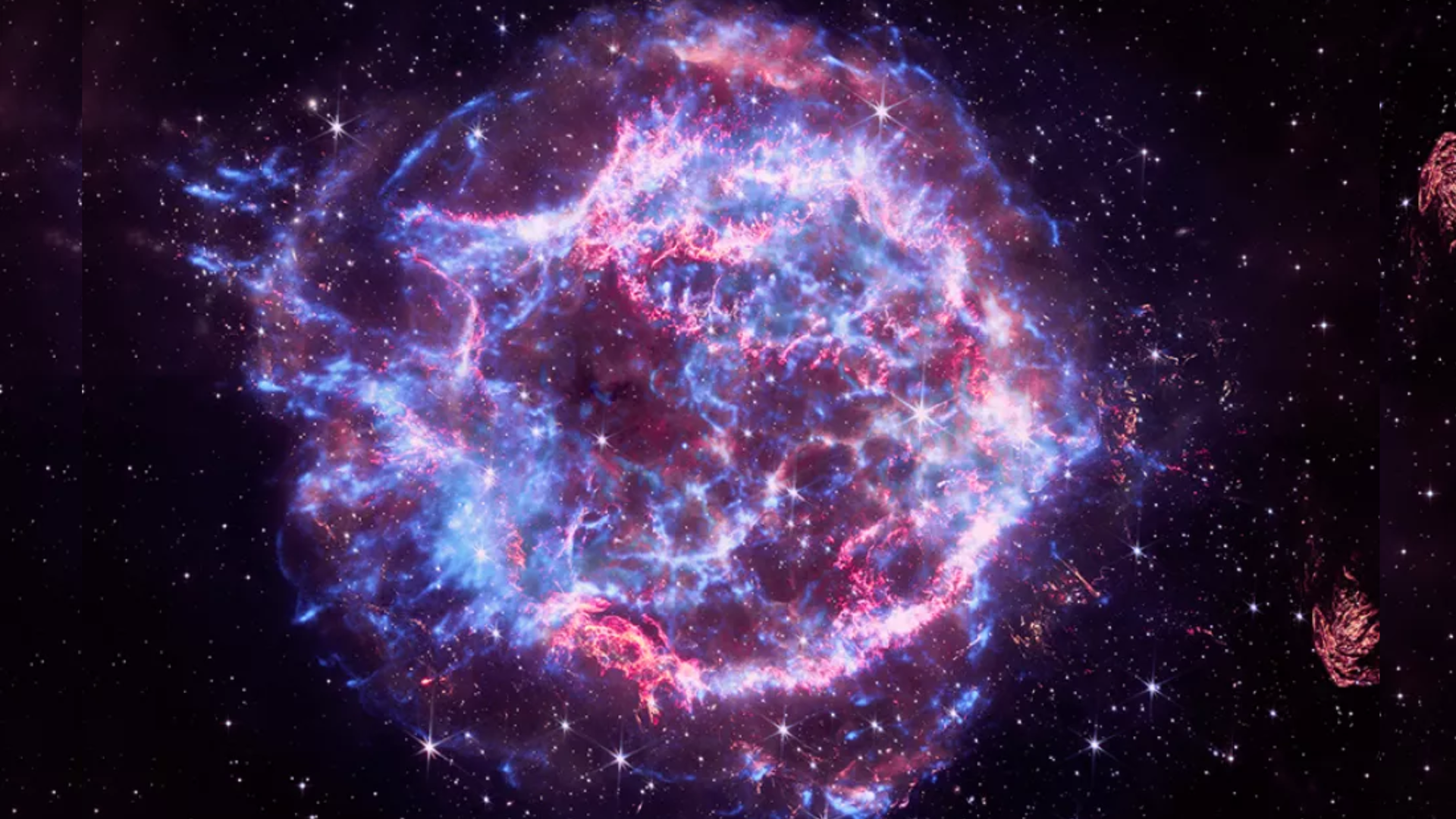
"All the evidence we see for hypernovae is suddenly gone."
When you purchase through links on our site, we may earn an affiliate commission. Here’s how it works.
Now you see them, now you don't. Scientists have discovered that some of the universe's most powerful explosions, hypernovas, may not happen at all.
These explosions, known as hypernovas, were first proposed to explain unusual stars in the halo of our galaxy, the Milky Way, and in a neighboring dwarf galaxy. It was suggested that these stars could only form from the debris of an explosion 10 times more powerful than the 'average' supernovas.
The team behind these new findings suggests that ordinary supernovas could actually account for these stars when the uneven or non-spherical way they fling out matter is considered.
"If we look at a supernova today, the star's materials are not spread evenly. Oxygen might predominantly fly in one direction, sulphur in another. New stars might form from a mix of pieces of the supernova, not its overall mix of elements," team leader Anmol Aggarwal of University College London (UCL) said in a statement. "We developed mathematical models that took account of this and found in all cases that stars with a very unusual mix of ingredients were most likely formed from ordinary supernovas.
"All the evidence we see for hypernovae is suddenly gone."
Supernovas occur when massive stars run out of fuel for nuclear fusion, effectively ending their lives. This results in the star's core collapsing, sending shockwaves rippling through its outer layers, causing explosions we call supernovas.
Hypernovas are proposed to occur in a similar way, but for an even more massive and rapidly spinning star. This results in a vastly more energetic explosion.
When supernovas or hypernovas happen, they fling elements that the dying star has forged throughout its lifetime into their surrounding cosmic environments. These elements eventually become the building blocks of the next generation of stars.