// TOM'S HARDWARE US — HARDWARE & GADGET
Alienware AW3226Q 32-inch 4K OLED gaming monitor review: Sleek design with performance and value to match
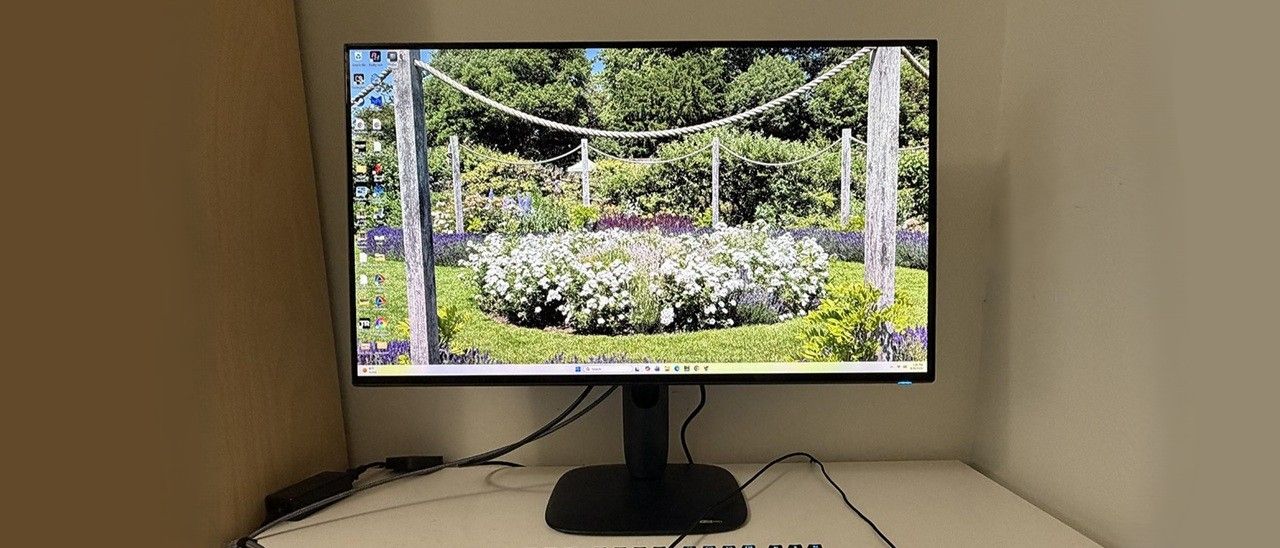
Aside from a lack of practical gamma adjustments, the Alienware AW3226Q delivers a bright, colorful, and razor-sharp image. With solid game performance and even more solid value, it’s an attractive choice.
Missing calibration options requires some compromise
Why you can trust Tom's Hardware
Our expert reviewers spend hours testing and comparing products and services so you can choose the best for you. Find out more about how we test.
Though OLEDs remain a premium gaming monitor category, there is no denying that they make up a large share of new model introductions. Looking over my reviews for the past two years, they represent just over half of the screens that have crossed my test bench. Prices are trickling down, and one company trying to make the best OLED gaming monitors more affordable is Alienware. Though it has plenty of high-end displays available, the newest models are aimed at more modest budgets.
The latest example is one that would have been a flagship not too long ago. The AW3226Q is a 32-inch 4K flat OLED with Tandem Stripe RGB technology, 165 Hz, Adaptive-Sync, HDR400 True Black, Dolby Vision, and wide gamut color. Let’s take a look.
Tandem RGB Stripe is the newest OLED variant, and it can be found in the AW3226Q as well as several new screens from Asus. I propose to simply call it TRS-OLED in this review. It takes the approach of stacking emissive layers to provide more light with less power consumption. It also broadens the color gamut to over 100% coverage of DCI-P3. In Alienware’s case, it’s four emissive layers behind an RGB sub-pixel layer that acts as a polarizer. By putting the pixels next to each other, hence the Stripe, rather than the triangular arrangement of QD-OLEDs, you get a wide color gamut and high brightness with sharper detail and no chance of fringing.
The AW3226Q produces 1,000 nits from a 3% window in HDR mode and around 275 nits full field as I measured it. The polarizing layer makes blacks more true by keeping ambient reflections from spoiling the image. Color volume came in at 101% of DCI-P3, which is more than a typical OLED, although a bit less than one equipped with Quantum Dots. And power consumption is low, with just 34 watts drawn at 200 nits brightness. HDR10 and Dolby Vision are supported, with a VESA DisplayHDR 400 True Black certification that I verified in testing.
Gamers benefit from the AW3226Q’s 165 Hz refresh rate that works with Adaptive-Sync to produce smooth motion processing. Like all speedy OLEDs, input lag is low and, in my tests, it managed to beat one 240 Hz screen that costs a good deal more. You also get AlienVision, which is a super cool aiming point and sniper mode editor that is unique to Alienware displays.
The AW3226Q is attractively styled and well-appointed with USB ports, a bit of LED lighting, and a solid stand with full ergonomics. It includes a DisplayPort 1.4 input and two HDMI 2.1 ports with FRL (48Gbps) and eARC, making it easy to integrate the monitor with soundbars or AV systems that also support HDMI eARC. There are no internal speakers, but you do get a 3.5mm headphone jack. Also included are USB ports: two Type-A, one Type-B, and one Type-C.
The AW3226Q is a decent value at its opening price of $699. That’s a significant discount over the $1,000 you’ll spend on an AW3225QF, which only has minor differences.