// 9TO5MAC — MOBILE & WEB
Here’s the difference the variable aperture of the iPhone 18 Pro makes at night
I previously tested the difference the wider aperture of the iPhone 18 Pro makes when it comes to depth of field. The executive summary is that the difference is small, but definitely present.
I said at the time that I’d intended to test the difference it made to Night mode shots when an unmissable night video opportunity had me write about that instead. So belatedly, let me turn my attention to Night mode photos …
Once the ship had passed through the bridge, I stuck around to return to plan A: testing Night mode still photos. The new variable aperture lens offers two complementary advantages for night photography: allowing us to either increase or reduce the shutter speed depending on the effect we’re looking for.
The widest aperture is boosted from f/1.8 to f/1.48. The wider the aperture, the more light captured for any given period of time. That should mean that Night mode shots have a shorter duration, meaning we don’t have to hold the phone still for quite so long. The shorter the duration, the lower the chances that inadvertent movement will spoil the shot.
I tested this with a number of shots and found that while the difference in duration was indeed rather small, as we’d expect from less than one stop of extra light, it may be enough to help in some circumstances.
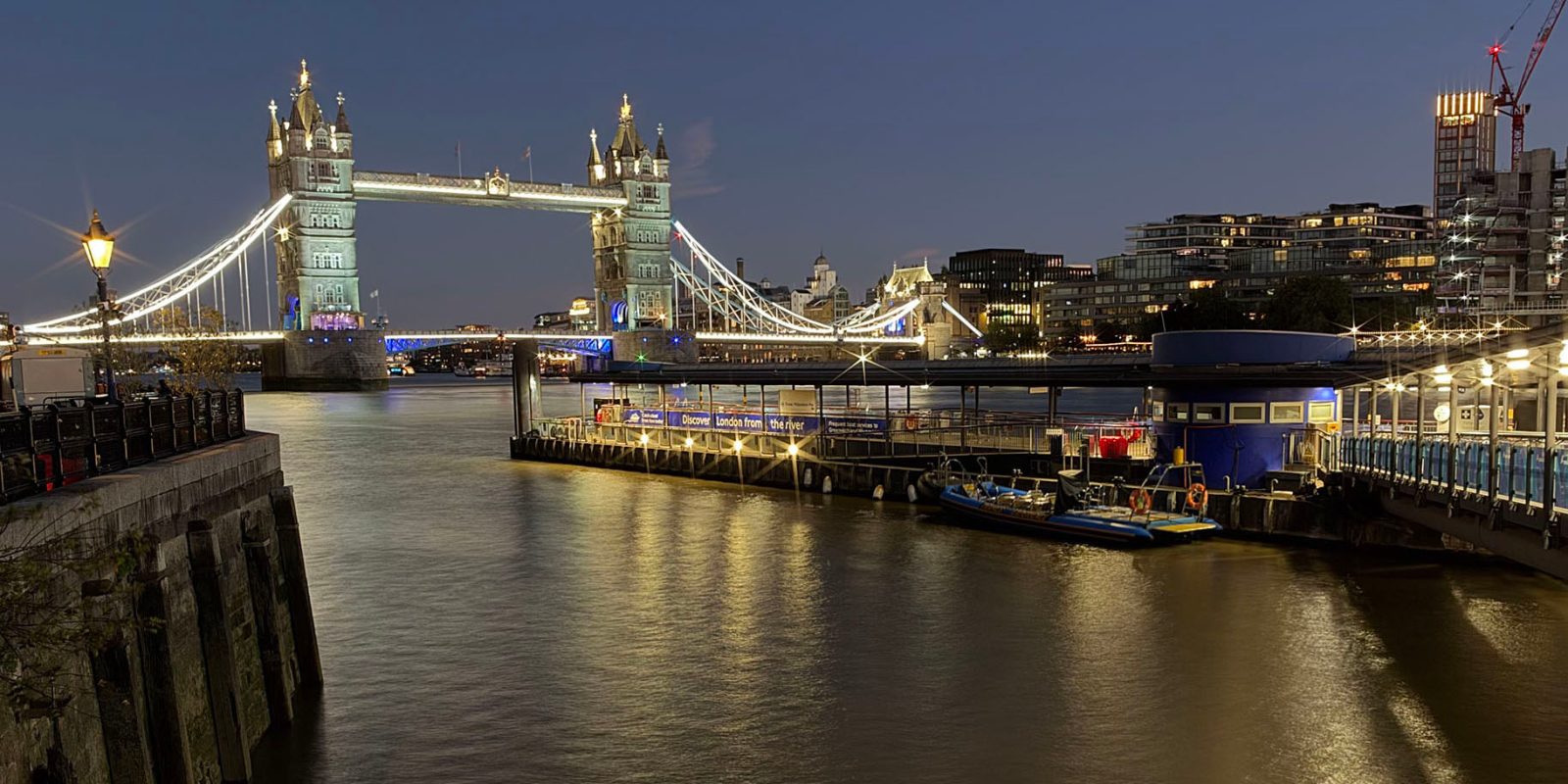
For example, for this shot, switching from f/1.8 to f/1.48 reduced the duration from 2.1 seconds to 1.7 seconds.
Other test shots showed similar results. The biggest differences are likely to be in the darkest of environments, like astrophotography. However, living in London, this is about as dark as it ever gets, and we never get to see stars, so that wasn’t something I could test.
Conversely, there may be times when we actually want a slower shutter speed. For example, having the shutter open for a longer period helps to smooth out choppy water, which can give a more pleasing appearance.
By manually reducing the aperture to the maximum of f/4 (a larger number is a smaller aperture), I was able to increase the exposure time to 4 seconds. This did indeed help give the water a smoother appearance.
This helps significantly with reflections on the water. For example, check out the reflections of the four spotlights on the floating pontoon under the Discover London from the Water sign, and compare this with the shot above.