// NASA BREAKING NEWS — SPAZIO & SCIENZA
NASA Improves Shock, Vibration Analysis
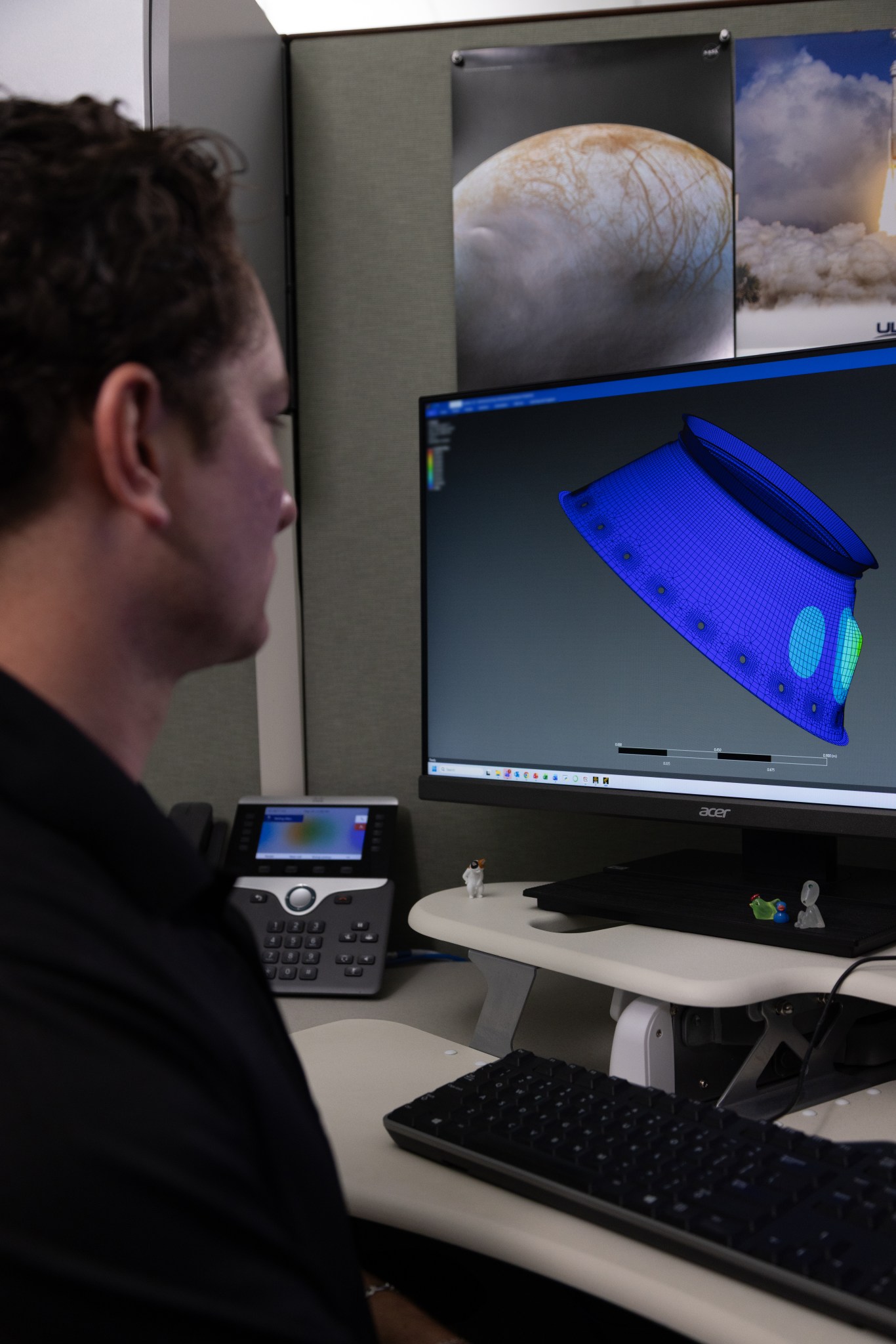
Rockets vibrate, shake, and flex intensely as they climb into space, and spacecraft packed with delicate scientific instruments must survive those forces. Before any rocket leaves the ground, NASA engineers work to predict how those stresses will affect every part of a spacecraft.
To do that, engineers in the Dynamic Environments Group with NASA’s Launch Services Program Office at the agency’s Kennedy Space Center in Florida have streamlined how they ensure spacecraft and rockets can withstand harsh vibration, shock, stress, or other physical forces, strengthening mission safety in the process.
Using a commercial digital software tool in a new way, the engineers developed a standardized modeling workflow for finite element modeling to strengthen shock and vibration analysis and ensure hardware is prepared for the extreme environments of launch and ascent.
“This computer-based method helps predict how rockets and spacecraft behave under extreme conditions before hardware is built and helps identify weak spots and potential failure risks early so the team can address the findings,” said Brian Beaver, chief of the Flight Analysis Division with the Launch Services Program Office at NASA Kennedy.
The team recently used the software for the first time while certifying a commercial launch provider’s rocket selected for a NASA mission. The commercial partner provided vibration testing but not shock testing. The Dynamic Environments Group determined shock testing was needed and used a template the group created to run what-if comparisons, visualize structural behavior, and answer complex questions that would have required extensive manual modeling in the past. The team verified the company’s testing results for flight environments, and the analysis provided new insights addressing shock during transport.
“We are using a tool that’s existed for decades, but it’s not normally used by the dynamic environments disciplines,” said Alex Hardt, aerospace engineer with the Launch Services Program Office at NASA Kennedy. “But we’re changing that. We’re using it in a relatively new area of dynamics.”
Although rockets and spacecraft are designed to absorb shocks and vibrations, those forces can cause wear and tear or potentially flight failures, especially during launch and ascent.
“We define how severe the random vibration levels and shock levels are, and then we verify that all the parts going on future rockets have been tested to those levels, maximizing their longevity,” Hardt said.
For decades, engineers have estimated shock and vibration environments using rules of thumb or by scaling previous data to estimate how each rocket component or spacecraft equipment would be impacted once assembled and flown. The approach worked, but relied heavily on engineering judgment and simple approximations drawn from past missions.
Because most dynamic environments engineers use finite element modeling tools infrequently, they often need to re-learn complex workflows. The software replaces older tools and provides a standard template that guides engineers more quickly and thoroughly through vibration profiles and shock conditions.