// KOTAKU — GAMING
So What Are We Supposed To Take Away From You Can See Everything?
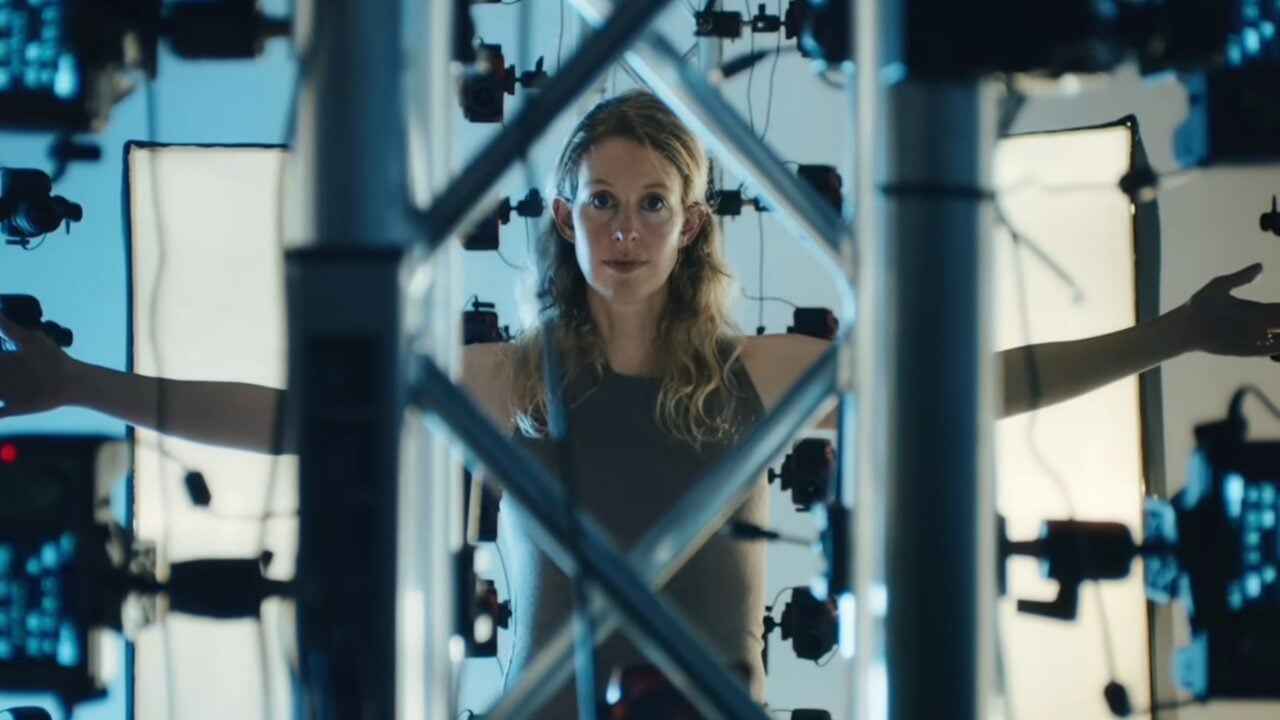
So, You Can See Everything, huh? A few of us here at Kotaku saw Nathan Fielder’s documentary about Elizabeth Holmes, the founder of Theranos, a health tech company that was shut down after Holmes was convicted of defrauding investors in 2018. The basis of the accusations was that the company’s signature device, which Theranos claimed could accurately conduct a vast assortment of blood tests on a single drop of blood, didn’t work as investors were led to believe. The film documents her final weeks with her partner and children before having to surrender herself into federal custody in Bryan, Texas.
Kenneth Shepard: And that’s only half of the Everything we See in this movie. So Ash, before we get into all there is to unpack, tell me, what was your knowledge of both Holmes and of Fielder’s work leading up to seeing this movie?
Ash Parrish: So most of my initial exposure to Nathan Fielder had been against my will. My first run-in with his work was the first season of his HBO show The Rehearsal where I felt for him both kinship and revulsion. I was fascinated and amused by the Inception-like depth to which he would pursue a subject and the results that would produce in his human guinea pigs. I’ve been hooked ever since. Less so, though, with Nathan for You which I have only seen bits and pieces of because my husband thinks it’s fucking hilarious. That show makes me want to crawl out of my flesh. Far less endearing than The Rehearsal.
As for Elizabeth Holmes, I think I saw some of the initial documentaries that had come out about her after her legal convictions but that was it. I didn’t see and didn’t care about The Dropout. But I knew her in broad strokes.
I think what lit my brain on fire with You Can See Everything is I know Fielder can get weird, and that the weirder he gets, the more human a story emerges, either from his subjects or himself (I’m thinking of the time he got a pilot’s license in the purest distillation of commitment to the bit). I wanted to see him work his eldritch neurodivergent truth powers on her to see what shakes out and HO BOY.
KS: I have avoided a lot of Fielder’s work because secondhand embarrassment makes me viscerally uncomfortable in a way that my therapist and I have had many conversations about. I watched the first episode of The Rehearsal and was like, “Oh, if it’s only going to get worse from here I have to tap out.”
For Holmes, I had only vague recollections of what happened with her and Theranos when the trailers came out because that was absolutely something outside of my orbit. I think I saw those stories coming out and kind of thought, “Ah, an American medical company being deceitful. For me, it was Tuesday.” Never watched The Dropout or really thought much about her again, to the point where when I first saw the You Can See Everything trailer I didn’t immediately recognize her. However, that trailer with Nathan and Elizabeth being inches away from each other’s face and he’s straight up asking her if she’s being deceitful sent chills down my spine.
I think anyone who has ever dealt with a narcissist or pathological liar has had a conversation like that, where they’re looking someone in the eye who, whether they truly internally believe it or not, is so committed to the “truth” they’re trying to put out that it’s almost unnerving. I was immediately brought back to a conversation I had in a coffee shop with an ex of mine in college who was very obviously lying to me, and he had to have known that I knew he was lying because I had literally laid out the facts of a situation in a way he could not feasibly debunk, and yet he dug his heels in, and I had that same expression Fielder has in the trailer of just pure annoyed disbelief, and I straight up just said “Why are you doing this?” Like, why are you committing so hard to this when the facts of the matter are laid out here. And so from this scene alone of two people where the dynamic seemed to be one person caught in dishonesty and anoth