// TOM'S HARDWARE US — HARDWARE & GADGET
Iran threatens to attack undersea cables in the Strait of Hormuz, calls them 'legitimate new targets' in future conflict
When you purchase through links on our site, we may earn an affiliate commission. Here’s how it works.
The Islamic Republic of Iran has described several undersea fiber cables that run through the Strait of Hormuz as "legitimate new targets." The area has become a hotbed of conflict since the start of military action by the United States, Israel and others in February. General Hossein Mohebbi, a spokesman for Iran's Islamic Revolutionary Guard Corps, referred to the cables in comments at an event this week, The Telegraph reports.
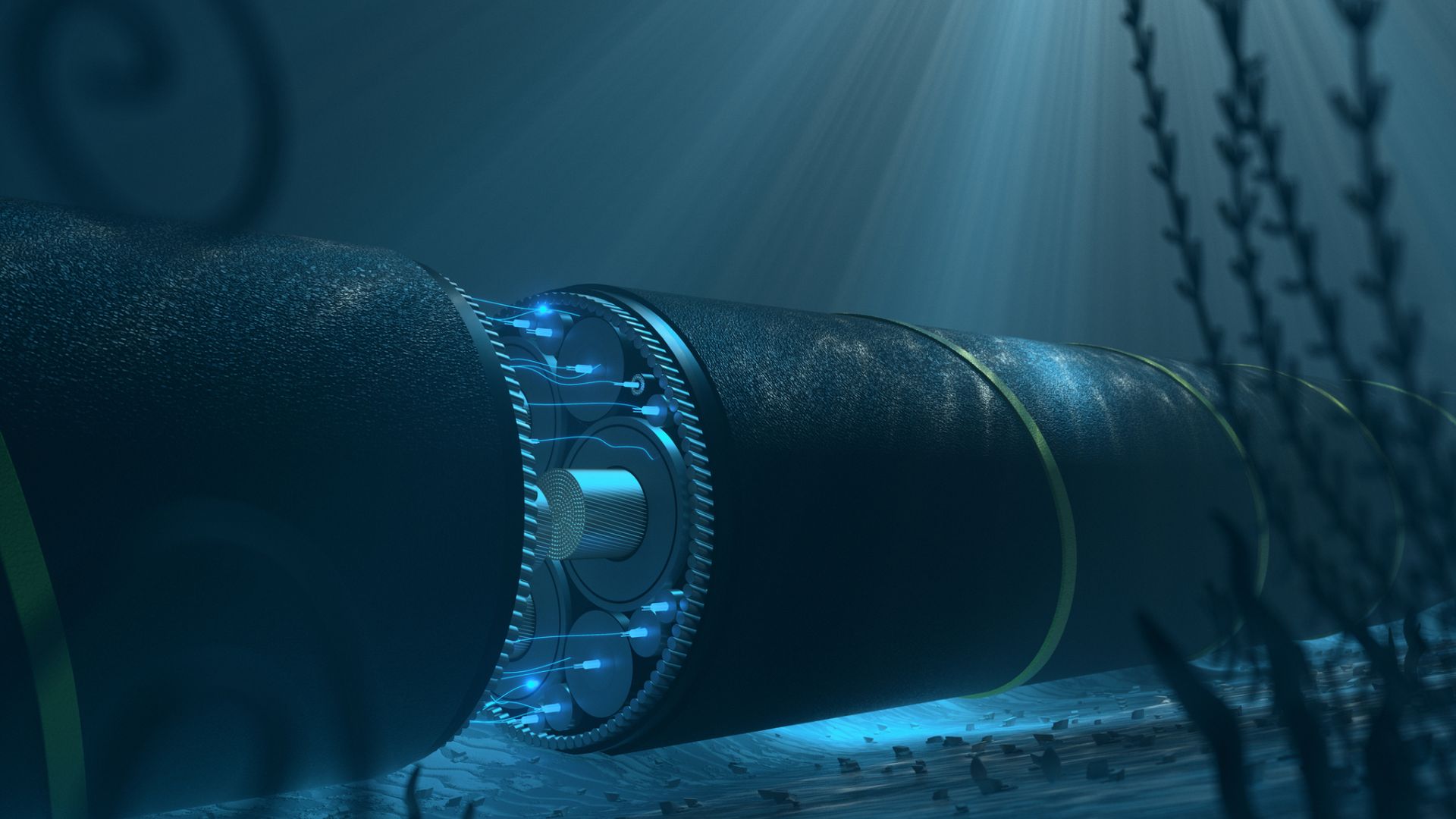
"Seven large cables pass beneath the Strait of Hormuz, and all internet and commercial data pass through them," according to Mohebbi. He went on to describe the cables as "legitimate new targets" for future assaults. Meanwhile, another IRGC General, Yadollah Javani, who serves as the IRGC's political deputy, has since suggested that if Iranian infrastructure is attacked, Iran will respond by attacking the cables, according to comments reported by Iran International.
The conflict between the United States and Iran has cooled, but it isn't quite over yet. Mohebbi suggested that a "third phase" in the war would reveal a "new geography" that would include "new targets and new weapons." One particular cable referenced by the IRGC appears to match the Asia-Africa-Europe-1 cable, a cable stretching 15,050 miles from Asia to Europe, traveling through Oman, the UAE and Qatar. Both the UAE and Qatar share direct maritime borders with Iran.
Experts believe the threat is credible. Professor Alesso Patalano, a war and strategy professor at King's College London, told The Telegraph that "not only is it possible, but it's been a rather clear possibility for a long time," adding that divers could "go down to the seabed... and cut them or destroy them." Such attacks aren't "unheard of," going on to reference the Nord Stream 2 gas pipeline attack near Denmark in 2022, supposedly by Ukrainian agents, as an example.
Meanwhile, further comments, made to The Telegraph, suggest that Iran had considered cutting the cables several times since the war began. However, up until now, Tehran had avoided doing so, as it would mean "declaring war on the whole world and building new enemies," according to another unnamed Iranian spokesman, although stating that it would continue to be "an option if Trump escalates."
Iran isn't the only country that has taken a special interest in undersea infrastructure. A Russian ship, for instance, was chased from British waters by a Royal Navy attack helicopter earlier this year as it loitered for 14 hours less than a mile from five undersea cables that connect the UK with Spain, Portugal, Canada, and the U.S.
Follow Tom's Hardware on Google News, or add us as a preferred source, to get our latest news, analysis, & reviews in your feeds.
Get Tom's Hardware's best news and in-depth reviews, straight to your inbox.
Ben Stockton is a deals writer at Tom’s Hardware. He's been writing about technology since 2018, with bylines at PCGamesN, How-To Geek, and Tom’s Guide, among others. When he’s not hunting down the best bargains, he’s busy tinkering with his homelab or watching old Star Trek episodes.