// ARS TECHNICA — MODA & SOCIETÀ
From impulse purchase to pocket studio: The M-Vave FM-1
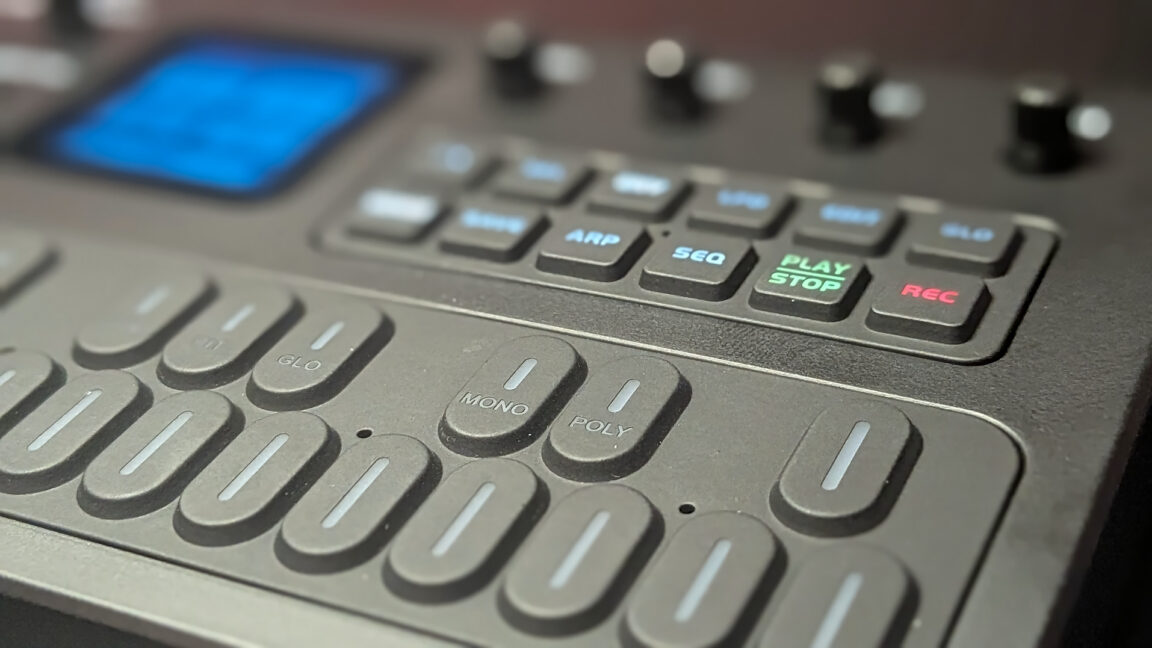
M-Vave’s cheap FM-1 pocket synth has exploded as a community firmware playground.
The M-Vave FM-1 is exactly the kind of device I have a weakness for. I may not have an intended use for the frequency-modulation synthesizer, but when a low price meets a high coolness factor, I’m powerless to keep it out of my cart.
Initially billed as a pocket cousin of the famous Yamaha DX7 synthesizer, the FM-1 is a bargain at only $59.72 after fees. At release, it was a cool device that did what it said on the box, but not much else.
But in July, some intrepid tinkerers on Reddit’s r/synthdiy board began reverse-engineering the FM-1’s stock firmware to expand the device’s abilities. By September, custom firmware began appearing. We’re not even through October, and there are already more community firmware projects available to install on the FM-1 than I could ever hope to cover.
I decided to check a few of them out. And just in case you were wondering: Yes, it plays Doom.
On October 17, M-Vave announced FM1 Open, a software package that encourages FM-1 owners to develop custom firmware for the synth-turned-whatever-else-you-can-imagine. Alongside the FM1 Open package came an SDK, a browser-based workbench, and version 15 of the stock firmware, now an open platform you can flash and build on. The unit’s 27 physical piano keys and modest 1.54-inch TFT display lend themselves well to a host of projects, musical or otherwise.
Normally, when an enthusiast community reverse-engineers a closed device, an official patch quickly follows. M-Vave has taken the opposite approach, though. The application source is published under GPLv3, and the company even includes an in-browser emulator to test custom firmware prior to flashing actual hardware. There’s a caveat, however: The underlying synth engine that powers the stock FM-1 package is still distributed as a closed binary, so it’s the application layer of the stack that’s actually open. I don’t think that diminishes M-Vave’s gesture toward the community, but it’s worth noting.
Before you rush to AliExpress, be aware that flashing custom firmware comes with risks. The JieLi chip powering the FM-1 keeps firmware in a single flash bank, so an interrupted update can leave the device in a difficult-to-recover state. As long as the flashing process completes without interruption, you should be fine. But nothing is foolproof, and there’s always a risk of bricking a device if something goes wrong.
Flashing will also wipe all information on the device. Before you try to load a new firmware package on the synth, back up your saved projects and settings because they will disappear. I was starting from a blank stock canvas, so there was no real risk.
The unit I received was running stock v14 firmware, and community guides repeatedly warn users to update to the stock v15 firmware before attempting to install custom firmware. Guess who didn’t listen? I blindly assumed that since I’d just received my FM-1, it would be running the latest firmware package (v16 now). I was wrong.