// KOTAKU — GAMING
Xbox Says It Has To Fix Its Review Code System After Missing Modern Warfare 4 Metacritic Score
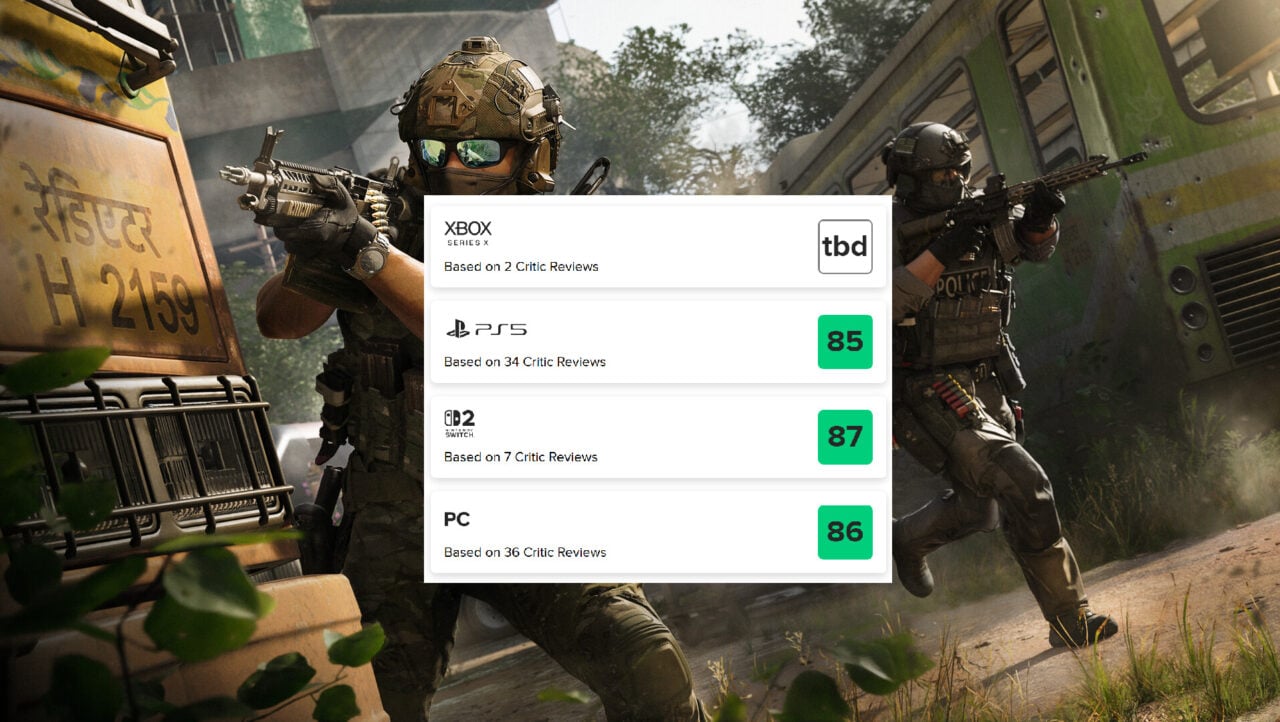
Call of Duty: Modern Warfare 4MetacriticReviewsXbox
A funny thing happened this week when the Call of Duty X account promoted Modern Warfare 4 using the unusually high Metacritic score averages it had earned. It shared a graphic showing an 89 on Switch 2, an 88 on PlayStation 5, and an 87 on PC as of October 26 (some of those numbers have since come down slightly). Ironically, it did not include the Metacritic average for the game on Xbox, despite Microsoft now owning the franchise. That’s because there weren’t enough reviews of the Xbox Series X/S version of the game to even get a Metacritic average.
This kicked off some discourse among game critics and Xbox console fans about why there often seem to be so many fewer reviews for games based on the Xbox version. Now, even Xbox’s own chief technology officer, Scott Van Vliet, has weighed in on the debate. “Reviewing a game on Xbox takes too many steps today,” he posted last night on X. “Press and creators should be able to redeem and play, and that’s what the team is ultimately building toward. The first updates are coming soon.”
What exactly are the “too many steps” Van Vliet is referring to? Well, normally when press and creators are approached for review codes prior to a game’s launch, they’re given the choice of which platform to select. In some cases, it’s as simple as just getting the code and going to the respective digital storefront to redeem it. But in other cases, and sometimes with Xbox specifically, there can be a more convoluted process that requires sharing an Xbox Live Device ID, waiting for the device to be “whitelisted” by the publisher, and then proceeding to get the latest build of the game downloaded.
This is sad @XBOX https://t.co/QZvL6T5T7c pic.twitter.com/bUOobBbG40
There’s been some debate over how frequent these extra steps actually occur and whether they’re actually annoying enough to make people opt for code on a different platform. Giant Bomb cofounder Jeff Gerstmann cast a skeptical eye on this part of the discussion this week on Bluesky. In response, some reviewers noted that high-profile games like 007 First Light did require these extra steps for Xbox code, but also suggested that would never be a determining factor in which platform they review a game on.
The bigger factor is that PC codes are usually available long before the console versions, especially if companies are still waiting on the platforms to sign off on final builds or last-minute updates. My general sense is that the entire process of updating a game pre-release and sharing access to that build via beta branches is significantly more streamlined on Steam. And in situations where there’s no way to transfer progress in a review build from the PC build to the console version, which is 99 percent of the time, it’s easier to just stick with the earliest available platform.
You just sort of get a code, then redeem it. Semi confused. Are they fixing the generation process so devs can hand them out further ahead of release? Are they fixing the pr outreach that was gutted a couple years back? I’m all for this. Confused as part of the issue is interest. https://t.co/DD3Wn0Kh6R
Still, I’m not sold on this being entirely an issue of just extra steps for accessing review builds on Xbox. There are plenty of situations where timing and availability aren’t an issue, and which platform a review takes place on is mostly just at the discretion of the particular creator or critic. For instance, I own an Xbox Series S and not an X, so depending on how much performance and graphical fidelity might play a role in my experience of a game, I might opt for code on PS5 as opposed to Xbox. Reviewers who have access to a PS5 Pro might also take that into consideration. But specific features can also play a role. Games that support Xbox Play Anywhere can be easily tested across console, PC, and Xbox Ally X, while also providing extra flexibility in the sprint to complete a game before it’s out.
The m