// TOM'S HARDWARE US — HARDWARE & GADGET
Bambu Lab H3C 3D printer review: A nine-tool monster
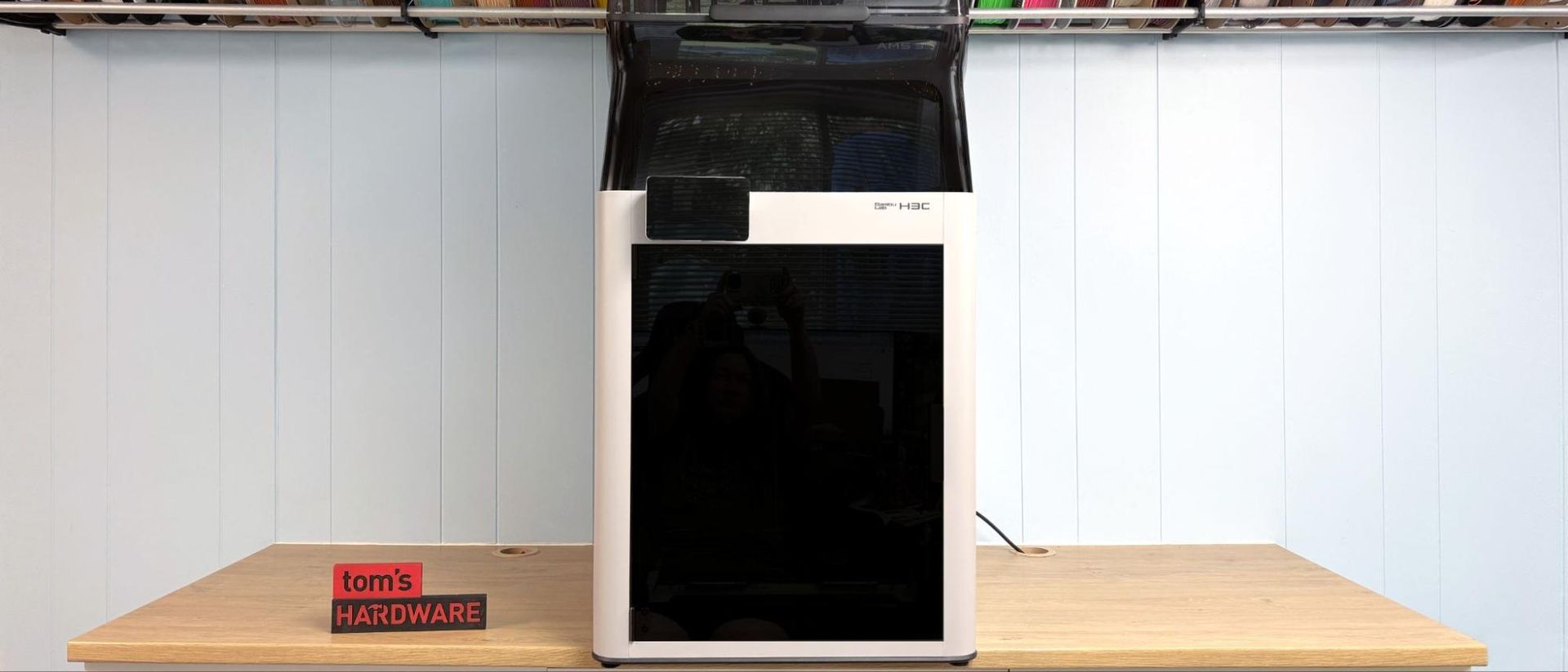
The Bambu Lab H3C is an excellent nine-tool 3D printer that printed everything we could throw at it. Whether you want nine-color PLA models, mix and match engineering filaments, or crazy squishable TPU shoes in a riot of color, this machine is a beast. If you don’t have low ceilings or a fear of step ladders, the H3C might be the only printer you’ll ever need.
Works with multiple materials and nozzle sizes in the same print
Why you can trust Tom's Hardware
Our expert reviewers spend hours testing and comparing products and services so you can choose the best for you. Find out more about how we test.
The Bambu Lab H3C is the printer we’ve been waiting for: a true Bambu tool changer. It has nine “Swaptek” tools that use a technology similar to the H2C Vortek rack, except each nozzle is built into a lightweight, hardwired tool with a dedicated filament path. The H3C is Bambu’s fastest multicolor 3D printer, and though it reduces waste, it does not eliminate it.
The H3C comes with a surprising “old school” technology: the ability to print 2.85mm filament. This is in response to China’s increasing fascination with 3D-printed shoes made with a wide variety of squishy TPU. Bambu sent along a few spools of their new super soft 75A TPU to show off, and it does make for comfy footwear. Each unit comes with one special 2.85mm tool as a standard feature, though you can buy a “normal” 1.75mm tool for $59 if you’re not into the novelty of phat filament.
You will also be able to add cutting, drawing, embossing, and foil transfer tools to the system. These were not available at the time of review, but we’ve seen these accessories on the H2D and A2L. The 3D printer will NOT come with a laser variant.
Bambu is checking off yet another item from the user wish list: the ability to print with more than one nozzle size. Because this is more of a software upgrade, you’ll also gain the ability to mix nozzles with Bambu’s other dual nozzle systems: the H2D, H2C, and X2D. The H2D will get the ability first, and the other printers will be updated by March.
The H3C has a 330 x 320 x 325mm build volume (the same as the H2C) and a massive “AMS” type module perched atop the main unit that holds nine spools. This gives it a somewhat towering mushroom shape that’s over three feet tall. It did not fit on my studio counter, which is a standard-sized IKEA kitchen countertop with a filament rack three feet off the surface. When we parked it on my industrial-grade shelving unit next to the H2D, even my 6’4” husband needed a step stool to load filament. Bambu was prepared for this problem and created a special rolling cart for the machine to make it more accessible. This is the first time the company has offered custom furniture for one of their printers and is an optional purchase that I highly recommend.
All nine tools are integrated into the bottom of the AMS 3H, which means the H3C only comes as a nine-tool 3D printer. There is no such thing as a single-color H3C. If nine colors aren’t enough for you, the printer can be hooked up to as many as four “normal” AMS units with the help of an optional buffer. Unfortunately, all outside AMS units need to run through the 5th tool slot, so you will lose the purge-free perk of the H3C.
The AMS 3H does not have motorized rollers, as retraction is unneeded on a tool changer. Seven of the slots have a TPU bypass, something we first saw on the single spool AMS HT. Two of the slots are nestled within an interior chamber for drying at up to 85°C. Though you can only dry two spools in the AMS 3H, you can run the dryer while printing, as it has its own power supply. The sealed dryer does not “leak” enough heat to dry the rest of the chamber…we checked. But that also means you don’t have to worry about the dryer melting a spool of PLA left in a nearby slot.