// ITS FOSS — LINUX & OPEN SOURCE
Kitty 0.50 Picks Up Where You Left Off After a System Restart
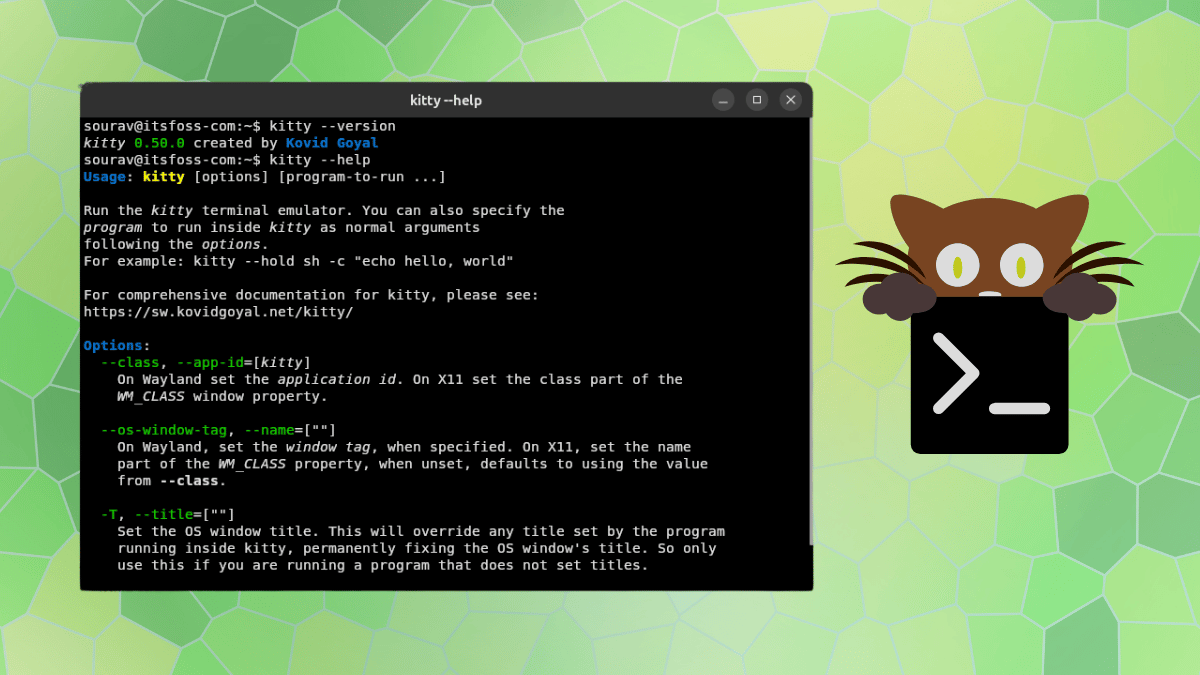
kitty is a GPLv3-licensed, GPU-based terminal emulator for Linux and macOS that uses OpenGL for rendering and is written in C, Python, and Go.
It can organize work into tabs and windows across seven layouts, supports small terminal programs called kittens that can be used to extend it, and can be controlled from the shell.
v0.50, its newest release, can bring back your open windows after a logout on Linux and macOS.
kitty now saves every OS window, tab, and window with its scrollback when a session ends and restores them at the next launch. You turn it on in kitty.conf with the restore_session_after_logout setting.
On Linux, this needs a desktop portal with v3 of the inhibit interface, and while Linux stores the state unencrypted and readable only by you, a macOS system would encrypt it with a dedicated key in the keychain.
Docked windows are new too, and they let you pin a window to the edge of another window or a tab. They sit outside the layout and are meant for things like a status bar or a file tree. A window dock goes wherever its window goes, and a tab dock stays until the last regular window in that tab closes.
There are also the three new cursor trail shaders called cursor-trail-railgun, cursor-trail-torpedo, and cursor-trail-pixiedust. When in use, these emit particles off the moving cursor, giving you a Neovide-like trail. They need cursor trails turned on, and shaders can also be triggered with key presses now.
Wayland users can now use a touchscreen to click with a tap, scroll with a swipe, and select text by holding a finger in place before dragging to select the rest of it. Window decorations on GNOME and similar compositors also look native and use the desktop's titlebar font and button layout (as shown above).
The release also fixes a flaw that let a malicious request bypass remote control password authentication, along with several memory safety bugs.
I ran kitty 0.50 on Ubuntu 26.10 with GNOME 51 on Wayland, all running inside a virtual machine.