// TOM'S HARDWARE US — HARDWARE & GADGET
TeamGroup GA Pro 2TB SSD Review: A faltering attempt at a mid-range PCIe 5.0 SSD
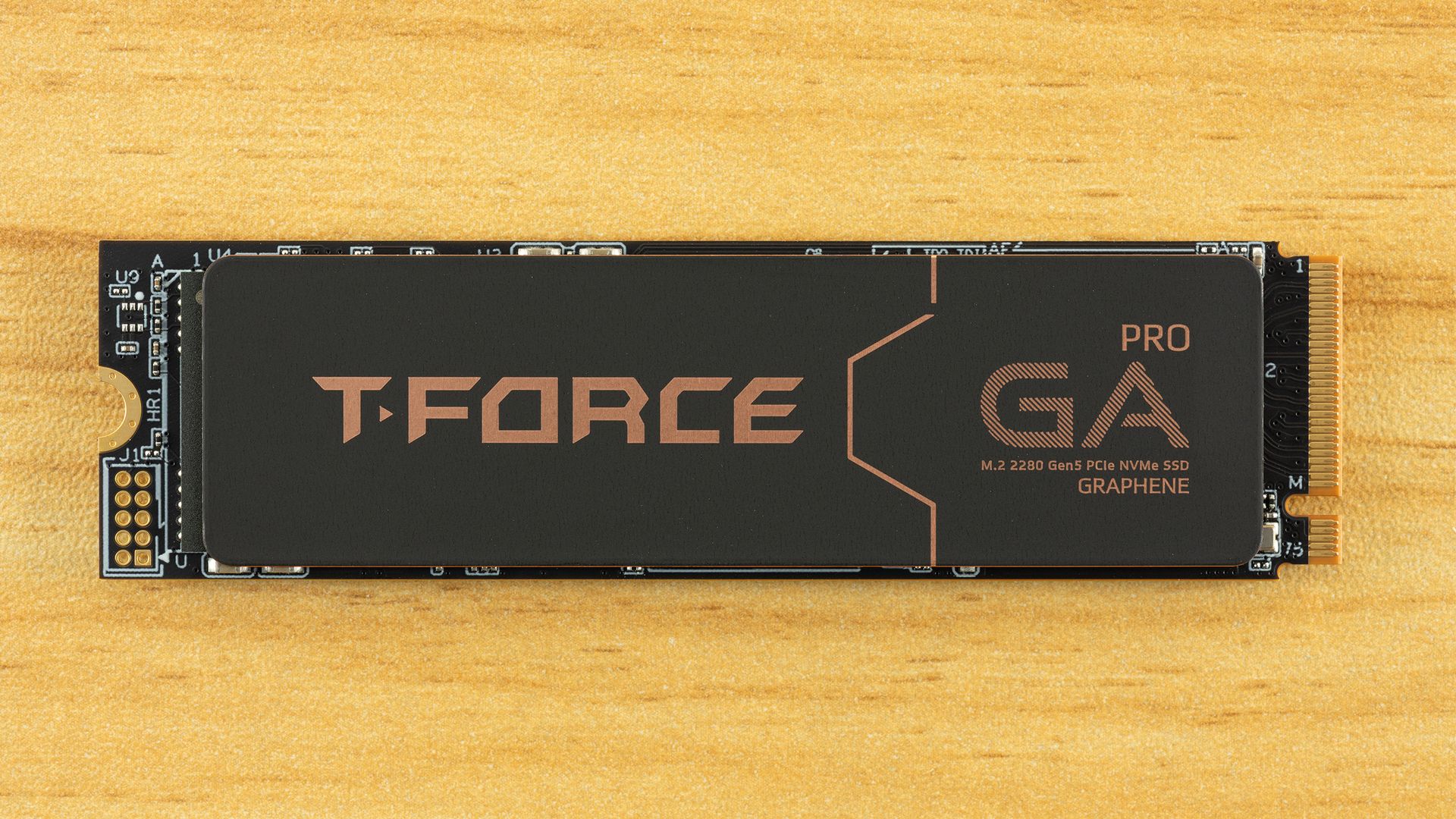
The TeamGroup GA Pro is a drive that mostly misses. While it has relatively good points at QD8 and acceptable steady-state write speed, overall performance is very low with this inefficient, hot-running drive.
Why you can trust Tom's Hardware
Our expert reviewers spend hours testing and comparing products and services so you can choose the best for you. Find out more about how we test.
Every once in a while we get a drive that comes across our desk that stands out, for good or for bad. The TeamGroup GA Pro falls into the latter category, enough so that we re-checked our results and contacted the company. We’ve managed to mostly sort out what’s going on and, while this is not the worst drive around, it has enough problems that we would generally not recommend it except if it's on steep sale.
TeamGroup’s array of storage offerings knows no bounds: if there’s a niche to cover, it makes an attempt. The GA Pro feels like such a try, although we’re not completely sure where it fits into the mix. The company is still working to iron out the bugs, if it can, but the technology is old enough that we wouldn’t hold our breath. On paper, it’s a PCIe 5.0 drive with DRAM that should beat any PCIe 4.0 SSD, but we found it struggles to live up to its own class of drive. Bright points are few and far between, but at least we can say it’s not the worst drive we’ve seen. The edges are just rougher than usual.
The TeamGroup GA Pro is available in 1TB, 2TB, 4TB, and 8TB capacities, although we only have the 2TB showing up at $331.99 at retail right now. The 8TB will probably be hard to find at this point. The drive is rated for up to 10,000 / 8,500 MB/s for sequential reads and writes, with no IOPS rating, although a drive like this can achieve 1 million or more. It has the standard five-year warranty with up to 600 TB of writes per TB of capacity.
TeamGroup has a number of downloads available for this range of drives, which is better than nothing. They do maintain firmware for their drives, and we made sure our test sample had the newest revision, 050g05E7. Also available is the SSD S.M.A.R.T. TOOL, which is their SSD toolbox with basic functions, such as health monitoring. For backup and cloning on Windows, we continue to recommend MultiDrive, which continues to be updated based on user feedback.
The good news is, the GA Pro has a graphene heat-spreading label. The bad news is, it’s insufficient to cool this drive. In most cases, you will want a heatsink on this. You can use a heatsink with the label in place, but you will have better luck if it’s removed. We are fond of graphene labels as they can be surprisingly effective, but it’s just not enough here.
Then we have the label which, with the 3.3V / 2.5A rating, puts the drive at a very optimistic 8.25W. We measured over 12.5W peak in our testing below. We can’t go by reported power states, as these top off at 3.50 W. Since we can’t rely on that, we can’t say for sure what even the expected enter/exit latencies are, relevant given TeamGroup’s claims about the drive, which we’ll get to later. The drive is otherwise double-sided with a controller, two DRAM packages, and four NAND flash packages.
The SSD controller is InnoGrit’s IG5666, the company’s answer to the Phison E26 high-end PCIe 5.0 champion. We have better controllers in that segment now, like the E28 and SMI’s SM2508, but even at the time of release, the IG5666 was not very popular. Both the E26 and IG5666 run very hot due to using an older process node, and newer flash wasn’t available yet to more easily reach the bus speeds needed. The GA Pro is not running full-out but, to be honest, that doesn’t help much. Phison put a lot of work into getting the E26 up to full speed in steps, and even the base 10 GB/s ones run toasty.
Get Tom's Hardware's best news and in-depth reviews, straight to your inbox.