// ENGADGET — HARDWARE & GADGET
Surface Laptop Ultra review: The most powerful Surface yet, but it still lags behind Apple
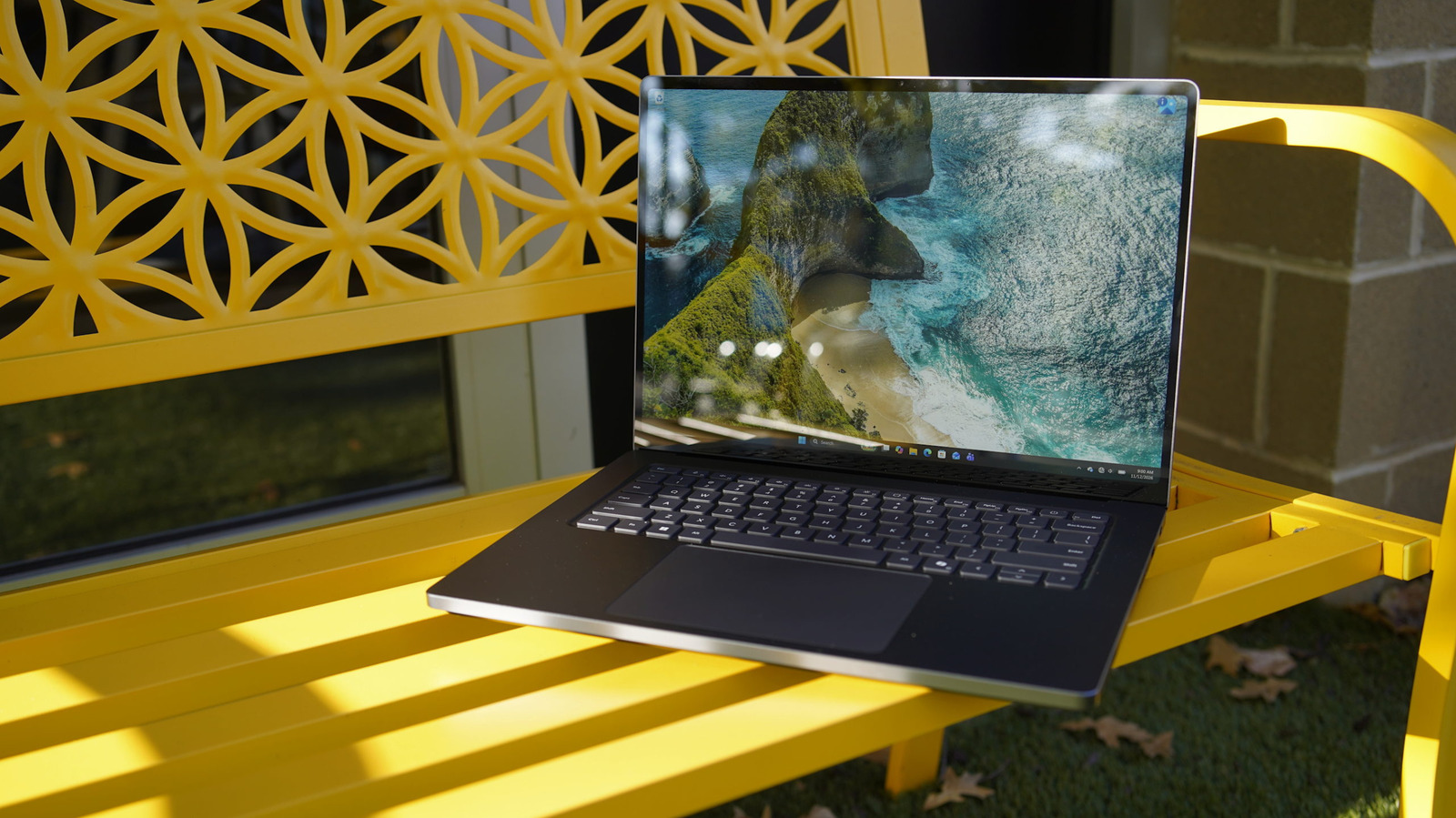
It’s a beautiful flagship device for NVIDIA’s RTX Spark.
With a name like Surface Laptop Ultra, Microsoft's latest notebook better be impressive. It's one of the flagship devices for NVIDIA's new RTX Spark platform, making it the most powerful Surface device yet. It can be equipped with up to 128GB of unified memory, which is ideal for running local AI models. And in just about every other respect, from its super-bright 15-inch screen to its sleek case, the Surface Laptop Ultra screams quality. So sure, the name fits.
But with its high $2,599 starting price, which easily escalates if you want to go beyond its stock 24GB of RAM, the Surface Laptop Ultra is really only meant for the most demanding users. To be fair, though, the same is true of all the RTX Spark laptops, including the excellent ASUS ProArt P16 we recently reviewed. Even Apple is pushing the limits of laptop pricing with its new touchscreen MacBook Pros with PROLED screens, which start at $2.899.
Like some sort of cosmic capitalist joke, PC makers have inexplicably decided to release pricier computers, even though we're already suffering from AI-driven memory price hikes. I'm sure the Surface Laptop Ultra's high price won't stop AI enthusiasts who've been eagerly awaiting capable Windows systems from buying one, but most gamers and content creators would likely be better off saving $1,000 and buying a capable gaming laptop instead.
Much like the standard Surface Laptop, the Ultra variant doesn't have any of the bells and whistles from Microsoft's convertible Surfaces. It just looks like a sleek, all-metal business laptop. Pop it open and you'll notice that its 15-inch screen has a tall 3:2 aspect ratio instead of the typical widescreen configuration. And if you peer along the bottom of the case, you'll see a slightly segmented base (reminiscent of the Surface Laptop Studio), which makes a bit of room for cooling vents and downward-firing speakers.
While there's a lot to admire about Microsoft's design prowess, the biggest selling point of the Surface Laptop Ultra is NVIDIA's RTX Spark chip. It's an Arm-based system-on-a-chip that can be equipped with up to 20 CPU cores and 6,144 GPU cores. Take note: You'll need to shell out $3,700 to get the most powerful RTX Spark hardware here, but at least that ships with 32GB of RAM. The base $2,600 Surface Laptop Ultra has 18 CPU cores and 5,120 GPU cores.
Taking a cue from Apple Silicon and Qualcomm's recent Snapdragon X chips, the RTX Spark also features unified memory, which is accessible to both the CPU and GPU. That gives it even more memory bandwidth than a typical Intel or AMD-based Windows PC, which have their RAM, CPU and dedicated GPUs spread out across their motherboards. By having direct access to tons of RAM, RTX Spark hardware can also house large AI models locally, which is a major reason why both Microsoft and NVIDIA are pitching it as a major evolution for PCs.
Thanks to its NVIDIA GPU cores, the RTX Spark chip also delivers gaming performance similar to an RTX 5070 laptop GPU. That makes it ideal for 1440p gaming, and you can probably also get decent performance in 4K and other higher resolutions thanks to NVIDIA's DLSS upscaling and frame generation. The Surface Laptop Ultra starts at a much higher price than most RTX 5070 gaming notebooks, though, so it's not something you'd want to buy for pure gaming.
The RTX Spark's Arm CPU is both a blessing and a curse: It technically can perform more efficiently than Intel and AMD's x86-64 chips, but it also requires emulating older Windows software and drivers. That opens the door to unforeseen bugs and issues, especially for niche apps and minimally-supported third-party drivers. While this was a major problem when Microsoft first started dabbling with Windows on Arm (think back to the original Surface with Windows RT or the Surface Pro X), the company's emulation for x86-64 software has dramatically improved. Kernel-level anti-cheat software for multiplay