// ARS TECHNICA — MODA & SOCIETÀ
Volvo's big batteries: We drive its updated 2028 plug-in hybrids
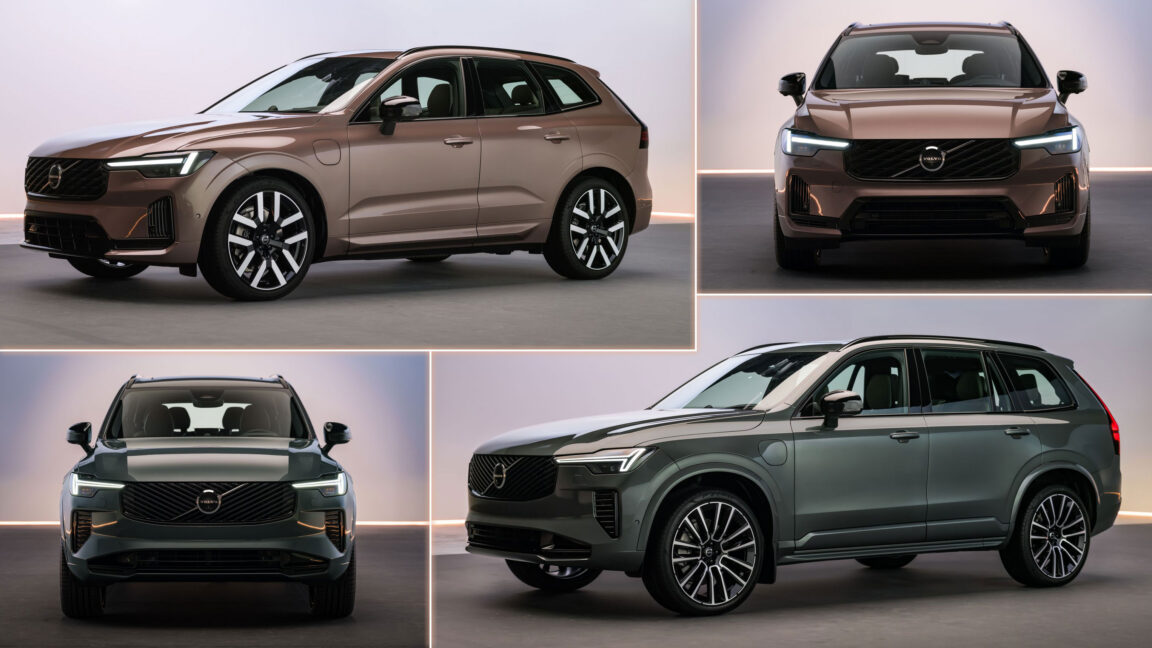
There’s just one thing we still don’t know: How much will they cost?
COPENHAGEN, Denmark—If we lived in the world that Volvo’s product planners expected back when the current XC90 debuted in 2015, both it and the smaller but related XC60 (which arrived in 2017) might have been the last of their kind as everything went electric. As we know, the future hasn’t turned out quite like that, especially in the critically important US market. At the same time, Europe and China are electrifying, which seems like an argument against spending resources on developing all-new replacements for models that might not have an eight-year lifespan in most markets.
So instead, Volvo has given the XC60 and XC90 another lifecycle refresh. The exterior styling tweaks are minimal; the bigger three-row XC90 had already been given a new look last year, and the XC60 now gains a similar grille and the same matrix headlights, for instance. And that’s no bad thing—both were, and remain, handsome shapes that are popular with Volvo’s customer base.
Instead, the Swedish automaker’s attention has been on bringing the technology up to date for model year 2028 standards. Which means a much bigger battery for the PHEVs, with sufficient capacity for a couple of days of daily driving for most of us before needing to be recharged. There’s also new, modern infotainment and interiors that are now even nicer to spend time in than before.
We first saw the revamped 2028 XC60 (and learned about its technical details and those of the XC90) in September, but with the cars going into production now and due to reach the first US customers in the first quarter of next year, we got the opportunity to spend some seat time with the updated cars.
Both the midsize XC60 and three-row XC90 use the same PHEV powertrain. Under the hood, there’s a 2.0 L four-cylinder direct-injection gasoline engine that generates 247 hp (184 kW) and 226 lb-ft (306 Nm) together with a 70 hp (50 kW), 122 ft-lb (165 Nm) electric motor, both of which drive the front wheels. At the rear axle there’s a second electric motor, with an output of 174 hp (130 kW) and 228 lb-ft (309 Nm). Combined output for the hybrid system is 455 hp (339 kW) and 560 lb-ft (759 Nm).
There’s also a much bigger battery, with a net capacity of 37.9 kWh (41.2 kWh gross). If you set the car’s mode to Pure, which relies solely on the rear electric motor for propulsion, that translates to an EPA range estimate of 78 miles (126 km) for the XC60 and 73 miles (116 km) for the larger, draggier XC90. Which is significant—when the average driver drives fewer than 30 miles a day, it means these PHEVs carry enough electrons for a couple of days of tailpipe-emissions-free driving before it needs to be plugged in again or the engine to fire up.
When it is time to plug it back in, expect it to take about four hours with a level 2 charger of at least 16 A, or 27 hours if you’re limited to 120 V. In Hybrid mode, where you get the benefit of both electric motors and the gas engine, Volvo expects a combined efficiency of 67 mpge in the XC60, and 61 mpge for the XC90.
Even if the gas engine is running and you’re in Hybrid or Power mode (which keeps the engine on all the time), you can drive these Volvos as if they were EVs with one-pedal driving: just move the transmission from D to B. The Volvos are always using their electric motors to slow the car before the friction brakes intervene, and in B you get the same amount of lift-off regen regardless of mode. For city traffic, it’s very effective. (In Pure, although only the rear motor deploys energy, both front and rear motors regen brake.)
In power mode, with all 455 hp unleashed, you can chirp the wheels on a wet day, but these model year 2028 cars are about one large male human heavier than the outgoing model year, both of which were already pretty heavy. So don’t expect performance-car performance. The XC60 is the sweeter to drive on a winding road, but both are entirely at home cruising on