// PC GAMER — GAMING
After gaming on pro-level panels I can tell you now that 360 Hz is the sweet spot for gaming monitors
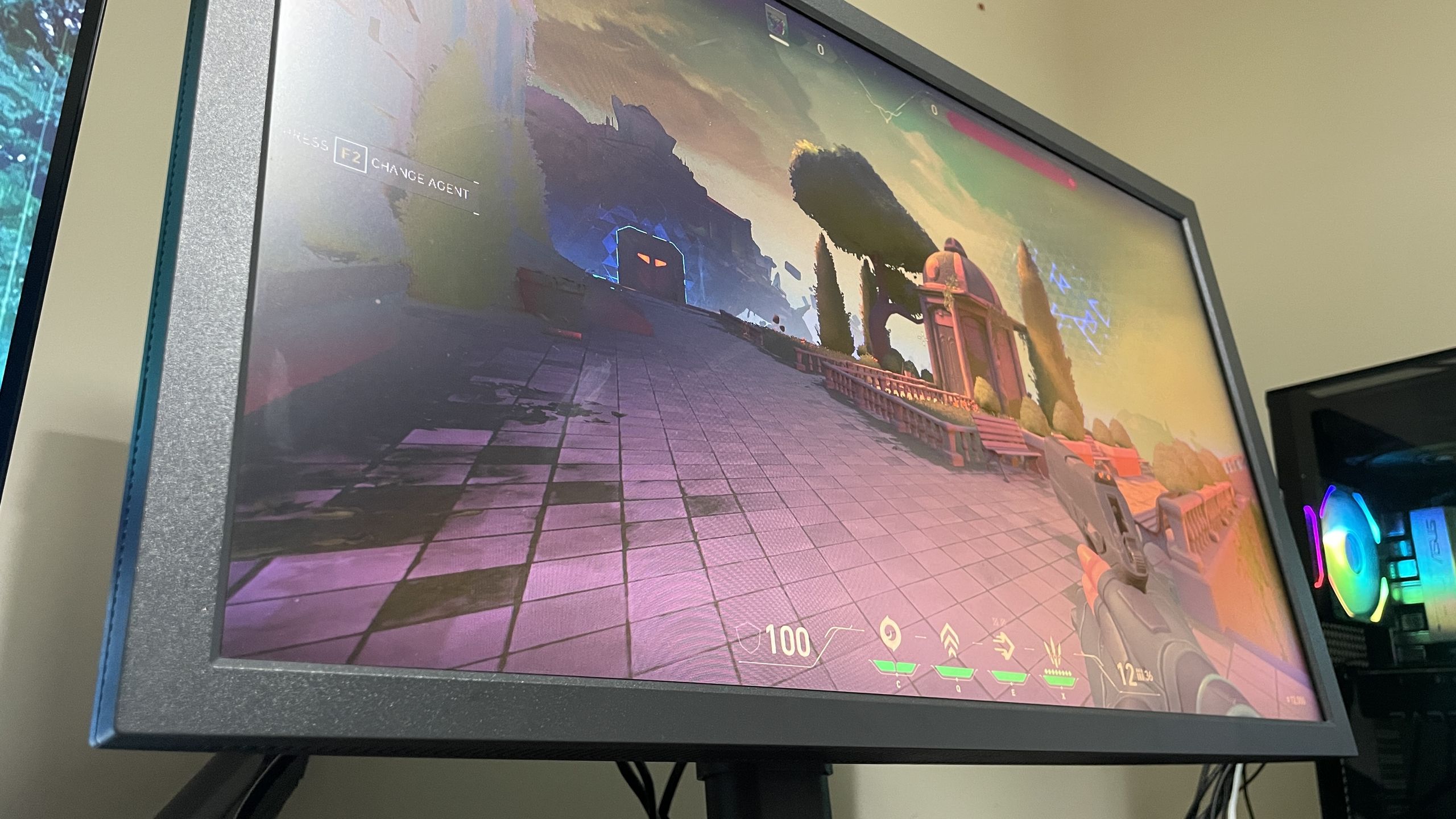
And I just don't think I can go back to anything below 240 Hz.
When you purchase through links on our site, we may earn an affiliate commission. Here’s how it works.
This week I've been: Latency testing a 320 Hz monitor, trying to climb up CS2 Premier ranks, and looking into information theory.
If you've been on this planet as long as I have, you might remember the sentiment that your eyes can't see above 60 fps. At least, that's what console gamers seemed to tell themselves once the PC gaming scene moved on. But actually using 120 Hz or 144 Hz quickly put an end to that myth.
Something about it must have sunk into my subconscious, though, because until recently, I stuck to 144 Hz monitors ever since I got my hands on one around 2014. It's as if I'd accepted that while 60 Hz isn't the limit, perhaps 144 Hz is—or, more realistically, it's as if I'd assumed that diminishing returns might kick in soon thereafter.
I've since discovered that's incorrect. It might be true if you're kicking back in a third-person RPG, and it's certainly true if you're not hitting north of 144 fps in-game. But as I've discovered recently, for competitive FPS gaming, ultra-high refresh rates are genuinely fantastic and much better than sticking at 144 Hz or 165 Hz.
There is truth to the idea that there are diminishing returns to upping your refresh rate, but they don't diminish as drastically or as quickly as a lot of people seem to think they do. I'd say 360 Hz is the sweet spot before real diminishing returns start to kick in, but it's also a little more complicated than that.
I first discovered this when testing the Zowie XL2586X+. Zowie monitors are the most popular for tactical FPS esports pros, for a few main reasons. First, there's the fact that big tournaments often use them across the board, so it makes sense to practice with them—that's one reason for sticking to a 24/25-inch 1080p monitor, too, by the way.
Apart from that very pragmatic reason, though, there's the fact that these monitors have ultra-high refresh rates, panels and colour profiles that are tailored to popular esports titles, and DyAc 2 anti-blur tech.
Of all of these factors, though, I've found that having a high refresh rate is the most important, in my opinion. Which is good news because it opens the field to a whole load more monitors than just Zowie ones with DyAc 2.