// ARS TECHNICA — CYBERSECURITY
F1 in Spain: An old-fashioned strategy fight can still be thrilling
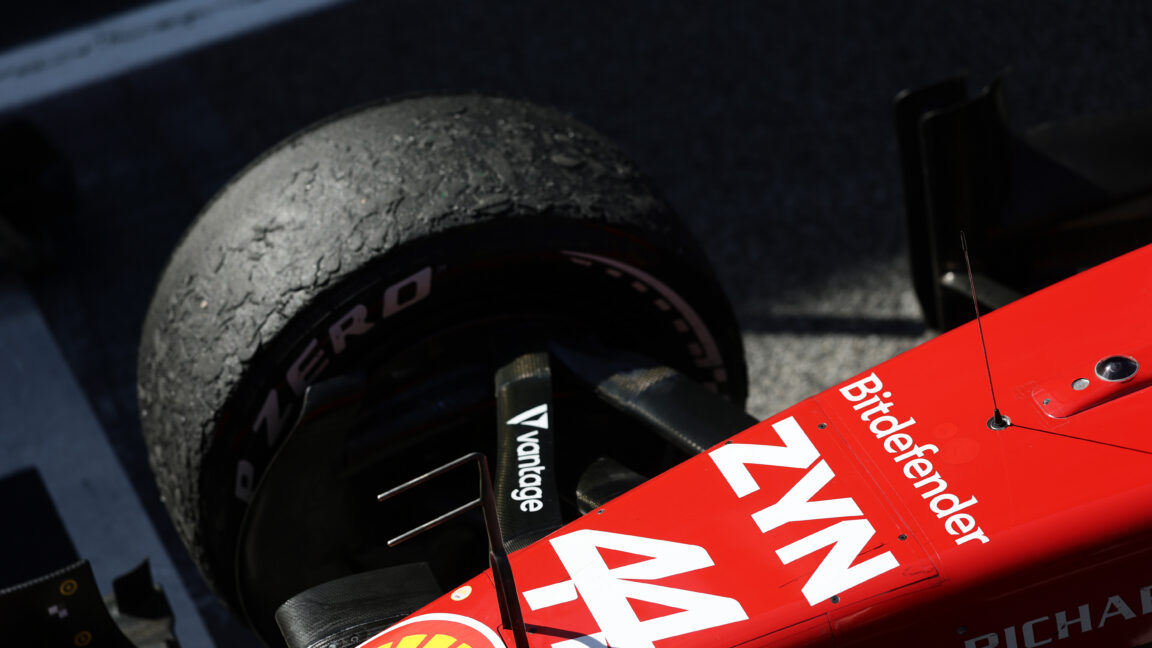
Armed with a ton of new upgrades, Ferrari came to Spain full of confidence.
Formula 1 raced in Spain this past weekend. The Barcelona-Catalunya circuit is one of F1’s purpose-built race tracks, with a number of fast corners and a track surface that’s more abrasive than usual. That means downforce is the name of the game. Catalunya has always required good aerodynamics, but it’s doubly important now. The more speed you can carry through a corner, the less energy you have to add on the following straight, and energy management is now as important in F1 as it is at Le Mans or in Formula E or even IndyCar. And the more downforce you have, the less the car slides, and the less the car slides, the less the tires get eaten up.
It’s the tire wear that suggested the strategies. So far, all the races this season have been one-stop affairs as drivers make their required change from one tire compound to another. But 66 laps of Catalunya would require at least three sets of Pirelli tires to get to the end. Maybe even four. As the tires wear, they become slower, to the tune of 0.2–0.3 seconds per lap. And one way to exploit that is with an “undercut”—pit early, change onto fresh rubber, and make use of the tire offset against your rivals to put in fast laps while they’re losing time. Do it right, and when they make their next pit stop, you should be in front.
Splitting the race into four stints means one more pit stop, and it costs about 22 seconds to drive through the pit lane, stop in the box, and then exit the pit lane again, assuming a tire change in less than three seconds. But since each set of tires is needed for fewer laps, they can be worked hard enough to offset that 22-second pit stop and more.
Bold strategies like that don’t always work; the two-stop plan that most teams opted for was the safe, sensible option. But Ferrari didn’t play it safe. It arrived in Spain with a massively upgraded car—new front wing, new floor, new sidepods, and so on. It probably already had the best chassis on the grid, and unlike a couple of years ago, the upgrade it brought to Spain worked well, particularly when driven by a newly resurgent Lewis Hamilton.
The seven-time World Champion suffered a serious loss of form with the introduction of ground effect cars in 2022. Those cars generated downforce mostly from the shape of their underfloor (rather than their wings and diffuser) and had very limited suspension setups. It’s fair to say that Hamilton never gelled with them. The previous year, he had won eight races, taking his career tally to 103. He didn’t win a race at all in 2022 or 2023, although he did take victory at the British Grand Prix in 2024, then inherited the win in Belgium two races later when George Russell was disqualified after the fact.
In 2025, Hamilton left Mercedes, where he’d won six of his seven championships, for the challenge of racing for Ferrari. But his results in the ground effect Ferrari were even worse than they were in the ground effect Mercedes, and by the end of the season, plenty of critics were asking if it was time for the driver to retire.
The 2026 car is much more to Hamilton’s liking. It’s smaller, lighter, and more nimble, and the ground effect-generating floors are gone. It’s much more compatible with his driving style, which involves late, heavy braking before rotating the car at the corner apex. Even more so since he was able to persuade team management that it was worth upsetting long-term partner Brembo—a relationship that stretches over 50 years—to switch to his preferred brake pad supplier, Carbon Industrie.
Buoyed by second places in both Canada and Monaco, Hamilton appeared a little lost during the second of Friday’s two practice sessions, having given up his car during the first for Ferrari junior Dino Beganovich. But on Saturday, Hamilton was much more at home in the car and missed out on pole to his former Mercedes teammate Russell by less than a tenth of a second.
Despite Hamilton’s qualif