// ARS TECHNICA — FINANZA
New airliner sets record flying 24 hrs nonstop from Australia to France
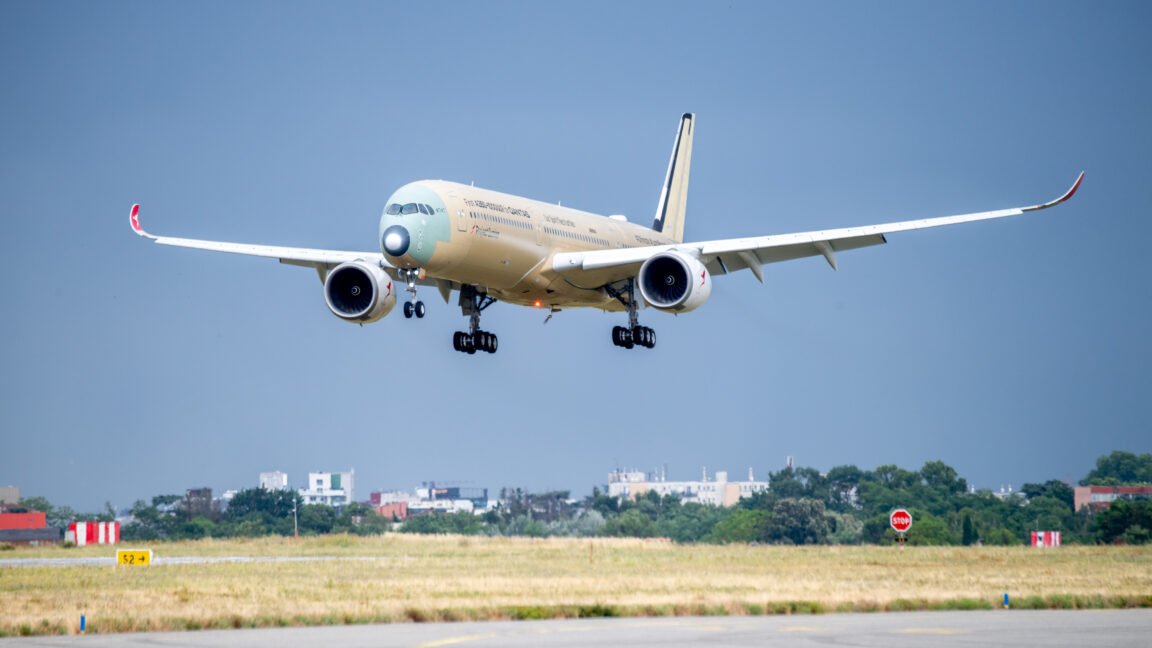
Record flight shows viability of Qantas Airways’ Project Sunrise routes in 2027.
A new Airbus passenger jet completed an ultra-long test flight between Australia and France lasting more than 24 hours—paving the way for the world’s longest nonstop commercial flights starting up next year.
The Airbus A350-1000ULR was developed specifically for Qantas Airways’ planned nonstop flights between Sydney and either New York or London. The Australian airline has ordered a dozen of the new airliners for its Project Sunrise routes that aim to start offering tickets for sale in 2027.
The aircraft had been doing initial test flights near the Airbus facilities in Toulouse, France, with a small team of test pilots and test engineers before conducting its first ultra long-haul test flight last week. After taking off from Toulouse on July 23, it flew for 19 hours and 13 minutes before landing in Melbourne, Australia, on July 24.
That set the stage for the likely record-breaking return flight that lasted for 24 hours and 25 minutes between takeoff from Melbourne on July 27 and landing in Toulouse on July 28.
The flight from Melbourne back to Toulouse covered 12,460 nautical miles in total, according to Airbus. Flight-tracking service Flightradar24 shows the flight route stretched across both the Pacific and Atlantic Oceans along with North America.
To handle such ultra long-range flights, Airbus describes the aircraft as being equipped with an extra rear center fuel tank capable of carrying 20,900 liters (5,521 gallons). That extends the aircraft range by 1,000 nautical miles to ensure it can cover the nearly 10,000 nautical miles for the nonstop flights between Sydney and either London or New York.
The aircraft also features a twin flight crew rest compartment designed to allow pilots to enter or exit rest areas without disturbing each other during commercial flight operations. Multiple pilots are required to take shifts during such long flights.
“To manage fatigue during the 20 to 23-hour flights we implemented four-hour shifts for each pilot, but we rotated the crew every two hours,” said Xavier Pepin, the Airbus test pilot who captained the return flight, in an Airbus post. “This staggered approach ensures that when a new pilot joins the cockpit, they overlap for two hours with the outgoing pilot.”
The first outbound flight to Melbourne included four Airbus pilots and five flight-test engineers who monitored aircraft systems in the cockpit or from work stations in the main cabin. But for the return flight to Toulouse, two Qantas pilots also joined the test flight crew that included three Airbus pilots and five flight test engineers.