// ARS TECHNICA — INTELLIGENZA ARTIFICIALE
What happens when you put AI to work deciphering lost languages?
AI is fantastic at spotting patterns, but human insight is the key.
Every ancient language that has ever been deciphered needed an anchor. Usually that’s a bilingual text, like the Rosetta Stone, or a known relative to compare it to. Linear A, the writing system of the Bronze Age Minoan civilization on the Greek island of Crete, has neither.
Linear A is described as a “language isolate” because it has no confirmed link to any known language, living or dead. As such, it has posed a significant challenge for linguists over the past century.
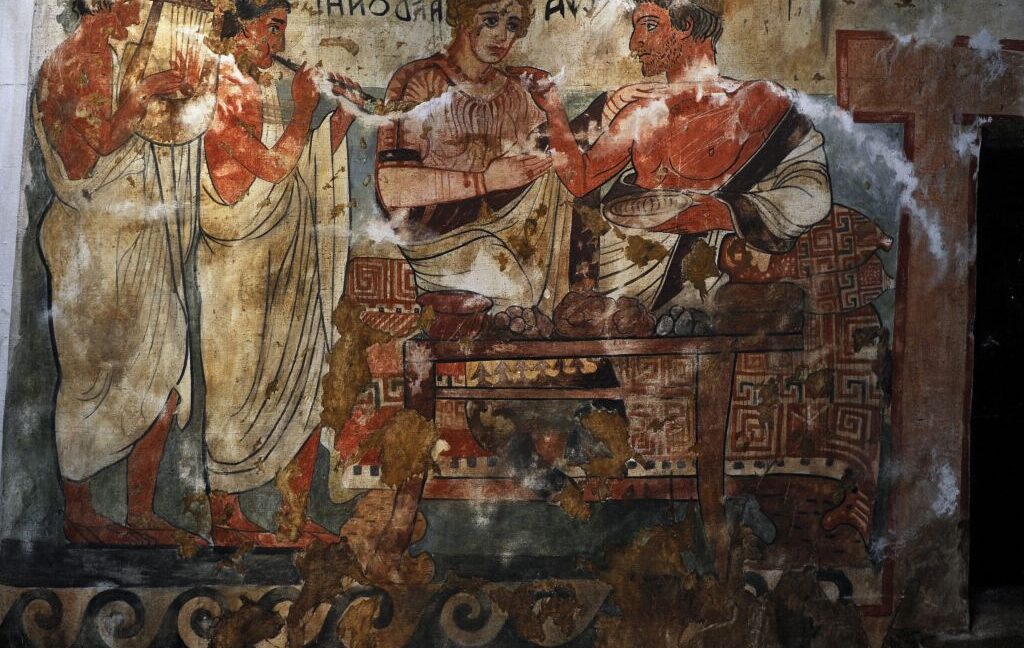
Etruscan, a language of Italy that was used before the rise of the Roman Empire, has fared only slightly better. A partial vocabulary has been collected from short funerary inscriptions, but its grammar and deeper meaning still elude linguists.
Both languages are exactly the kind of puzzle that AI has recently been pulled into—not by replacing the linguists, but by supercharging their hunches. So does AI actually stand a chance of finishing what a century of human effort hasn’t?
A recent case shows both the appeal and the catch. In June 2026, a self-taught AI engineer and amateur linguist claimed a breakthrough on Linear A. It started from a single guess that one unknown word in a prayer inscription derived from a Semitic root meaning “to dwell” or “to inhabit.”
He then used AI-built programming scripts to test that sound-pattern against the rest of a collected Linear A corpus. He was reportedly able to assign values to 40 signs and compiled a 408-word lexicon, showing—in his view—that Linear A is an extinct member of the Semitic language group, which encompasses languages such as Hebrew and Aramaic.
It’s worth being precise about what AI did and didn’t do here. It didn’t have the idea. The engineer did.
The AI was the research assistant. It rapidly cross-checked a human hypothesis against thousands of characters, work that would have taken a human months by hand. That division of labour is the pattern currently worth paying attention to, far more than any single claim that is still under review.
So where does AI actually help, and where does it hit a wall? It’s genuinely strong at large-scale pattern testing. It can check whether a hunch about one sign or word holds up across an entire archive in minutes instead of years. It can spot repeated sequences a human eye would miss, and restore damaged or fragmentary inscriptions by predicting likely missing characters.