// SPACE.COM — SPAZIO & SCIENZA
A volcanic eruption seen from space | Space photo of the day for June 17, 2026
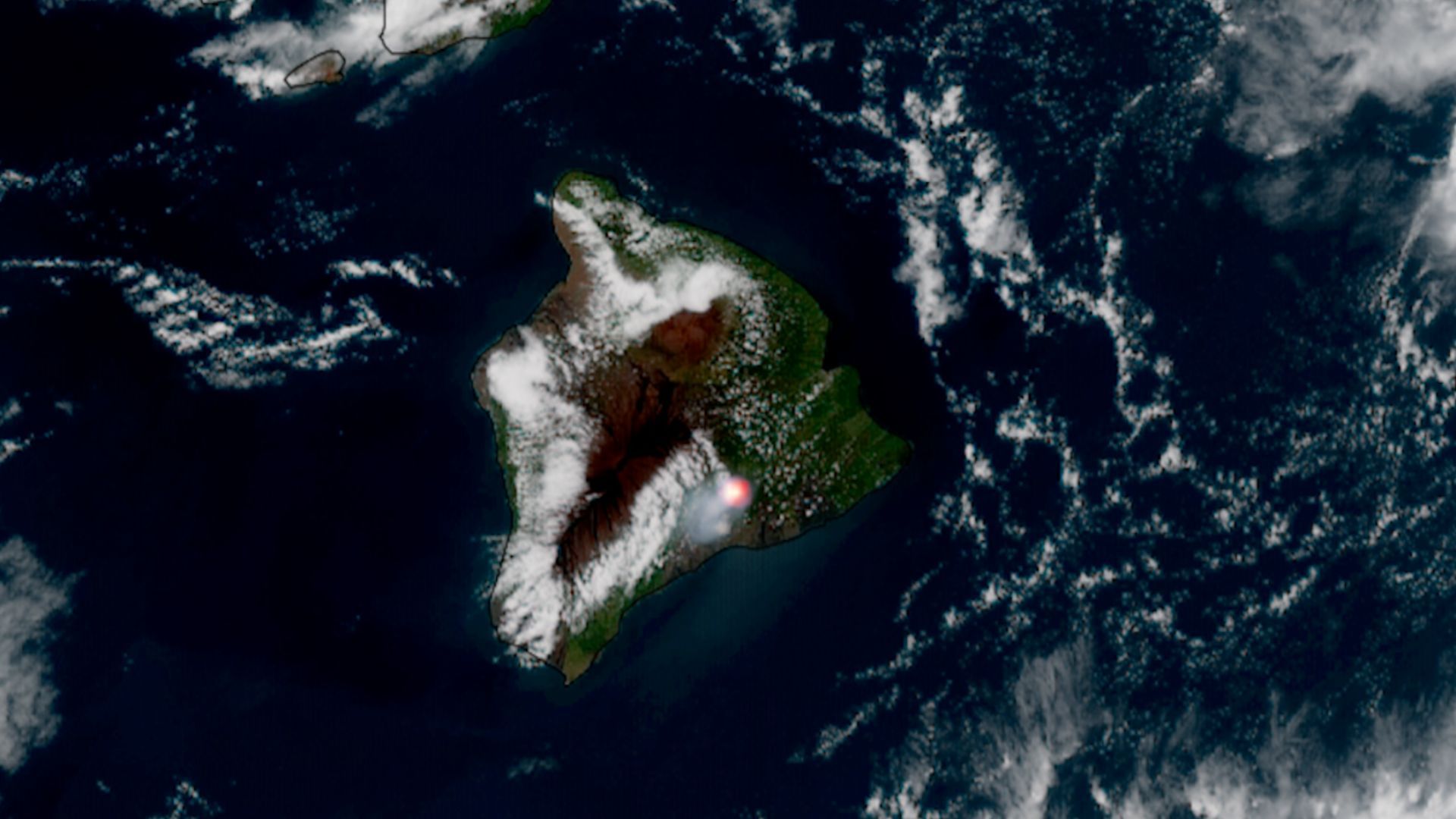
Hawaii's Kīlauea volcano shot out lava for the 49th time that we know of.
When you purchase through links on our site, we may earn an affiliate commission. Here’s how it works.
On Sunday (June 14), the Hawaiian volcano Kīlauea erupted for the 49th time that we know of — marking its 49th "episode," as scientists say.
And during the show, the GOES-18 weather satellite caught the action: the volcano blasting lava about 700 feet (210 meters) into the air. A gif of the footage can be seen just below.
Yesterday, Hawai'i's Kīlauea had its 49th eruptive episode, with lava fountains reaching about 700 feet (210 meters) into the air. pic.twitter.com/EW81mKPTNPJune 15, 2026
Specifically, in this GOES-18 satellite imagery of the Kīlauea eruption, take note of the bright red spot toward the bottom right of the island. That color indicates warm to hot fire, per the scale visible at the bottom of the gif.
The gif itself is also sped up, showcasing a timespan from 3:01 p.m. EDT (1901 UTC) on Sunday to 10:31 p.m. EDT the same day (0331 UTC the following day).
It's a treat to witness Hawaii's Kīlauea volcano erupting for many reasons, one being its grandeur. It's considered the most active volcano on Earth, having consistently erupted for the last 200 years or so.
It's also huge, with a 4,090-foot (1,250-meter) summit that has a depression about 3 miles (5 kilometers) long and 2 miles (3.2 km) wide. This very large depression is what's known as a "caldera." You can think of it as a huge crater on the volcano's summit.
That crater is called Halema'uma'u, and is in fact where the eruptions of this volcano originate. This particular eruption lasted about seven and a half hours, according to the U.S. Geological Survey's Hawaiian Volcano Observatory, but no lava was reported exiting the caldera territory. In conjunction with the eruption, however, the USGS reported three earthquakes within Kīlauea caldera.