// SPACE.COM — SPAZIO & SCIENZA
AI is ready to run spacecraft. Is the space industry ready for it? (op-ed)
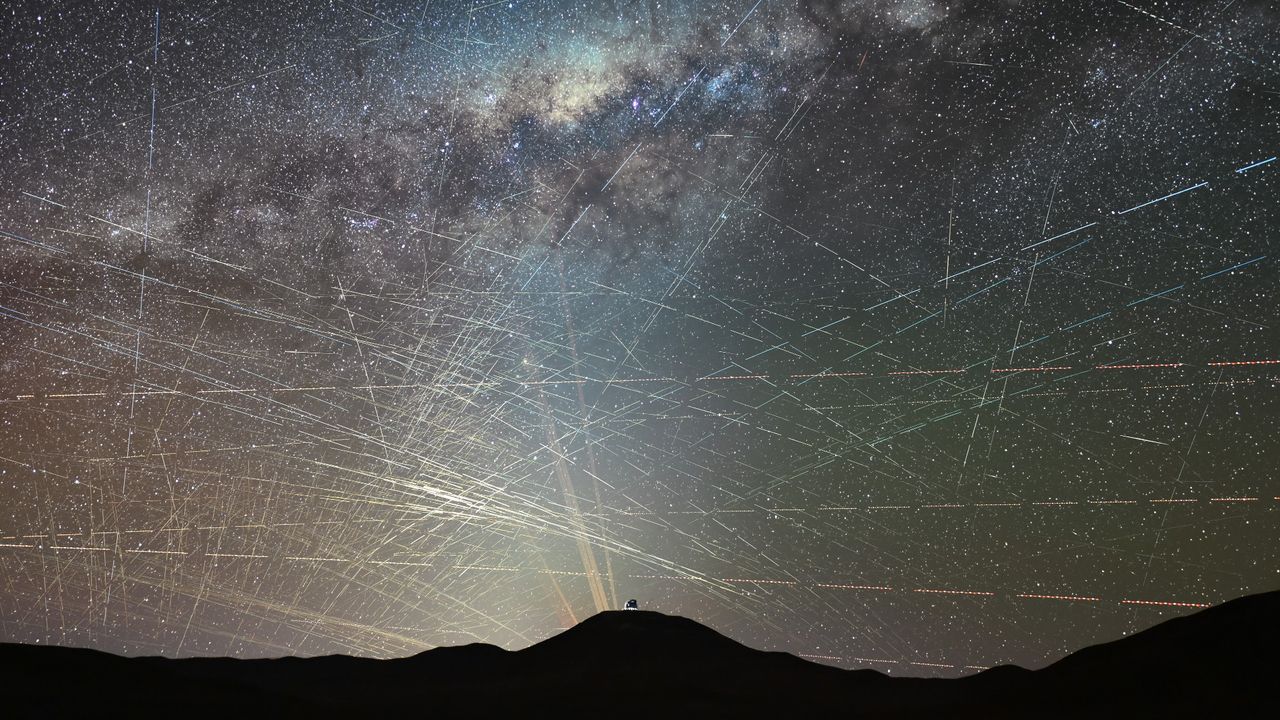
As satellite constellations grow, it will become increasingly difficult for human operators to run them.
When you purchase through links on our site, we may earn an affiliate commission. Here’s how it works.
Martin Halliwell is a Partner at NewSpace Capital, one of the world's first private equity firms devoted exclusively to growth-stage companies working in the space technology sector. He formerly served as Chief Technology Officer of SES, where he led global technology and R&D from 2011 to 2019. Halliwell contributed this article to Space.com's Expert Voices section.
There are now some 16,000 active satellites in orbit. Market intelligence firms like Novaspace say that up to 43,000 satellites will be built and launched over the coming decade. Others, such as Goldman Sachs, think as many as 70,000 new low-Earth orbit (LEO) satellites could be launched in the next five years alone. The exact number is less important than what these predictions reveal: that satellite constellations are getting bigger.
This is a good thing. Space is a crucial enabling force in the modern world, touching just about every part of ordinary life. But as these constellations grow, it will become increasingly difficult for human operators to run them. A network of a few satellites can be managed from the ground; a network of hundreds, or even thousands, cannot be managed in the same way. These satellites must share data, avoid interfering with one another, meet changes in customer demand, and deal with technical problems. Some decisions must be made in seconds, without waiting for instructions from Earth. This is why onboard processing, automation and artificial intelligence are becoming all-important. Satellites will need to sift through and analyze more information in orbit, then act within clear limits set by human operators.
One major use for AI will be processing data in orbit. At present, most satellite data is sent back to Earth before it is cleaned, sorted and analyzed. Earth-observation companies, for example, may collect huge amounts of imagery to track weather, crops, disasters, land use or emissions. They must then process all of it on the ground before they can give customers useful information. If satellites can do more of this work in orbit, they can send back only the data that matters. This would cut costs and save time. In defense, where speed can decide the outcome, it could help people act much faster. Onboard processing could also reduce reliance on ground systems, which may themselves be attacked or disrupted. Satellites remain vulnerable, but moving some analysis into orbit could make the wider system more resilient.
Satellites must be able to spot patterns, respond to changes and adjust their plans in near real time. This makes them well suited to AI. One important use is managing network capacity. Demand for satellite bandwidth is always changing. It may rise over cities at busy times, around major events, in disaster zones, on aircraft and ships or during military operations. AI could track these changes and decide where a satellite’s beams should point, how much power each beam should use and when capacity should be moved elsewhere. This would help satellite networks send more capacity to places where it is needed most, instead of sending the same amount to the same places all the time. The result would be a more efficient use of the satellite’s limited power and available spectrum.
The barriers are not only technical. They are also legal and organizational. Most laws, contracts, insurance policies and operating rules were written for systems controlled by people. They assume that a named person makes each important decision. AI makes responsibility less clear. If an AI system points a beam at the wrong place, disrupts another service or causes damage, it may be difficult to decide who is at fault: the satellite operator, the manufacturer or the software company. Operators must also decide how much control they are w