// ARS TECHNICA — MODA & SOCIETÀ
Pushing the limits: Infinite Machine's Olto is barely a bicycle
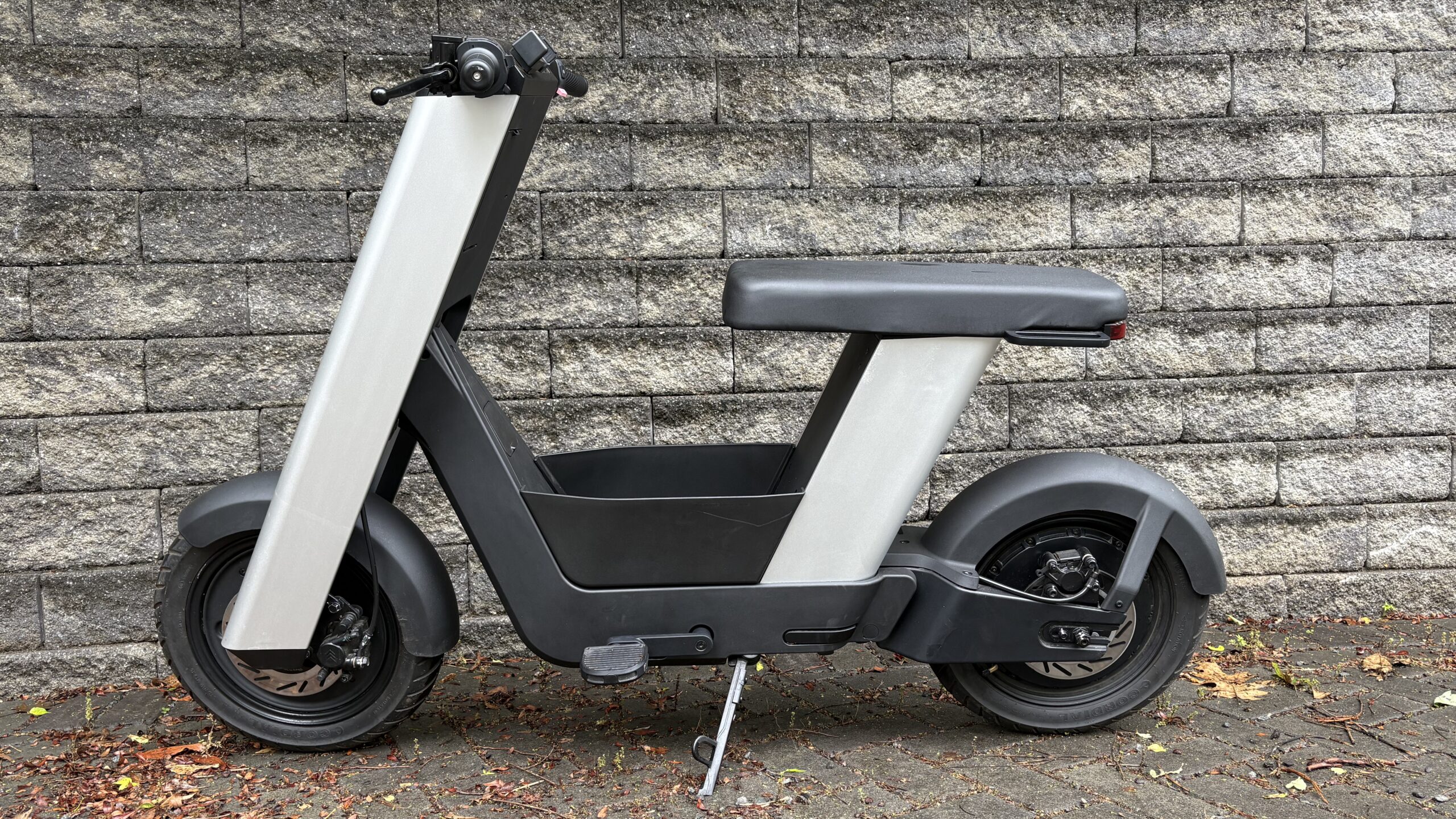
Scooter layout makes pedaling a bad experience. But it does have pedals.
The Infinite Machine Olto is a great electric scooter, one with an overall layout that echoes the classic Vespa. It’s comfortable, and it accelerates well, handles nicely, and has a capacious battery. It has a rugged design that seems capable of handling a lot of abuse, but it also comes with thoughtful touches and security features that mean you can park it anywhere with confidence. And it provides all that at less than half the cost of its full-featured stablemate, the P1 scooter.
The reason is that the Olto is also a bicycle. Sort of.
This may technically be a bicycle, but it’s not one you’d ever want to pedal. While you can set it to operate as either a Class 2 or Class 3 e-bike, it works best when the pedals are both locked in a forward position, acting as footrests. The Olto was designed to provide riders with the experience of a scooter while still allowing them to take advantage of the growing bike lane networks in many urban areas across the country.
It’s impossible to review the Olto as a product without considering what its category represents: an explosion in electrified personal transport, with all forms looking to share infrastructure initially set aside for bicycles. We’ll look at the product first, but we’ll also consider its implications.
We talked a bit with the Olto’s designers at Infinite Machine, who are cyclists based in New York City, about what they were trying to accomplish with the design. They described a local scene familiar to anyone who has visited NYC in recent years: ubiquitous bike lanes with a steady stream of traffic, almost all of it electric, and much of it not pedaled. If so many people were already riding their bikes as scooters, the designers reasoned, why not give them the benefits of a true scooter experience while still staying within the legal definition of a bicycle?
So the Olto has pedals. And you can hypothetically pedal it, though I couldn’t find a way to do so without the electric assist. Using the phone app, you can switch between Class 2 (assist or throttle up to 20 mph/32kmph) or Class 3 (no throttle, assist up to 28 mph/45 kmph). But the seat is low relative to the pedals, and it’s so wide that there’s no way to rotate your legs without your thighs slamming into it.
Instead, it’s meant to be kept in Class 2 mode and operated with a twist throttle. In this mode, you might as well stow the pedals. That involves reaching under the cranks to click a switch that disconnects the cranks from the drive system and then pulling the right crank away from the machine, at which point it will rotate freely. Two pegs can be extended from the Olto’s body to hold the pedals in their furthest forward position, where they serve as footrests. The maneuver is somewhat fiddly, but it can be done in less than a minute once you’re used to the process.
Infinite Machine’s phone app provides access to two Class 2 modes that differ in how quickly they accelerate. The slower one would be appropriate for stop-and-go traffic, since the quicker acceleration would make it difficult to match the speed of the cars around you. The higher acceleration setting is a lot of fun when you have the road mostly to yourself.
I did have one problem with the quick acceleration. At about 175 lbs. (80 kg), the Olto is a beast, and it’s tough to move around by hand if you’re trying to fine-tune where you’re parking it. At one point while doing so, I accidentally twisted the throttle, and it leaped forward out of my hands and away from where I was standing (fortunately, this occurred in my driveway). A weight sensor in the seat would go a long way toward eliminating this risk by ensuring that someone is in the driver’s seat before sending power to the wheels.