// SPACE.COM — SPAZIO & SCIENZA
Engineers race to save stricken LINK rescue spacecraft before it's too late
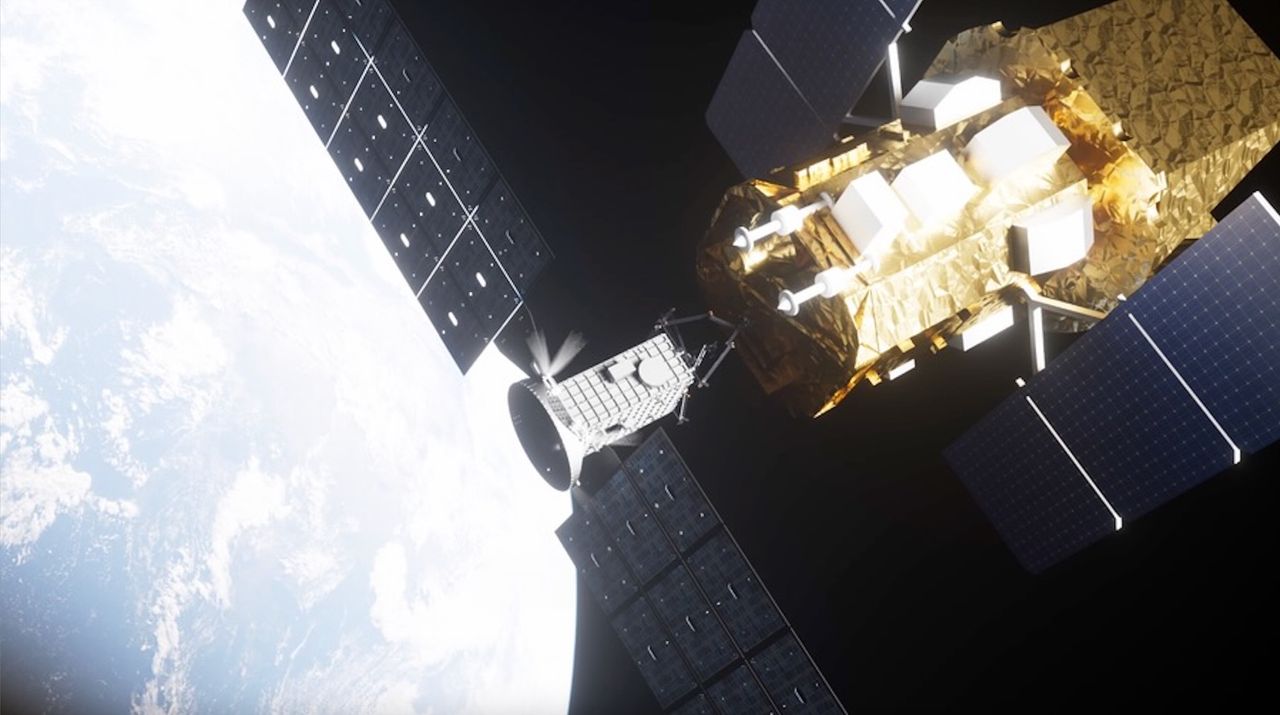
Teams have succeeded in reducing LINK's spin, but more work needs to be done.
When you purchase through links on our site, we may earn an affiliate commission. Here’s how it works.
A private rescue spacecraft is having troubles of its own in Earth orbit.
LINK, a satellite built and operated by the Arizona company Katalyst Space Technologies, launched July 3 on a daring and unprecedented mission: Rendezvous with NASA's Swift space telescope and boost the observatory to a higher orbit before it falls out of the sky.
About three weeks after launch, however, LINK started spinning at an unexpected rate, a problem that caused a temporary communications dropout and a reset of its satellite platform. And two of LINK's three orientation-controlling reaction wheels stopped working.
Spacecraft operators always work hard to fix such problems when they crop up, but there's a special urgency where LINK is concerned. It needs to reach Swift soon, or atmospheric drag will pull the observatory — which possesses no thrusters of its own — down past a point of no return. NASA thinks this boundary lies at around 186 miles (300 kilometers) above Earth, an altitude that Swift is expected to reach by October.
So the original plan called for LINK to meet up with Swift in early August, just a month after launch — pretty much as soon as commissioning work on the rescue craft wrapped up. That's not going to happen at this point, but mission teams haven't given up on the rescue attempt. Indeed, they're making progress on getting LINK back up to speed, as a new update relates.
"LINK originally was in a multi-axis spin rotating at about 9 degrees per second, which resulted in sporadic communications and impeded LINK’s progress toward Swift," NASA officials wrote in the update, which the agency posted on Thursday (Aug. 6).
"Using a series of burns from one of LINK’s electric propulsion thrusters, the Katalyst team now has slowed that spin to about 1.47 degrees per second," they added. "Katalyst plans to keep LINK at that spin rate as it proceeds with next steps for the mission."
Those next steps include uploading flight software updates "with new attitude controllers designed to maintain LINK’s stability in its current configuration," NASA officials wrote. "These updates would allow LINK to begin maneuvering to align with Swift’s orbit."