// HACKER NEWS — CYBERSECURITY
'Every millimetre counts': Inside the beast tunnelling under Sydney Harbour
You have reached your maximum number of saved items.
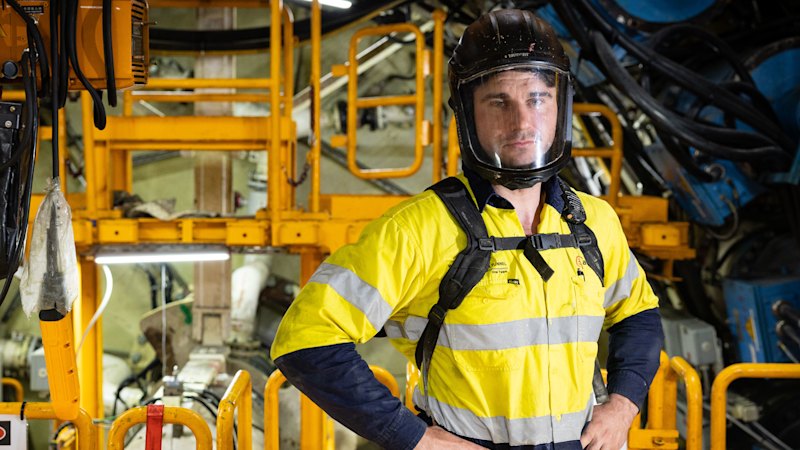
Twenty tunnellers working on a giant boring machine are enclosed in submarine-like cramped and noisy conditions as they carve their way under the inner west and Sydney Harbour with laser-like precision.
In the belly of the beast named Barangaroo is pilot Andrew Jones, whose role is critical in keeping the 137-metre-long machine within five millimetres of its course. He maintains 100 per cent focus as he checks control panels and displays – without him, the machine would not work.
“It’s stressful but rewarding. I love it,” Jones said in the control room of the machine, commonly referred to as TBM. “I’m confident in the machine. I would feel more nervous in a submarine than what I would on this machine.”
Jones, who joked that his recently arrived third child is “TBM3”, has worked on boring machines that carved out tunnels for Sydney’s metro rail lines.
The 4400-tonne Barangaroo has started her 1.5-kilometre grind northwards beneath Birchgrove, leaving in her wake one of the twin tunnels for the $7.4 billion Western Harbour Tunnel motorway. Once complete, the three-lane tunnels will link the Warringah Freeway on the north shore to the WestConnex toll road at Rozelle, in the south.
Ahead of her is another boring machine – Patyegarang – which has dug more than 110 metres from one of two giant launch chambers deep under Birchgrove Oval, her team of 20 workers keeping watch, her tail almost disappearing from the launch chamber into the tunnel she is carving out.
The riskiest part of their journeys will be through a 200-metre section of clay, silt and sand under the harbour. The so-called paleo channel is an ancient riverbed below the harbour that has silted up over millennia.
To lower the risk, one boring machine will pass through the paleo channel at a time – the first before Christmas. Operating 24 hours a day, each will take about six weeks to pass through the most hazardous section.
An indication of the dangers, two hyperbaric chambers are at the ready in the machines operated by Spanish contractor Acciona as a precaution for workers due to the pressures beneath the harbour, especially in the paleo channel.