// NATURE NEWS — SPAZIO & SCIENZA
Rattlesnakes’ own anti-venom could protect humans too
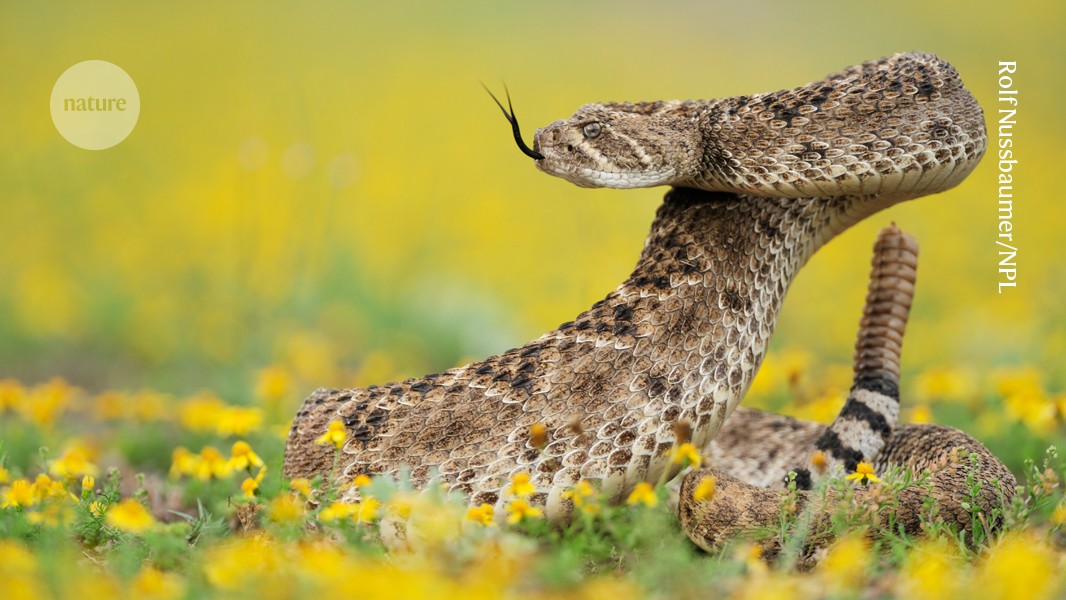
Western diamondback rattlesnake (Crotalus atrox) blood contains proteins that can staunch bleeding and prevent tissue degradation. Credit: Rolf Nussbaumer/Nature Picture Library
Globally, snakebites kill 80,000 to 140,000 people a year and lead to around 400,000 disabilities. Because many people who are bitten live in rural areas, there is insufficient access to antivenom. To find a solution, Sean Carroll at the University of Maryland in College Park and his colleagues decided to look into how snakes protect themselves against their own venom1.
Access Nature and 54 other Nature Portfolio journals
Get Nature+, our best-value online-access subscription
Prices may be subject to local taxes which are calculated during checkout
Carroll, S. B. et al. Proc. Natl. Acad. Sci. USA 123, e2612168123 (2026).
Seeking global talents at all levels (Distinguished, Leading, Young Scholars, Postdocs).
State Key Laboratory of Ultrasound in Medicine and Engineering, Chongqing Medical University.
Postdoctoral Researcher to investigate the neural circuit mechanisms underlying individual differences in stress vulnerability and resilience.
OBI Scholars seeks exceptional early-career scientists studying mechanisms of nervous system disease for faculty positions with ~$3M in support.