// HACKER NEWS — CYBERSECURITY
Idol Mahjong Final Romance: A Slideshow Disguised as a Video Game
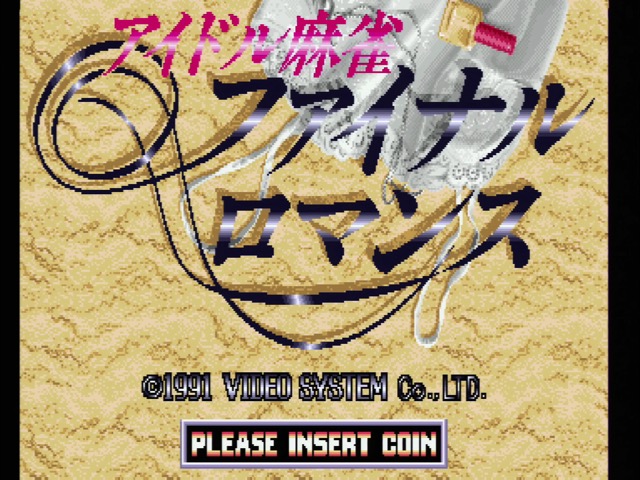
We’re back into the strip mahjong games today, here going back to 1991. Video System is a company that’s probably best known in retro-gaming circles for Aero Fighters/Sonic Wings, but mahjong games (usually branded Idol Mahjong) were one of their bigger moneymakers. And there’s something interesting going on here– Idol Mahjong Final Romance 2-R-4 Special re-releases the final three games in the series, which all also got contemporary console releases, but the first game in the series has never been seen outside of its original arcade launch. Why?
The first game in the Idol Mahjong series was actually 1988’s Idol Mahjong Housoukyoku, but all the rest of the games in the series followed the lead of this 1991 title: Idol Mahjong Final Romance.
The goal of this game is simple; you have dates with eight different women. And you’re going to play strip mahjong with all of them, as you do. No elaborate Nichibutsu-style plotline here, though it’s also worth noting that unlike Jaleco’s Mahjong Daireikai, you also don’t get a choice of which girl to play against, you always go through them in the same order.
Idol Mahjong Final Romance has a lot of aesthetic, and a lot of it disappears in later games in the series. This guy who runs the item shop that appears between stages, for example, is replaced with a maid– in fact, I’m not sure you ever see a man in the Final Romance series again. (Is that what makes it final?) The way the item shops work, though, is about the same.
When you’re presented with a girl, you get various graphics to set the scene, along with sampled voice at a very low bitrate.
And then, of course, what you do is play the riichi variant of mahjong, with far fewer points than you should have, with the goal of winning three rounds with a girl so she will become sufficiently unclothed. I went over the basics in my first strip mahjong post earlier this year.
A nice thing about this game is that every coin, even the first one, will start you with enough money to buy the item that lets you do a redraw on your initial hand, and even better, you can choose whether to use it or not after seeing the initial draw. This can be pretty useful if you get an awful hand to start with.
This game is definitely more mahjong-centric than Nichibutsu’s; notice the girl doesn’t even show up during the matches, whereas in Mahjong Koi no Magic Potion the picture of the girl dominated the screen, to the point of hiding the opponents tiles. Keep your eyes on the game! And the AI player can do calls like chii and pon, so look out.
I have to say, I really like the rotoscoped actual pictures approach to these games. Let’s put a pin in that, and instead just note how the animations are also very low frame rate. Every once in a while, you might be able to get a strange state for a single frame.
The Idol Mahjong Final Romance PCB is exactly standard for contemporary Video System mahjong games of the late 1980’s and early 1990’s. How much so? Here’s my Final Romance, PCB code VS-Z80-7, next to my copy of Mahjong Daiyogen, PCB code VS-Z80-6. Pretty much the only real difference I see is that less of the board is populated.