// NATURE NEWS — SPAZIO & SCIENZA
Screening babies’ genomes could save lives. Here’s how it would work
Uzma Rentia is a science journalist in Washington DC.
Search author on:
PubMed
Google Scholar
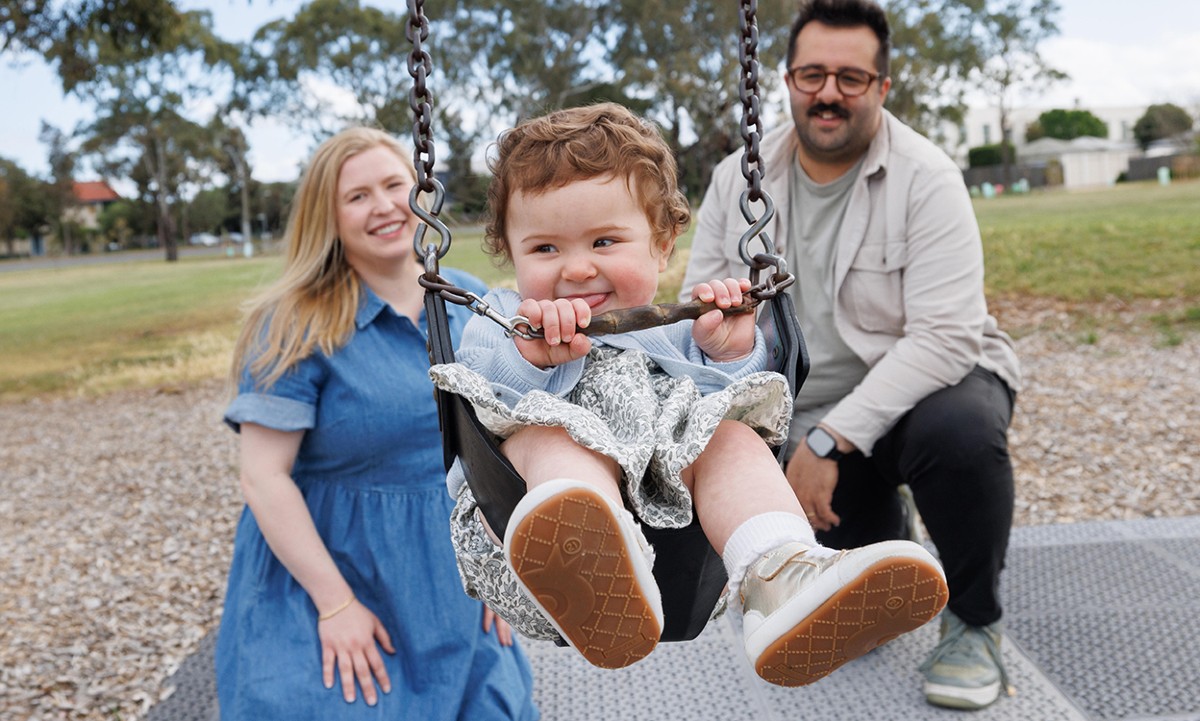
Justin Ghattas and Scarlett Morwood enrolled their daughter, Giselle, in a study to screen for genetic disorders. Credit: Nadir Kinani Photography/Newspix
Two-year-old Giselle Ghattas is fearless, funny and affectionate, according to her parents. She loves diving headfirst down playground slides and climbing onto anything she can reach. Giselle seems like any other lively toddler, despite having a rare genetic disorder that threatens to rev her immune system at full throttle.
The controversial embryo tests that promise a better baby
The condition, known as familial haemophagocytic lymphohistiocytosis (HLH), causes fever and inflammation and can spiral into organ failure, neurological damage and death in as little as months if it goes untreated. And that’s the case for many children with the disease. Because HLH is rare and variable, clinicians often misdiagnose it or fail to catch it early.
But Giselle is not like most people with HLH. Her parents, Justin Ghattas and Scarlett Morwood, enrolled her in BabyScreen+, a study in Australia, which uses whole-genome sequencing to screen newborns for genetic variants associated with severe, treatable diseases. Ghattas and Morwood came across the study on social media.
“If I had just kept scrolling on Facebook and not joined, then we’d probably still be, potentially even now, working out: ‘What’s wrong with her?’” says Ghattas. Instead, Giselle received a bone-marrow transplant at six months old, and despite some complications, she has recovered and begun to thrive. According to her physicians, she will probably not need any more treatment beyond routine monitoring, says Ghattas.
BabyScreen+ is just one of dozens of initiatives around the globe that is assessing the feasibility of expanded genomic newborn screening. Early results have shown that these approaches can flag treatable conditions that aren’t covered by conventional newborn screening, which checks for up to a few dozen conditions. If the trials prove successful more broadly, genome sequencing could revolutionize current practices for newborn screening, providing in-depth information about a range of deadly and debilitating conditions, including some cancers.
For Wendy Chung, a physician-scientist at Boston Children’s Hospital in Massachusetts, the promise of genomic newborn screening was evident long before she became a principal investigator on GUARDIAN, one of the largest genomic newborn-screening studies so far. “Newborn screening is, I would argue, one of the most, if not the most, successful public-health initiatives in the sense that it leaves no one behind,” she says. “GUARDIAN is really adding another modality to enhance what already is a very successful public-health initiative.”