// HACKER NEWS — CYBERSECURITY
Japan tried to build an operating system for the world, the US intervened
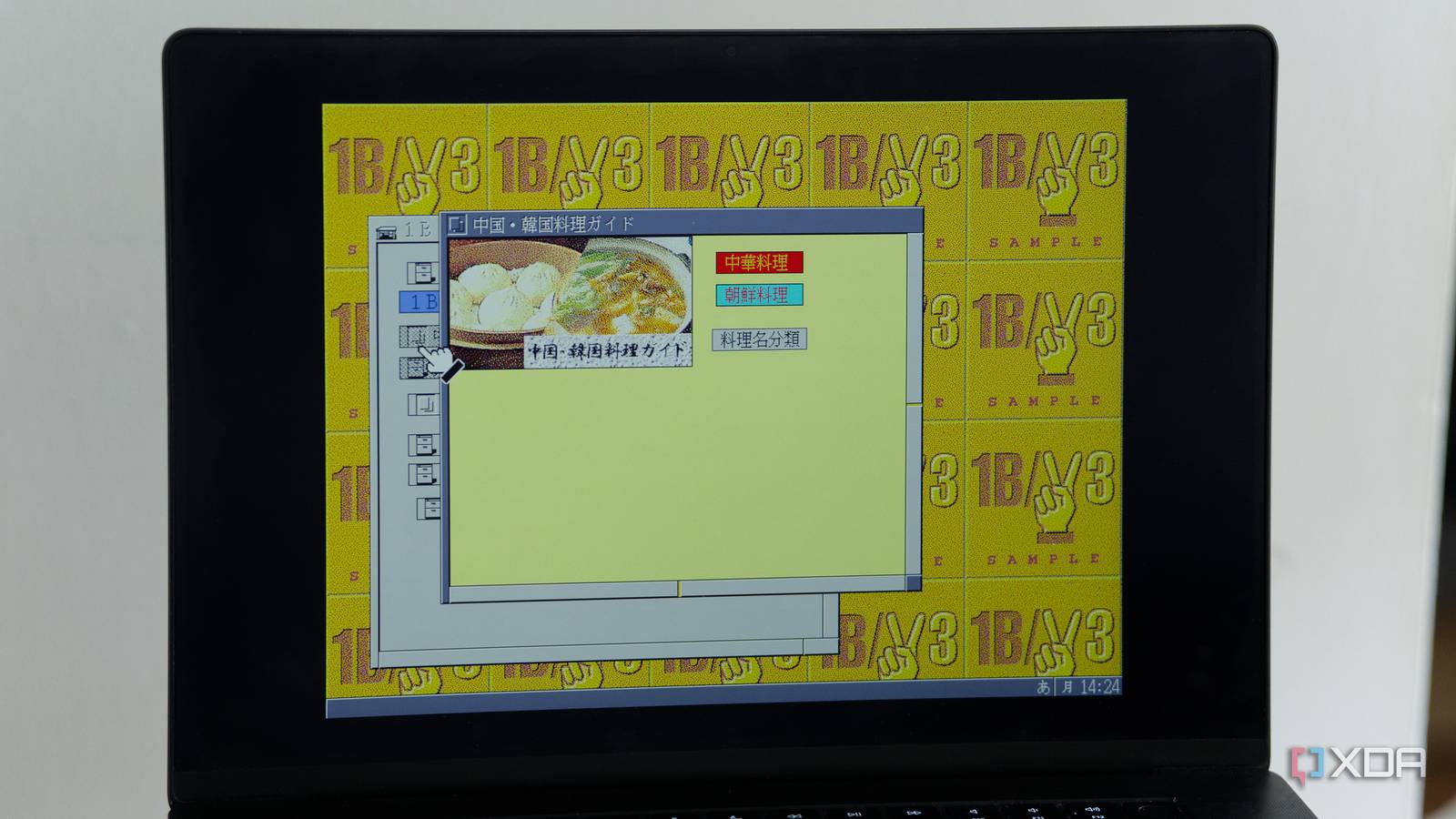
There's a version of computing history where the desktop OS that won wasn't Windows. Not because the alternative was Unix-based or because Apple pulled off something different, but because an operating system designed at the University of Tokyo in 1984 was ambitious enough to try to replace the file system with a hypermedia document model, run on a custom Japanese CPU architecture, and encode 1.5 million characters, only to have a US trade report single it out as an unfair trade barrier in 1989.
That project was TRON (The Real-time Operating system Nucleus), a real, government-backed Japanese computing initiative whose desktop variant, BTRON, was named in a US trade barrier report and effectively killed before it could reach schools nationwide. Meanwhile, its embedded counterpart, ITRON, quietly became one of the most deployed operating systems in history.
TRON's history has since attracted some genuinely wild conspiracy theories, including one claiming that Japan Airlines Flight 123 was deliberately crashed in order to target the TRON developers on board, despite there being no evidence that any TRON developers were even on the flight. But the strangest part of the story isn't even a conspiracy theory: BTRON's hypermedia desktop was decades ahead of what the market could support, and SoftBank founder Masayoshi Son may have helped sink it from the inside.
Ken Sakamura was a researcher at the University of Tokyo when he launched the TRON Project in 1984. It was an ambitious undertaking; he wanted a vertically integrated computing architecture that Japan could build its entire digital infrastructure on, from the microcontroller in a washing machine to the workstation on a desk to the telecom switch in a central office. The project had five sub-architectures: ITRON for embedded real-time systems, BTRON for personal computers, CTRON for mainframes and telecom switching, MTRON for cross-system coordination, and STRON, a hardware implementation of the real-time kernel.
The project designed its own CPU architecture, the TRON VLSI CPU, which Hitachi manufactured as the Gmicro/200 series. Hitachi actually produced and sold it, and it ended up powering some Japanese workstations and embedded systems throughout the late 1980s. Sakamura's team also drew up its own TRON keyboard layout, designed for efficient Japanese text input alongside programming symbols, and a real-time peripheral bus called micro-BTRON, based on IEEE 802.5 and intended as an alternative to MIDI for connecting "electronic stationery" peripherals, though that bus never shipped in a commercial product. The idea was that every layer, from silicon to user interface, would be designed together, with no compatibility debt to existing platforms.
The character encoding system, TRON Code, was arguably the most ambitious part. It supported multi-plane character switching via 0xFE escape codes, with 31 defined planes of 48,400 characters each, giving a theoretical capacity of 1,500,400 characters. By 1999, B-right/V R2 shipped with roughly 130,000 characters across 14 defined planes, covering JIS levels 1 and 2, Chinese GB 2312, Korean KS C 5601, Unicode's non-CJK range, and the Mojikyo collection of rare historical characters, and users could register new characters for free through the TRON Character Resource Center. To put that in perspective, Unicode 1.0 in 1991 defined 20,902 unified CJK ideographs, and TRON's CJK coverage exceeded Unicode's for well over a decade. A large part of that count came from Mojikyo, though, which separately encodes variant glyphs that Unicode unifies into single code points.
You can see the ambition from the very beginning, as the 1996 demo release includes a character-code viewer that lists its planes side by side: Japanese basic, Japanese supplementary, Chinese GB, Korean KSC, and 6-dot Braille. Braille is there as a first-class plane rather than an accessibility add-on bolted on later, and Unicode didn't encode Braille patterns at all un